

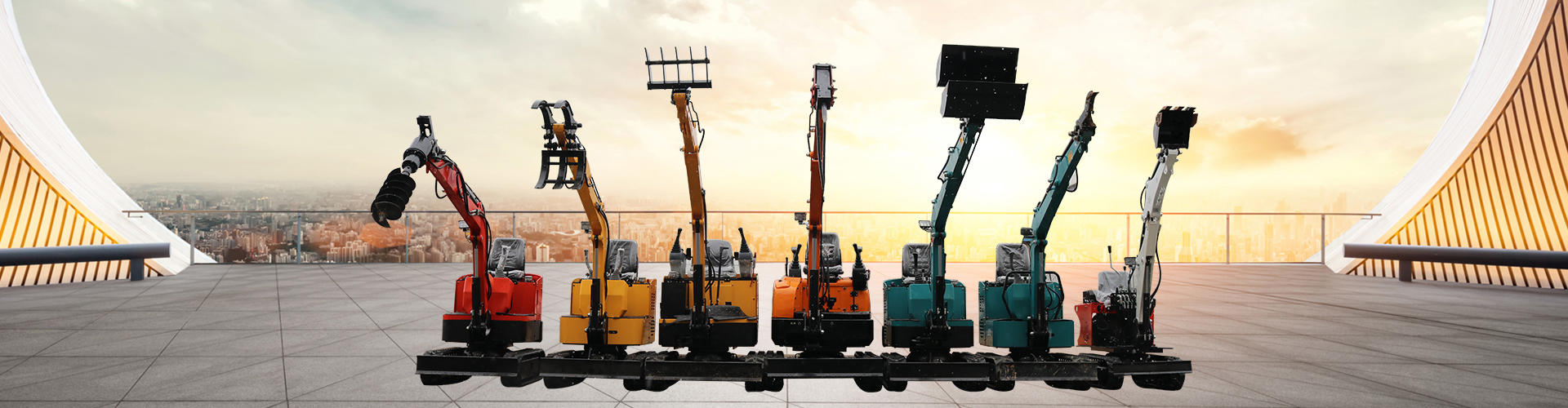

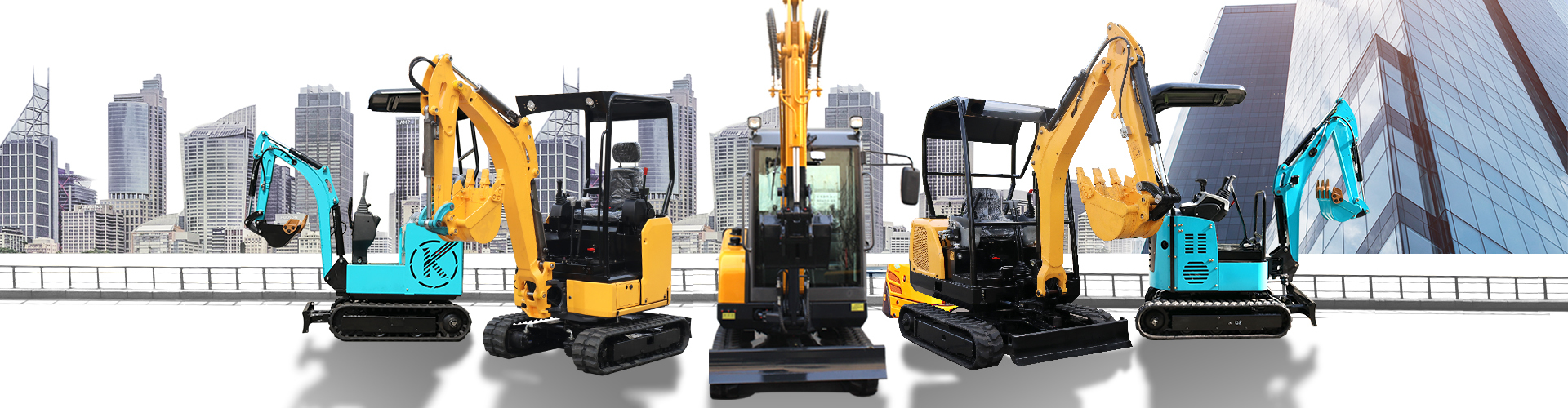
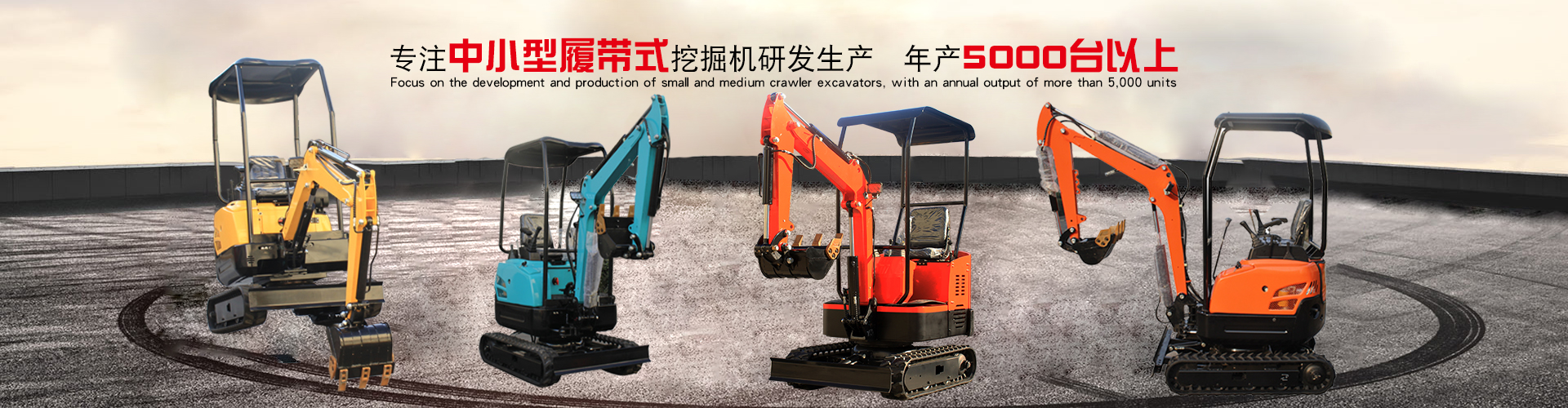

When operating a compact excavator, it should be parked on a solid and level surface. For tire-type compact excavators, ensure the stabilizers are properly engaged. If the weather is exceptionally cold and the excavator is stationary for an extended period, please drain the engine coolant.
Small excavator construction
The track width of compact excavator undercarriages is always wider than the wheelbase, making forward operation more stable; therefore, lateral operations should be minimized. Keep the excavation point close to the machine to enhance stability. If the excavation point is too far from the machine, it can cause the center of gravity to shift forward, resulting in unstable operations. Lateral excavation is less stable than forward excavation, especially if the excavation point is far from the machine's center. To maintain operational balance, keep the excavation point a suitable distance from the machine's center.
During the operation of a small excavator with a bucket, once the bucket is fully loaded, do not continue to scoop soil to prevent overloading. When performing tasks such as digging trenches, canals, foundation pits, etc., consult with the construction personnel based on the depth, soil type, slope, and other conditions to determine the distance of the machinery from the slope.
Operating a mini excavator with its bucket to dig into rock can cause significant damage to the machine; it should be avoided as much as possible. When挖掘is necessary, adjust the position of the machine according to the crack direction of the rock to allow the bucket to smoothly enter and dig. Insert the bucket teeth into the rock cracks and use the digging force of the bucket arm and bucket to excavate (be mindful of the teeth slipping out). For uncrushed rock, break it first before using the bucket for digging.
