



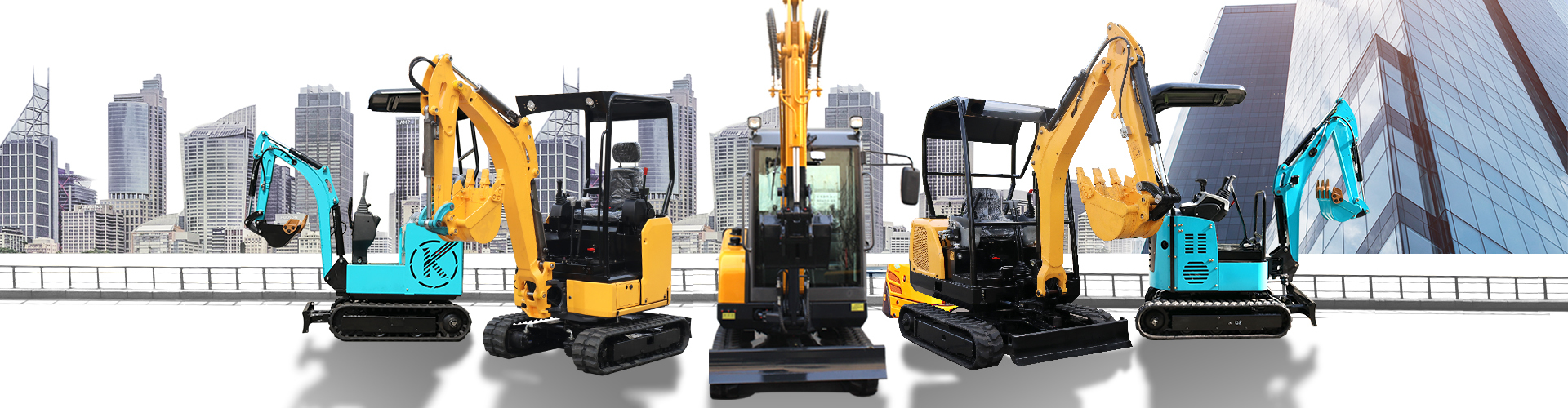
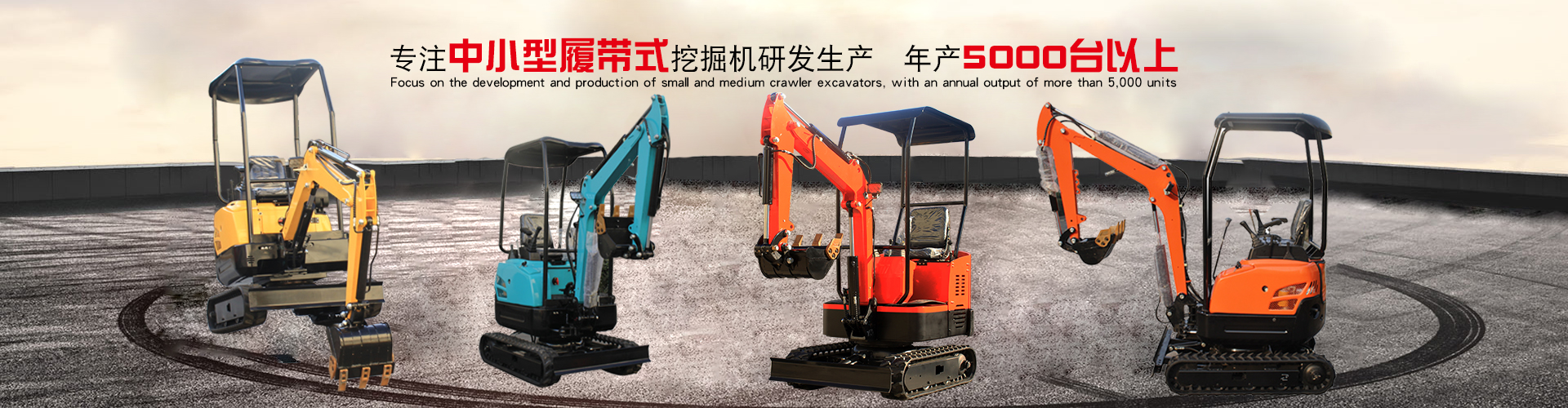

In recent years, the use of integrated undercarriages has become more prevalent in compact excavators. These walking steel structures are simple in design, lightweight, and offer good rigidity. Components such as tracks and support wheels are selected from standard parts used in industrial consumer large tractors, thus controlling costs while ensuring quality. Today, we take a look at the components of a compact excavator's walking installation.
The undercarriage frame is a load-bearing structure for the walking installation of compact excavators, consisting of support frames, load-bearing beams, and track frames.
The tracked walking installation, with its "four wheels and one track" (i.e., the driven wheel, guide wheel, support roller, roller, and the track itself), evenly distributes the upper net weight onto the road surface, making it advantageous for use on low-load-bearing roadways and enhancing its walking characteristics.
Compact excavators are primarily used for municipal road construction or work in confined spaces. Factors such as office environments and detailed specifications should opt for rubber tracks due to their advantages of minimal air disruption, low noise, faster speed, less vibration, lower ground installation pressure, and greater driving force, which can reduce the impact on machinery from the road surface. In extreme environments or when working in the field, steel tracks can be used to adapt to extreme working conditions. While wheel-mounted walking systems offer faster operation and better maneuverability, they prevent tire damage to the air during operation, making them popular in urban planning and construction. However, they have higher ground installation pressure, less slope climbing ability, and require professional support feet for excavation work to ensure the reliability and safety of the excavator. Therefore, track-mounted walking systems are more suitable.
