
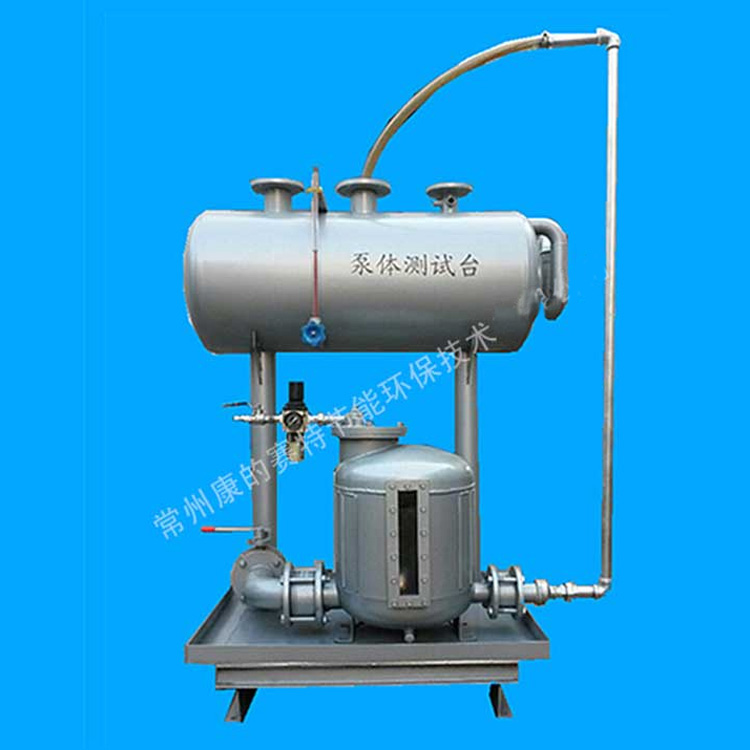
 Condensate Recovery Air-Powered Pump Test Bench
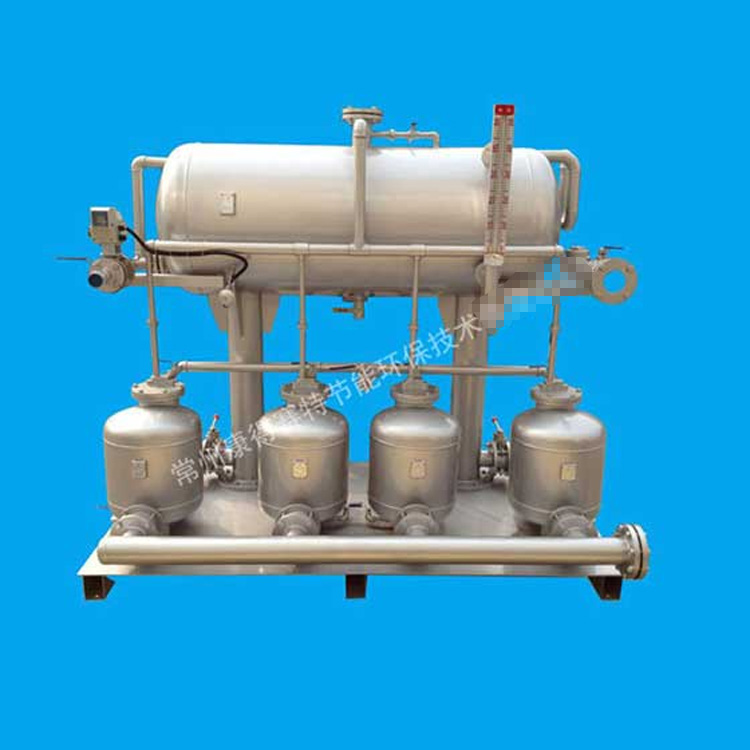 CDST-HT-Ⅳ Type Condensate Water Recovery Pneumatic Device Mechanical Pump
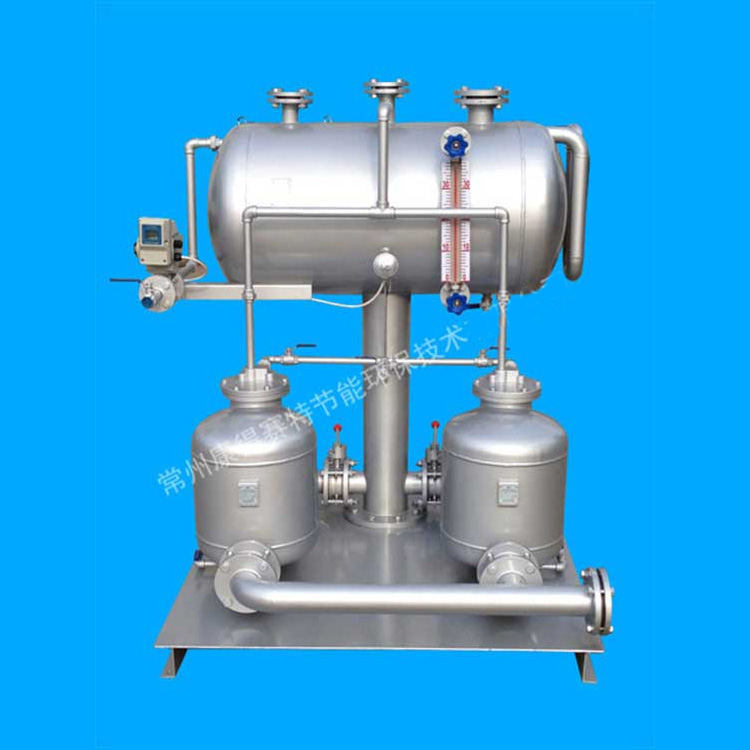 CDST-HT-Ⅱ Type Condensate Water Recovery Pneumatic Mechanism Pump
 CDST-HT-Ⅰ Type Condensate Water Recovery Pneumatic Device Mechanical Pump
 CDST Condensate Water Recovery Pneumatic Mechanical Pump
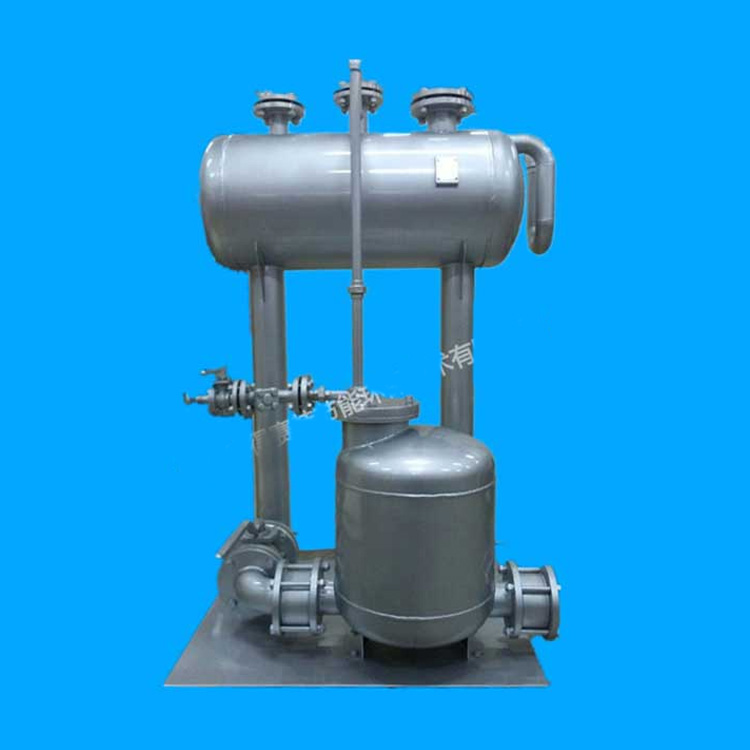 CDST-Ⅰ Type Condensate Water Recovery Pneumatic Device Mechanical Pump
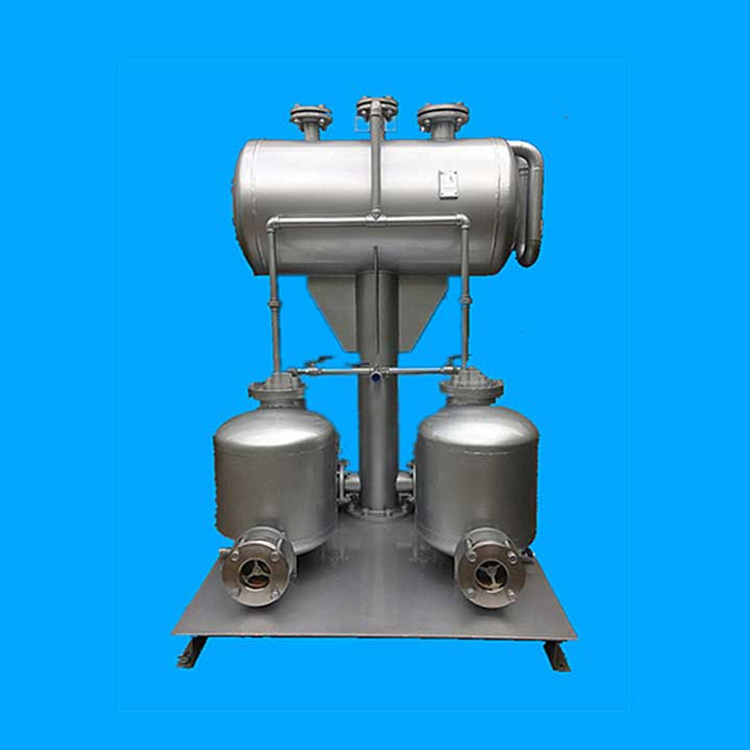 CDST-Ⅱ Type Condensate Water Recovery Pneumatic Device Mechanical Pump
Product Details

A comprehensive enterprise specializing in equipment research and development...
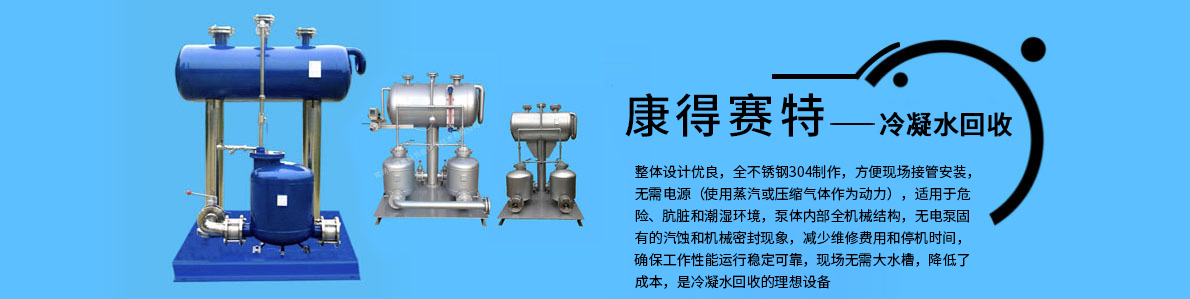

产品Price Negotiable
最小起订Quantity: 供货总Quantity:


I. Product Features IV. Technical Specifications 6. Working Principle V. Dimensions Section 7: Specifications and Models (2). Categorized by Function 2. Selection Overview Table KDST-QC Full Water Treatment System Specifications Sheet 3. Model Description Section 8: Selection InstructionsComplete Water Treatment System
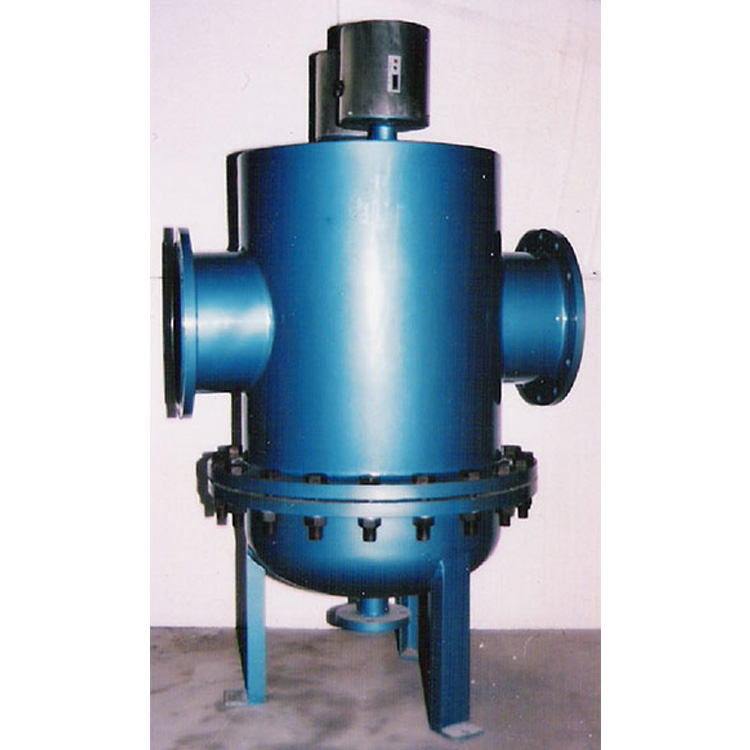
 The Full-Process Water Treatment System is a comprehensive processor designed to address the four common issues in various circulating water systems: corrosion, scaling, algae, and water quality. It replaces the treatment process that requires multiple units with a single unit, thereby replacing the traditional treatment methods.
It employs high-tech solutions like the differential shielding effect and multi-point array combination. It ingeniously addresses the significant challenge of mutual interference and restriction between various frequency bands and corona discharge fields. It offers comprehensive optimization treatment of water quality, with functions including scale prevention, corrosion prevention, sterilization, algae elimination, and ultra-pure filtration.
The powerful sterilization, algae removal, and disinfection functions of UV light tubes compensate for the shortcomings of radio frequency technology in sterilizing and removing algae in high temperature, high humidity, and poor water quality environments.
Section II: Application Scope
1. Primarily applicable to the water quality treatment and control for recycled water, tap water, surface water, groundwater, seawater, swimming pool water, and hot water.
2. Suitable for a wide range of industries including oil, chemical, steel, power generation, central air conditioning, boiler heating, ground-source heat pumps, and other industrial and mining enterprises, for their circulating water, source water, and wastewater treatment.
Section 3: Product Features
Integrating variable-frequency technology and UV sterilization disinfection, the equipment's comprehensive performance far exceeds that of general "full-process water processors" and "radio frequency water processors."
2. Each emitter utilizes the differential shielding effect and multi-point array combination, ensuring no interference between them and strong targeting.
3. Fully automatic operation for waste water discharge, removing iron substances, suspended particles, sediments, and other impurities from the water. This can be done without interrupting the system's normal operation, ensuring efficient concentration control and reducing operating costs, eliminating the need for manual intervention.
4. The equipment can be equipped with a PLC control system, which can be configured with online conductivity, temperature, pressure, and other signals as required (optional), and features an automatic backwash function.
5. Equipped with a differential pressure controller and a comprehensive water quality tester, featuring over-pressure alarm and continuous water quality monitoring with digital display.
1. Processing Effect
Corrosion rate: ≤0.093A, reducing the pipeline's corrosion rate to 1/10 of the original.
Scaling and descaling efficiency: ≥95%
Sterilization Rate: ≥95%
Algae Elimination Rate: ≥97%
Filter Precision: Selectable according to customer requirements.
Head loss: ≤0.15 meters of water column.
2. Inflow Water Quality
Adaptable to Water Quality: Total Hardness (as CaCO3) ≤ 1000 Mg/L
Water Temperature: ≤100℃
Flow rate: ≤2.8 m/s;
Work Pressure: ≤1.6 MPa
Operating Temperature: -25°C to +95°C
Operating Environment Temperature: -25℃ to +50℃
Relative humidity: <95%.
3. Operating Parameters
Average Mean Time Between Failures (MTBF): > 60,000 hours
Design Life: 20 years
Power: 50w to 200w
Operating Voltage: 220V ±10% / 50Hz
Safety Insulation Voltage: 5000V.
Principle of Scale and Lime Removal
Scale forms after water is heated and its temperature rises, primarily composed of hardening substances such as Ca2+, Mg2+, Si2+, Fe3+, and suspended particles. In actual operating conditions, the scale formed by various water systems is all composite scale. By using a transducer, specific radio frequency energy is converted to the treated medium——water, causing the arrangement of scaling ions to distort and deform. When the water temperature increases, the treated water needs to be allowed to recover to its original state over a period of time. During this phase, the likelihood of scaling is significantly reduced, thereby controlling the formation of hard scale.
2. Corrosion and Rust Prevention Principle
Corrosion that occurs when water comes into contact with metal, in principle, is electrochemical corrosion, known as the "microbattery effect." The working principle of the entire process is to utilize the principle of weakening and inhibiting the original battery effect, forming a dynamic layer of negatively charged, rich in negative charge on the inner wall of the pipe, gradually weakening and inhibiting the electrochemical corrosion product Fe2O3, converting it into a stable Fe3O4, achieving the effect of rust controlling rust.
3. Sterilization and Algae Control Principle
Waterborne fungi and algae require specific environmental conditions for survival and reproduction. The "Full-Process Processor" utilizes its ultra-clean filtration to concentrate and remove suspended particles, impurities, certain microorganisms, and humic substances, effectively reducing water turbidity and COD, BOD levels. This恶化 the environment for algae and bacteria proliferation, inhibiting their growth. Secondly, the "Electronic Radio Frequency" employs high-frequency electromagnetic waves of specific spectra to disrupt negatively charged cell surfaces, utilizing its strong penetrating power to directly damage the enzymes necessary for bacterial survival and reproduction, preventing sugar absorption and halting metabolism, thereby killing the bacteria. Lastly, the powerful sterilization, algae elimination, and disinfection capabilities of the ultraviolet lamp tubes compensate for the limitations of radio frequency technology in high-temperature, high-humidity, and poor water quality environments.
4. Ultra-Clean Filtration Principle
An integrated filtration system formed by a combination of active iron membrane, mechanical variable orifice barrier, and corona discharge field. It effectively filters and adsorbs iron ions, suspended particles, sediments, and other impurities from water, controlling water turbidity, color, and collecting and discharging impurities. It is an essential advanced filtration equipment for both industrial and domestic water supply and drainage systems. It boasts high purification efficiency, low equipment resistance, and is environmentally friendly, with no pollution to water quality. It can replace multiple general-purpose filtration products, such as elbow and Y filters, without the need to replace the comprehensive filter element. It achieves the entire process of filtration, collection, concentration, and effluent discharge while maintaining continuous system operation.
The working principle of the "Full-Process Treatment Unit" is to address the issue of composite scale by controlling both hardness scale and dirt comprehensively. Therefore, under normal operation of the system, the "Full-Process Treatment Unit" can complete scale prevention and removal, rust prevention and corrosion inhibition, sterilization and algae control, ultra-pure filtration, and the full-process treatment of water quality.
1. Full Process Water Treatment Classifier
(1). Categorized by control method

Due to varying industries, systems, and water quality, the water quality issues to be addressed differ; therefore, the full-process processor can be customized to meet different needs and treatment specifics by combining the four major functions—“sterilization, anti-corrosion, scale prevention, and water purification”—into processors with varying focuses.
*Note:
(1) Full-Automatic Water Treatment System
For environments requiring automatic detection, automatic effluent discharge, or strict requirements for water conservation, energy saving, and labor saving, the "Fully Automatic Water Treatment System" can be chosen.
The "Full Automatic Water Treatment System" is an upgraded version of the standard "Water Treatment System," featuring added pressure, temperature, conductivity, pH, residual chlorine, and total dissolved solids sensors, as well as a PLC programmable controller (optional for some). It compares detected parameters with set values and displays dynamic parameters on a color screen, achieving continuous operation and automatic backwashing of the water treatment equipment, thereby enhancing the overall system's automation level.
(2) Intelligent Full-Process Water Treatment System
"The Intelligent Full-Process Water Treatment System is an enhanced version of the standard "Full-Process Water Treatment System," incorporating additional features."
Pressure differential controller and comprehensive water quality tester, continuously monitor and digitally display water quality; when water quality becomes concentrated, deteriorates, or exceeds standards, it can trigger an audible and visual alarm to promptly notify on-site staff. It also allows for real-time setting of water quality control ranges based on the current water quality, fundamentally resolving issues such as equipment blockages and disruptions to system operation caused by operational management and water quality deterioration. It truly realizes intelligent operation of equipment, bringing convenience to users.
(3) Integrated Physical Water Treatment System
For environments with high temperatures, humidity, and poor water quality, strict requirements are placed on issues like algal growth, scaling, and corrosion. Chemical dosing can serve as a supplement to the "full-process water treatment system," yielding better results than either standalone physical or chemical water treatment methods.
The "Integrated Physical-Chemical Water Treatment System" is an upgraded version of the "Full Process Water Treatment System" featuring an automatic chemical dosing unit; it can add agents such as pH adjusters and disinfectants based on water quality control requirements; the dosing amount is only 10-20% of that of equivalent pure chemical dosing.
(4) UV Full-Process Water Treatment System
For environments with high temperatures, high humidity, and poor water quality, where strict requirements are placed on issues like bacterial and algal growth, yet chemical treatment is not an option, such as in industries where tires come into direct contact with recirculated water; the "Ultraviolet Full-Process Water Treatment System" can be chosen for its ideal bactericidal and algicidal effects.
The "Ultraviolet Full-Process Water Treatment System" is an enhancement to the "Full-Process Water Treatment System" by incorporating ultraviolet sterilization and disinfection equipment; it has no impact on the other functions of the "Full-Process Water Treatment System" itself.
(5) Pipe Type Full-Process Water Treatment System
For environments with smaller installation spaces and lower filtration precision requirements, installing a standard "full-process water treatment system" can be challenging. In such cases, you can opt for the simplified version of the "full-process water treatment system," known as the pipe-type full-process water treatment system.
"The Pipeline-Type Full-Process Water Treatment System offers the same functions as the standard Full-Process Water Treatment System, and can also be customized to include automatic, intelligent, integrated physical and chemical, and ultraviolet options based on usage requirements."
(6). Dedicated Water Treatment Unit
For the above various full-process water treatment systems, to achieve specialized treatment effects, their functions in aspects such as sterilization and algae removal, corrosion prevention, scale prevention, and water purification can be combined into dedicated full-process water treatment systems as separate series. For instance: Comprehensive Full-Process Water Treatment System, Sterilization and Algae Removal Full-Process Water Treatment System, etc.


1. Equipment Selection
(1) Prior to selection, a clear supplementary water quality report and water quality standards, as well as circulating water specifications, must be provided.
Quality standards, work pressure, working temperature, flow rate, etc.
(2). Before selection, it is also essential to clarify the system's waste discharge method and automation requirements.
2. Equipment Installation
The installation location of the equipment should be as close as possible to the cooling equipment for optimal processing; however, the distance from the wall and main equipment should be greater than 400mm.
(2). Adaptable installation for the need of equipment maintenance and filter flushing without shutdown.
(3). If the main body of the full-range processor and the control box need to be installed separately, the distance between the main body and the control box should generally not exceed three meters.
3. Equipment Usage
(1). After the system is installed, pipeline cleaning should be performed. During cleaning, the pipeline should be knocked to remove
Soot and debris adhering to the inner wall of the pipe should be cleaned from the filter after the system's first week of operation.
(2). Upon the initial operation of the system, the water supply valve should be opened first. After the system is filled with water, then open the return water valve to facilitate the removal of impurities in the pipeline.
(3). Discharge waste water promptly based on the system-set pressure difference and concentration ratio; (especially during summer).
(4). In environments with poor water quality, it is appropriate to assist with medication treatment; the specific dosage of the medication is determined based on the system's conditions.
(5). Strictly prohibited from operating the equipment for extended periods without water.
(6). Equipment Operation:
a. Flow rate: When the differential pressure between the in and out water ports reaches 0.02-0.05 Mpa (or according to the system set differential pressure)
Reverse flush should be conducted. When water quality is poor or the new system is first used, reverse flush 2-3 times every 8 hours. After normal operation, it depends on the water quality.
b. Anti-Laundering: Open main valve, drain valve, close the water supply valve of the equipment, and turn off the 220V power. Perform reverse flushing of the filter element to revitalize it. The duration of the anti-laundering process depends on water quality, usually between 10-20 seconds.
c. For severely polluted systems, a gas-water mixed backwash and regeneration filter should be used. A separate effluent pump should be installed when the import pressure is less than 0.25 MPa.
d. Post-resurrection filter performance, the water in and out pressure difference returns to the original value.
Phone Consultation