




What method to use for the recovery and utilization of condensate has been a topic of ongoing debate, with the focus primarily on two aspects:
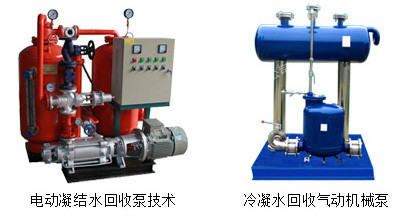
What type of recycling pump should be used, an electric pump or a mechanical pump?
What type of recycling system, an open-loop or closed-loop system?
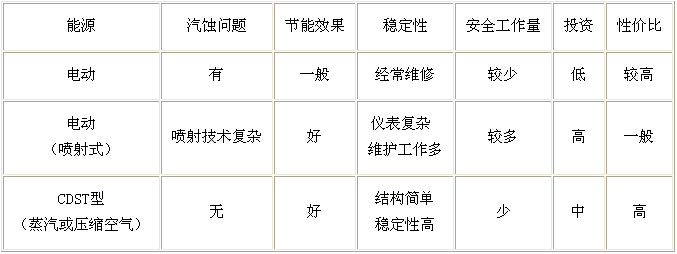
Mechanical pumps exhibit no cavitation when pumping high-temperature fluids.
Mechanical pumps can effectively remove and recover condensate from equipment under any operating condition, including when a vacuum is produced within the equipment.
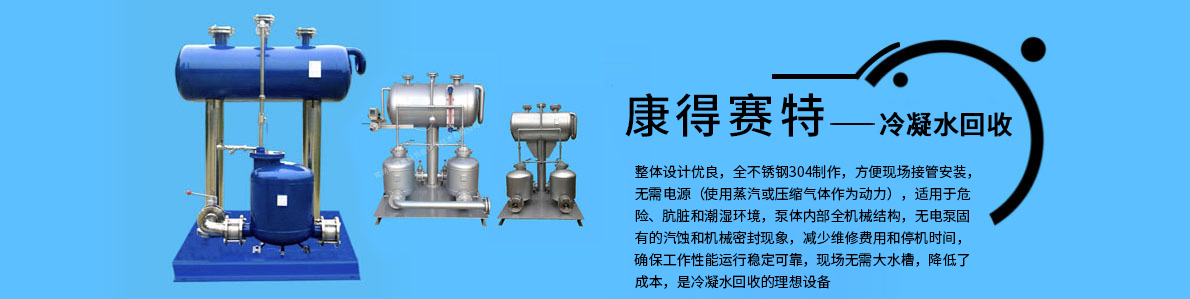
Mechanical pumps operate without electricity, utilizing steam or compressed air as energy sources, featuring low energy consumption and suitability for hazardous and humid environments.
The electric pump has a higher lift than the mechanical pump, a larger tank, and greater heat loss.
Many believe that a closed-loop condensate recovery system is more energy-efficient due to the absence of secondary steam loss and its aesthetically pleasing and logical design. We do not dispute this, but we argue that the effective drainage of the front-end heat exchange equipment must be considered during the condensate recovery process. For closed-loop systems, an unresolved issue is the back pressure of the drain valves. If the pressure of the entire recovery system is set at 1bar, then even without any elevation in the condensate pipes, there will be at least 1bar of back pressure after all steam drain valves. Compared to an open-loop recovery system with the same steam pressure at the front end, the effective working pressure difference for the drain valves must be reduced by at least 1bar. This reduction in pressure must be considered during all equipment selection, and some drain valves may even need to be chosen with larger diameters, increasing the initial investment. More importantly, if a drain valve or bypass valve in a closed-loop system leaks, the back pressure will increase even more, affecting the operation of other drain valves and compromising the system's reliability.
In practical applications, the higher the back pressure after a drain valve, the lower its operational reliability becomes, especially in situations where the heat exchanger load frequently changes. This phenomenon is particularly pronounced (see technical literature on heat exchanger flow loss), sometimes resulting in slow start-up speed, low heating efficiency, failure to achieve heating goals, system oscillation, and phenomena such as water hammer corrosion and freezing.
Therefore, closed-loop systems are less reliable compared to open-loop systems, with heat exchangers and drain valves more susceptible to issues. From a balance of system reliability and energy conservation perspective, open-loop condensate recovery systems are more suitable for most steam systems. These systems are more reliable, and leaks at the front end are detected promptly, making closed-loop systems difficult to meet such requirements.
In steam systems, the tremendous potential of condensate is apparent. By effectively reclaiming condensate through appropriate methods, not only can energy be conserved, but it also ensures that the other equipment in the steam system operates without disruption.
Comparison of Pros and Cons of the Three Recycling Devices Currently in Use on the Market