
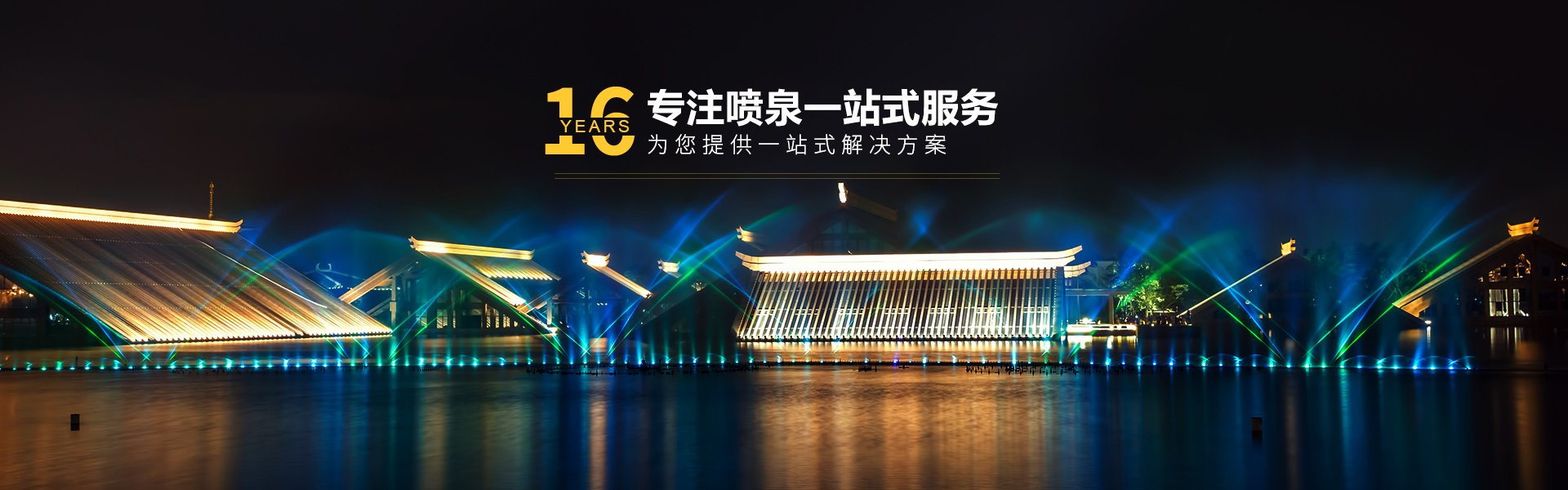



Large-scale musical fountains can be found in many places, with the control system being a key component. These fountains typically employ programmable control systems for operation. Designers of musical fountains need to understand the control characteristics of large-scale fountains to create effective designs. Musical fountains operate through real-time control systems, with larger fountains having more complex control systems. However, whether large or standard, both types of fountain systems play pre-programmed control programs along with music, which is the basic principle of the control system. Through the control system, various water shapes and lighting can be manipulated at will. Below, we will introduce the control features of large-scale musical fountains.
Large-scale musical fountains are commonly found in large squares, theme parks, and expansive lake surfaces. Electrical equipment includes pumps, lighting, sound systems, inverters, and distribution panels, with a total installed capacity of several thousand kW. Due to their intermittent operation, voltage fluctuations and interference are particularly severe, especially with the high-frequency and high-current inverters. Therefore, for real-time control of musical fountains, a master-slave control method is used, with the master controller installed remotely from the equipment control room, allowing for a panoramic view of the fountain for easy monitoring and control. The slave controller, which controls the electrical equipment, is directly installed on the distribution panel in the control room. The master controller typically uses a computer, providing multimedia technology, various text and graphic operation displays, and real-time monitoring of the slave controller. The slave controller employs a microcontroller, PLC, or industrial computer. However, considering anti-interference capabilities, harsh working conditions, and a good performance-to-price ratio, PLCs are generally preferred.
The control methods for musical fountains primarily include real-time control and program control. Musical fountains have low requirements for real-time control since the combination of lights and water shapes is limited, with many changes being regular and repetitive. Program control involves computers replacing manual operations to control sub-devices in real-time. Therefore, timing arrangements must be made for the music to be played and the corresponding lights. After debugging, the control timing is saved on the computer, and the music and corresponding control sequences are played during the official performance.
Introducing the control characteristics of large-scale musical fountains, we hope the related knowledge we've provided is helpful to you all. Should you have any questions, feel free to contact us for consultation. The control system for large musical fountains is quite complex, and as technology continues to advance, so does the fountain control system. We believe the synchronization issue with music will be resolved in the near future.