
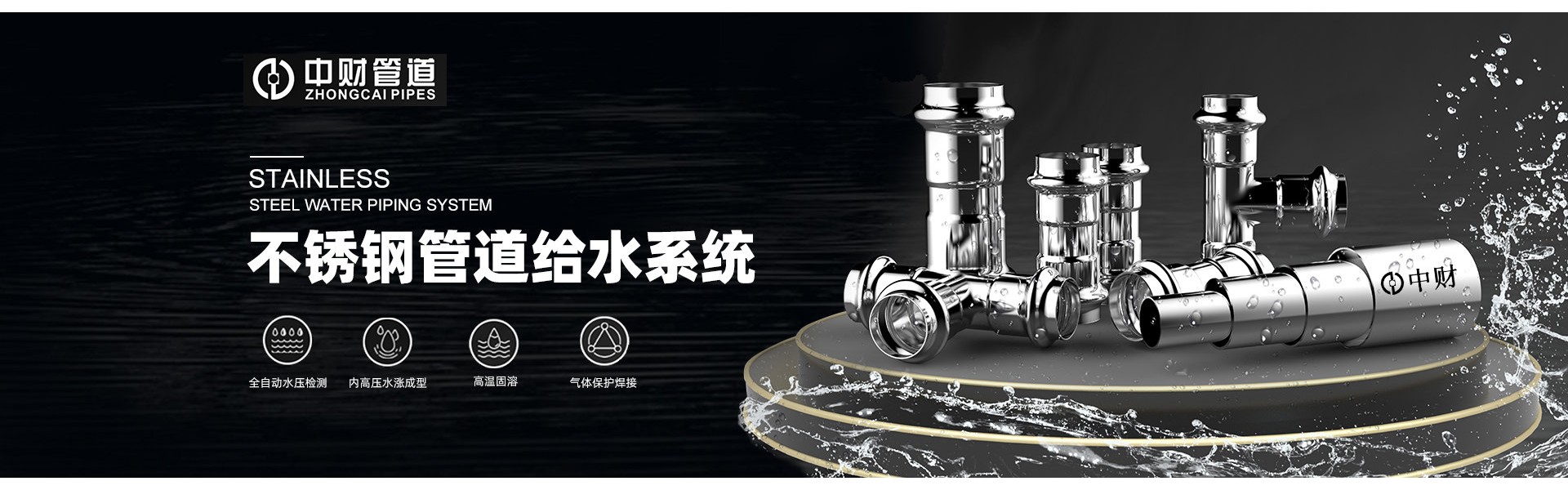


1. Clamp connections —— available in single clamp and double clamp types. Double clamp connections offer stability. They involve using radial contraction force (hydraulic crimping tool) to clamp the fitting tightly onto the pipe and achieve a connection effect through the sealing of an O-ring. These connections are easy to operate, have good sealing properties, and are not removable.
2. Radial Clamp Connection - Utilizes radial contraction force (hydraulic clamp) to secure the fitting onto the pipe and achieves the connection effect through a wide rubber gasket's sealing. It is removable, with the process of adding a rolling rib on the pipe end for installation; general in sealing, and cast pipe fittings are costly.
Welded Connections --- Utilizing thermal melting technology to fuse two connecting components, achieving the effect of connection. High connection strength; however, the gas shield for weld joints on-site is difficult to meet standards, leading to easy rust formation and directly reducing the lifespan of the pipeline. Installation quality heavily relies on the technician's skills, making it challenging to maintain consistent quality.
4. Self-locking connections – previously used for small diameter plastic hose connections, tool-free, and quick to install. The internal joints are prone to loosening and leakage, resulting in poor sealing.
