

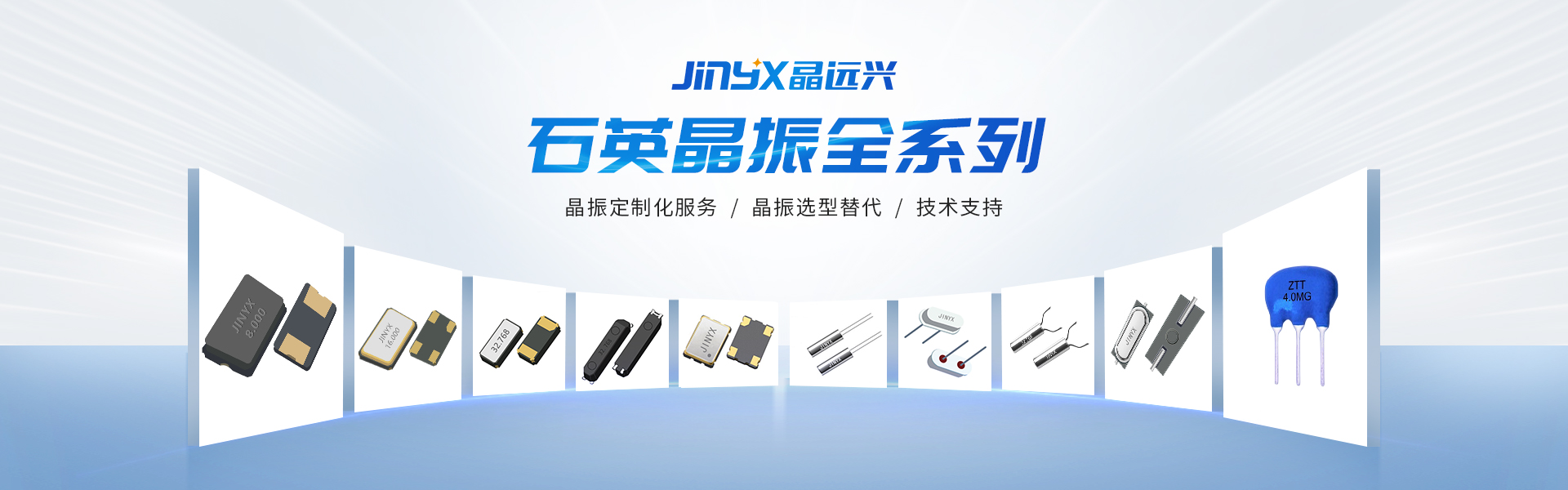

The active oscillator, also known as a crystal oscillator, is widely used in electronic products. Jingyuanxing Electronics provides a brief introduction to active crystal oscillators, including their applications, usage methods, and key parameters.
I. Introduction:
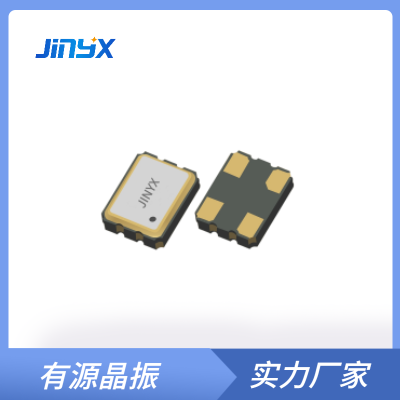
An active oscillator, also known as a crystal oscillator, is simply a general term for all voltage-carrying crystals. An active oscillator, in addition to the quartz crystal slice, also includes transistors and resistive-capacitive components, thus it is thicker than a passive oscillator. Its internal structure consists of: metal cover + silver-plated electrodes (quartz crystal slice) + IC + ceramic base + pad. It does not require an internal oscillator from the DSP nor does it need a complex configuration circuit; its signal level is fixed, so it only requires selecting the appropriate output level. Therefore, active oscillators are less flexible and more expensive.
Part Two: Usage and Classification:
Oscillator technology with power source requires higher standards and more stable performance, typically used in high-value products such as telecommunications, aerospace, and industrial control fields.
The oscillators can be broadly categorized based on their functions, including: Standard Precision Crystal Oscillators (SPXO), Temperature Compensated Crystal Oscillators (TCXO), Voltage Controlled Crystal Oscillators (VCXO), Temperature Compensated Voltage Controlled Crystal Oscillators (VC-ICXO), and Oven-Controlled Crystal Oscillators (OCXO).
Each differential crystal oscillator, with its unique waveform and parameters, offers distinct functionalities and applications. However, they all share excellent characteristics such as low power consumption, low current and voltage, and low phase jitter and phase noise.
III. Usage:
Different oscillator pin connections vary, but all will be specifically marked with the 1 pin. The functions and connections of the other pins can be referred to in the corresponding specifications. The common usage of an active crystal oscillator is: one pin floating, two pins grounded, three pins connected to output, and four pins connected to voltage. (The pin marked with a dot is the 1 pin, with the pin facing down, numbered counterclockwise as: 2, 3, 4.)

IV. Key Parameters:
Center Frequency: All oscillators have their own frequency, which is unique and singular.
2. Frequency Stability: Under nominal power and load, the allowable frequency deviation for operation within the specified temperature range, with or without an implied reference temperature.
3. Power Voltage: The common voltages for active crystals include 1.8V, 2.5V, 2.8V, 3V, 3.3V, and 5.0V. Note that high voltage can replace low voltage, but low voltage cannot replace high voltage.
4. Encapsulation Size: The size of the oscillator has evolved towards smaller, lighter, and thinner dimensions. Common sizes are (Length*Width mm) 7.0*5.0/5.0*3.2/3.2*2.5/2.5*2.0/2.0*1.6/1.6*1.2.
5. Output Modes: There are numerous output modes for oscillator, such as CMOS, TTL, Clipped Sinewave, LVPECL, LVDS, HCSL, each with its own unique waveform and application.
6. Operating Temperature Range: The operating temperature range for the active crystal oscillator is -40 to 85°C.
7. Phase Noise and Jitter: Phase noise and jitter are two different quantitative methods of the same phenomenon, serving as a true measure of short-term frequency stability.
8. Pull Range: The pull range is a parameter for VCXOs, representing the ratio of the change in frequency (increase or decrease) to the center frequency. This value is typically expressed in ppm. The pull range usually ranges from 100 to 200 ppm, depending on the structure of the VCXO and the selected crystal.
9. Aging Rate: Over time, the frequency values will change within the aging rate indicator.

Shenzhen Jingyuanxing Electronic Technology Co., Ltd. specializes in the research, production, and sales of quartz crystal oscillators, offering a range of products including temperature-compensated oscillators, voltage-controlled oscillators, standard active oscillators, passive oscillators, 32.768K clock oscillators, ceramic oscillators, and more. Our production equipment is state-of-the-art, with mature and stable processes, a comprehensive management system, and a professional and attentive service team. Welcome to inquire! Regarding active oscillators, what else would you like to know? Let's discuss it together!
