

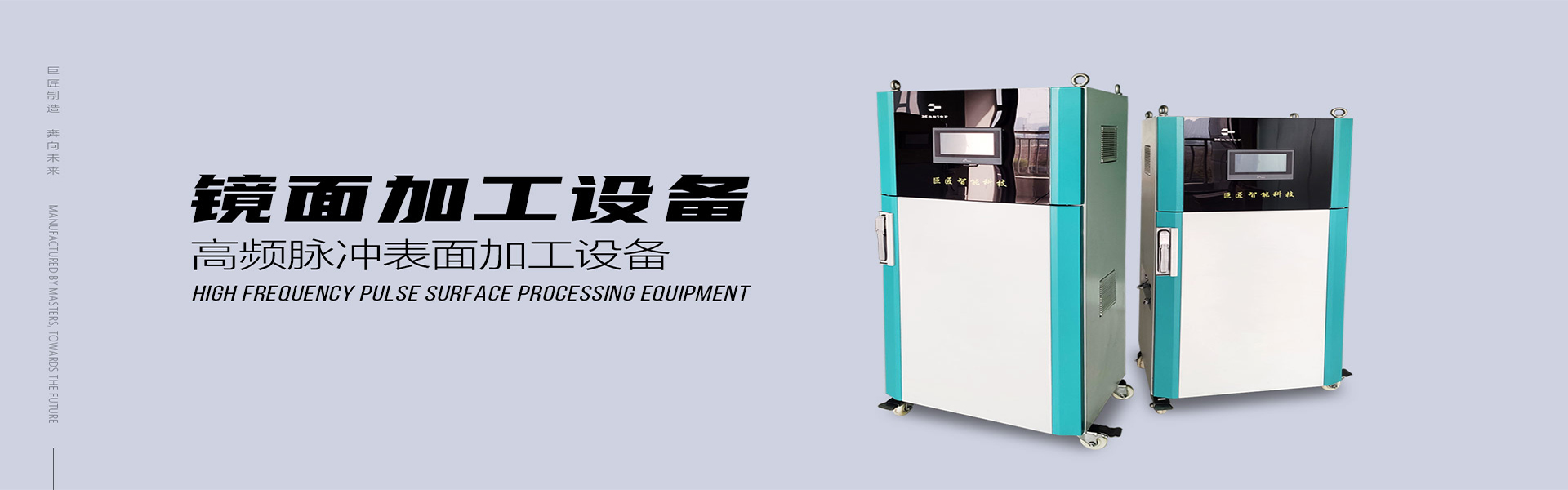


The excellent mirror polishing effect and efficiency of mirror processing equipment have been widely recognized in the industry, adopted as a national standard process. Now, let's introduce the usage of this mirror processing equipment. The equipment is based on traditional rolling devices, attached to a vibration source and related control software, causing the surface material of the rolling parts to be subjected to static pressure and influenced by the dynamic pressure effect generated by the impact source. The vibration rollers make material surface deformation easier, with a deeper rolling layer and higher residual pressure, resulting in better surface quality.
Superior mirror finishing effects and efficiency of the mirror processing equipment have been widely recognized by the industry and accepted as a national standard process. Now, let's introduce how to use this mirror processing equipment.
Mirror polishing equipment is based on traditional rolling devices, attached to vibration sources and related control software. This causes the surface material of the rolling parts to be subjected to static pressure, as well as the dynamic pressure effects generated by the impact source. The vibration roller makes material surface deformation easier, the roller hardening layer is deeper, the residual pressure is greater, and the surface quality is better.
Mirror finishing equipment, utilizing machine tool systems, can adjust the rotational speed of parts and the feed rate of the cutting disk. The cutting disk applies a certain preset static pressure and ultrasonic impact force to the surface of the workpiece being processed. By combining these two forces, the resulting force promotes elastic-plastic deformation of the part surface, thereby controlling the mechanical nanofinishing of metal surfaces.
Installing raw material workpieces on CNC lathes, while paying attention to fixture setup and alignment, installing the correct tools on the CNC lathe, usually selecting high-speed steel materials; editing the CNC program, and then carrying out rough and finish machining of the workpieces. The mirror finishing equipment can also be used when installed on standard vehicles.
After the precision finishing of the mirror polishing equipment is completed, it can be analyzed and tested. We need to ensure the processing accuracy of the workpieces and leave a 0.02mm machining allowance for the mirror polishing equipment. The management and operation methods of the mirror polishing equipment are simple. On a standard machine, after the basic size information of the workpiece is processed with a standard tool, there is no need to re-clamp. The ultrasonic mirror polishing process can be directly used for processing. Due to the elastic contact, the operating system is simple, and any operator who can operate the machine tool can perform the processing during the operation, easily achieving the mirror effect.
