
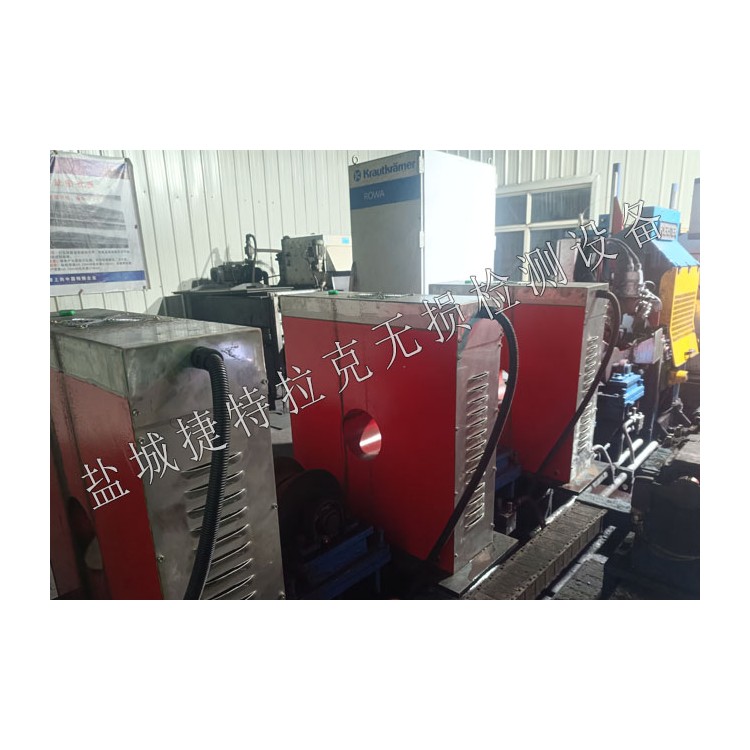
 Round Steel Demagnetizer
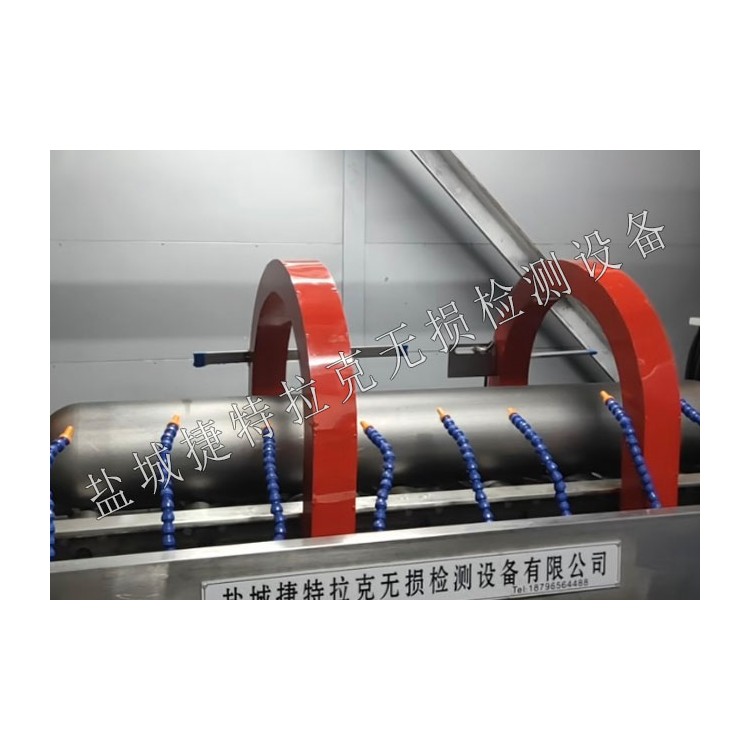 Magnetic Particle Inspection Machine for Steel Cylinders
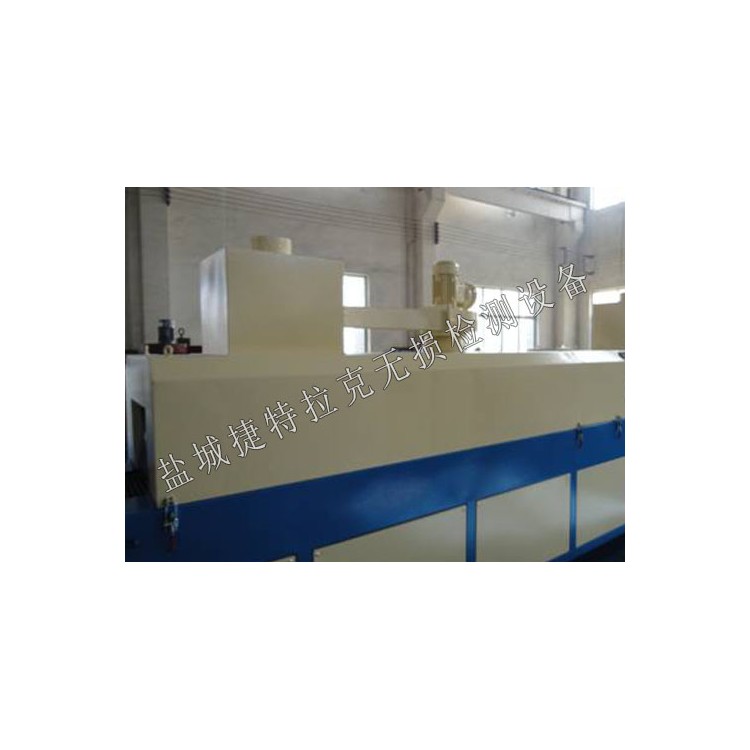 CTQ-III Chain Plate Cleaner
 Large Gear Inspection Machine
 Valve body flaw detector
 Harmonic Drive Component Magnetic Particle Inspection Machine
 Four-station screw automatic assembly line flaw detector
Product Details

Magnetic Particle Inspection Machine | Inspection Machine | Fluorescent Magne...



产品Price Negotiable
最小起订Quantity: 供货总Quantity:


Quality: |
|
Price: |
Bulk orders at discounted rates |
Phone: |
187-9656-4488 |

I. Technical Specifications:
1.1. Power Supply: Three-phase 380V±10% 50Hz
1.2. Power: 20 Kw
1.3. Inner Diameter: Approx. Φ600 mm x 600 mm
Demagnetization Effect: ≤0.3mT
1.5. Conveyance Method: Belt Conveyor Demagnetization: Trolley Demagnetization
Dimensions: approximately 800×600×1500mm
Total Weight: Approximately 600KG.
II. Working Principle:
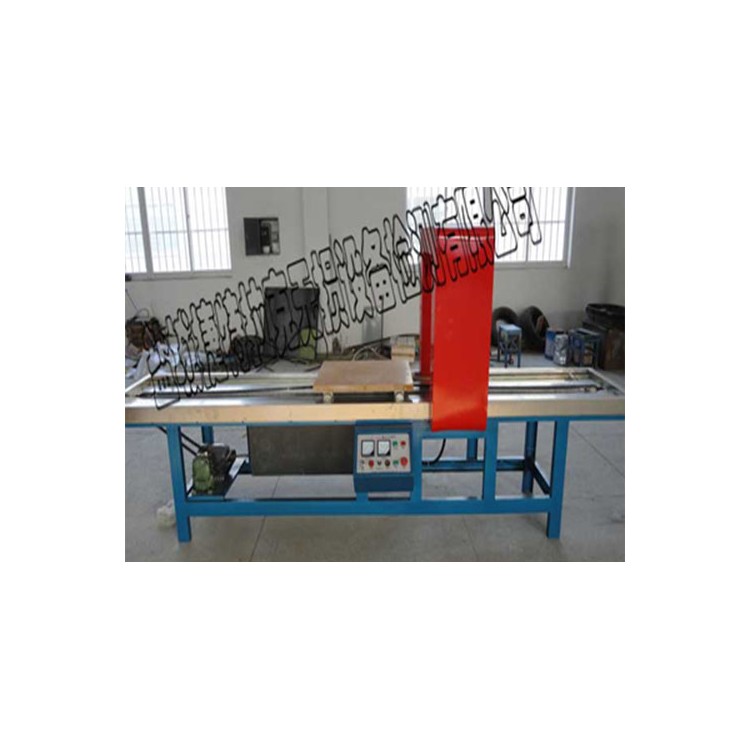
Special-purpose automatic degaussing machine for large workpieces is conveyor belt type. When using the degaussing machine, place the workpiece on the conveyor belt tray. As the degaussing coil is powered on, the motor and chain drive the workpiece on the conveyor belt into the degausser and gradually away from it. A strong axial magnetic field is generated within the coil, which changes with distance, thereby achieving the degaussing effect.
III. Equipment Composition:
3.1 The workpiece is sent into the degaussing coil via a conveyor belt for degaussing while keeping a distance from the workpiece, which can be combined with an inspection machine to form an inspection production line.
3.2 The demagnetizing coil is a major component of the equipment; as the workpiece gradually moves away from the coil, the demagnetization purpose will be achieved.
3.3 The control circuit consists of demagnetization switches, contactors, power indicators, etc., controlling the operation of the entire demagnetization equipment.
4. The Importance of Demagnetization Treatment:
After degaussing, the workpiece is completely free of magnetism, does not attract other ferromagnetic materials, and is easy to clean; it reduces residual stress, extending the life and surface finish of the workpiece. The wear resistance, durability, and fatigue resistance of the workpiece treated with magnetic processing are all significantly improved.
Demagnetization treatment technology is a new type of non-thermal processing technique for metal materials, which utilizes magnetic pulse processing to reduce the residual stress within steel workpieces, alter their dislocation structure and defect configuration, thereby enhancing the overall comprehensive mechanical properties of the workpieces. This demagnetization technology integrates electronics, ferromagnetism, and the study of metal materials, boasting a high level of technological content.
Demagnetizers are commonly used for degaussing permanent magnets (ALNICO, ferrite) and materials with low coercivity (hardware, mold steel, etc.).
Demagnetizers and degaussers available on the market come in various models and specifications, with different targets and varying effects.
V. The Demagnetizer's Demagnetization Principle:
Demagnetization involves placing the workpiece in an alternating magnetic field, which generates a hysteresis loop. As the amplitude of the alternating magnetic field gradually decreases, the trajectory of the hysteresis loop becomes smaller. When the magnetic field strength drops to zero, the residual magnetism Br in the workpiece approaches zero. The direction and magnitude changes of the current during demagnetization must be performed "in phase with the decay."
Demagnetization Methods and Demagnetization Equipment:
Demagnetization Communication
AC Demagnetization Method
For batch degaussing of small and medium-sized parts, it is best to place the parts on a degaussing machine equipped with tracks and trolleys. During degaussing, position the parts on the trolley, 30 cm in front of the coil. When the coil is energized, slowly move the parts through the coil along the tracks and away from the coil, at least 1 meter, before turning off the power. For heavy or large parts that cannot be degaussed on a machine, you can also wrap the coil around the parts, move it through the parts slowly while energized, and turn off the power at least 1 meter away.
B Attenuation Method
Due to the continuous reversal of AC direction, the demagnetization can be achieved by gradually reducing the current to zero using an automatic decay demagnetizer or a voltage regulator. This can be done by placing the workpiece inside the coil, between the two magnetizing clamps of the flaw detector, or by touching the workpiece with a rod contact and then decreasing the current to zero for demagnetization.
For welds on large pressure-bearing equipment, an AC electromagnetic yoke degaussing machine can also be used. Connect the two poles of the electromagnetic yoke across both sides of the weld, turn on the power, and move the electromagnetic yoke slowly along the weld. Disconnect the power after it is 1 meter away from the weld for degaussing.
DC Demagnetization
Workpieces magnetized by direct current can be demagnetized using direct current reversing decay or ultra-low-frequency current automatic demagnetization.
DC Reversal Demagnetization
By continuously reversing the direction of direct current (including three-phase full-wave rectified current) and gradually reducing the current through the workpiece to zero, demagnetization is achieved. The number of current decay cycles should be as high as possible (usually requiring more than 30 cycles), with each decay's current amplitude being as small as possible. If the decay amplitude is too large, the demagnetization goal will not be reached.
Ultra-low frequency current automatic degaussing
Ultra-low frequency typically refers to frequencies ranging from 0.5 to 10 Hz, suitable for degaussing workpieces that have been electromagnetized by three-phase full-wave rectification.
3. Heat-treated workpiece demagnetization
Heating the workpiece to a temperature above the Curie point is the most effective method of demagnetization, but it is neither economical nor practical.
Phone Consultation