
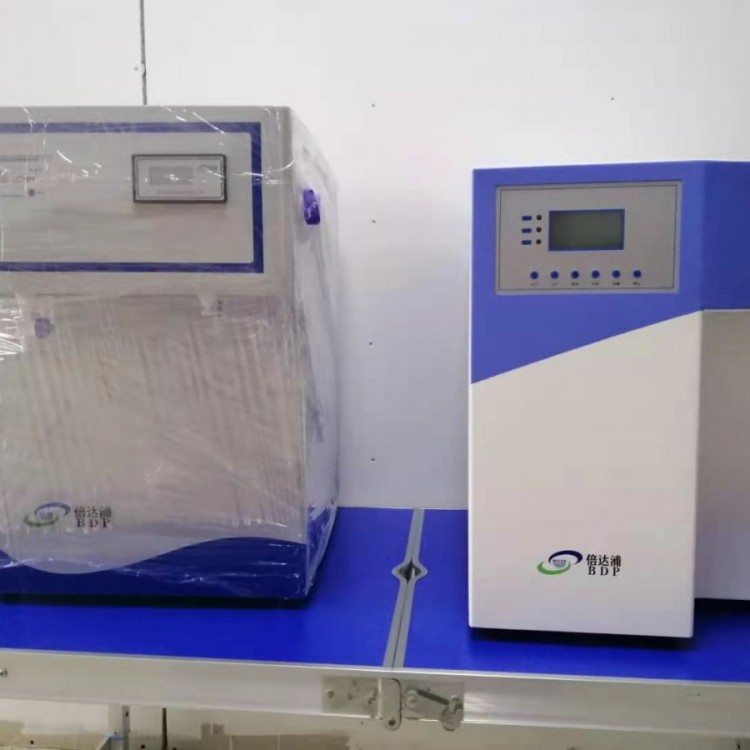
 Industrial Pure Water System, Replacement of Consumables for Pure Water Machines, Installation and Maintenance
 Environmental Monitoring Wastewater Treatment Equipment, Integrated Sewage Treatment Equipment, Acid-Base Neutralization, Pufilm Environmental Protection
 Direct Factory Sales - Medical Institution Laboratory Wastewater Treatment Equipment, Integrated Wastewater Treatment System
 Pufumei Environmental PMWE High Salinity Wastewater Treatment Equipment High Concentration Sewage Treatment Equipment
Product Details

Membrane separation products, membrane bioreactors, wastewater and废气 equi...



产品Price 30000.00/Tai
最小起订Quantity:1 Tai 供货总Quantity: 10000 Tai


 High-concentration Wastewater Treatment Equipment, Complete Organic Wastewater Treatment System, Integrated Submerged Equipment
¥40000.00
High-concentration Wastewater Treatment Equipment, Complete Organic Wastewater Treatment System, Integrated Submerged Equipment
¥40000.00
 Experimental Membrane Separation Unit Laboratory Membrane Concentration Equipment PMM-05 Pu Membrane Customizable
¥18000.00
Experimental Membrane Separation Unit Laboratory Membrane Concentration Equipment PMM-05 Pu Membrane Customizable
¥18000.00
 Pufumei Environmental Lab-Grade Ultra-Pure Water System, Vertical Ultra-Pure Water Equipment, Industrial Pure Water Production System
¥9000.00
Pufumei Environmental Lab-Grade Ultra-Pure Water System, Vertical Ultra-Pure Water Equipment, Industrial Pure Water Production System
¥9000.00
School's chemistry and physics laboratory wastewater treatment equipment includes a regulating pond Wastewater generated during the teaching process at schools is channeled into a treatment and regulation pool. It undergoes primary sedimentation pretreatment and water volume regulation using a filter screen, which removes larger suspended solids such as wood shavings. The filtered slurry is then pumped back to the factory for recycling, while the sediment is manually removed. 2. One sedimentation pond Wastewater is raised to the secondary sedimentation tank for further sedimentation. The incoming water temperature must be 30°C, and hot water is prohibited from entering the secondary sedimentation tank. Lime milk is added to adjust the pH to a neutral level. 3. Forecast Pool Adjust the inflow rate with the pump, ensuring it's neither too full nor too low. Maintain the water level below 1m from the ground and above 1m from the bottom of the pool, and facilitate the volatilization of organic gases in the water through aeration. 4. Secondary Sedimentation Basin Add flocculant (5% ferrous sulfate) for sedimentation treatment in the sedimentation pond, adjust pH to 10-11, and remove 60% of the suspended solids and color from the wastewater. 5. Triple Sedimentation Pools After settling, the supernatant is re-augmented with flocculant (polyacrylamide 1) and flows into the three-stage sedimentation pond for secondary flocculation and sedimentation treatment, removing 90% of the suspended solids and color from the wastewater. Most of the settled supernatant is recycled to the regulating pond, while a small portion flows into the biochemical system for treatment. The settled sludge is pumped into a sludge dewatering machine for drying. 6. Biochemical pond Wastewater entering the bio-sedimentation tank first flows into the anaerobic bio-sedimentation tank, where anaerobic bacteria oxidize the organic matter in the wastewater, removing 85% of the organic matter and bringing the water to an aerobic state. Some of the organic suspended solids decompose and settle, then enter the aerobic bio-sedimentation tank, where they are treated using the activated sludge process technology, achieving over 95% efficiency. Monitor the activated sludge in the aerobic pond daily to ensure normal growth of aerobic bacteria, guaranteeing the effluent meets discharge standards. Additionally, based on the daily water flow concentration and volume, add nutrients appropriately to maintain a carbon:nitrogen:phosphorus ratio of approximately 100:5:1. Seed 7. Four-stage sedimentation tank After aerobic treatment, the wastewater flows naturally into the sedimentation pond four times to separate sludge from water. After separation, the supernatant is reused by flowing into the recirculating adjustment pond, and on the other hand, decolorizing agents are added according to the effluent conditions to meet the discharge standards.


Phone Consultation