




- AllProduct Category
-
Rack Shelves
Overhead Racking
Slip-Sheet Shelves
Steel Pallets
Pallet Racks
Tightening Bracket
Warehouse Racks
Lightweight Shelves
Medium Shelves
Heavy Duty Racks
Mold Storage Shelves
Attic Shelves



详情描述
I. Basic Definitions and Core Functions
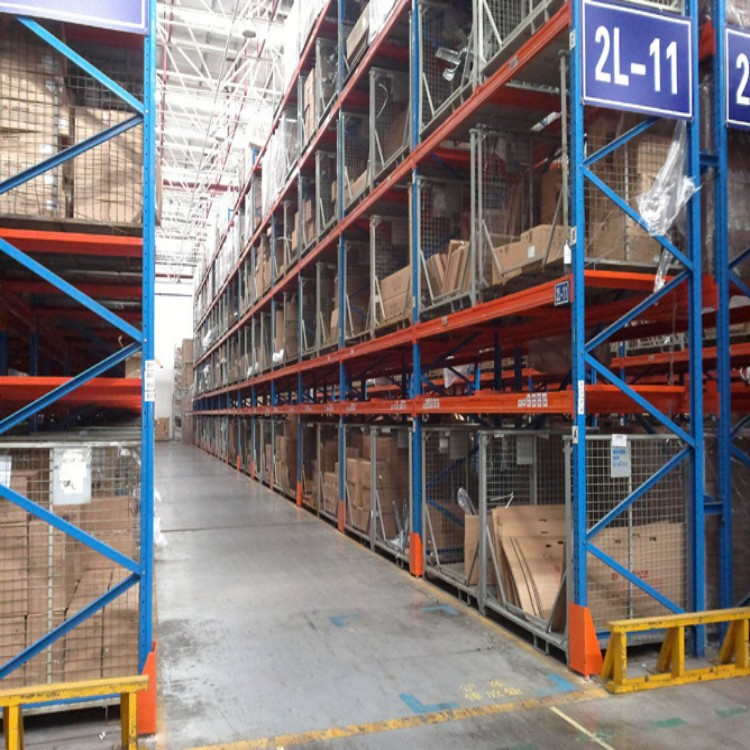
Rack beam shelves, also known as pallet racks or bin racks, are professional heavy-duty storage equipment that uses pallets as the storage unit. They form multi-tiered storage bays through the combination of beams and posts, enabling three-dimensional storage of goods. Their core function includes:
Palletized Storage: Each pallet corresponds to a single storage location, supporting mechanized retrieval (e.g., forklifts, stackers) to enhance operational efficiency.
Space Optimization: Single-layer height adjustable (usually in increments of 50-75mm), accommodating various cargo sizes, maximizing the use of vertical warehouse space.
High Load Capacity: Single-layer load range from 1000kg to 5000kg, catering to storage needs for heavy goods (such as mechanical parts, home appliances, automotive components).
II. Structural Composition and Materials
Pile System
Material: Cold-rolled steel, hot-rolled steel, or stainless steel, with a surface treated by spraying paint or galvanizing to enhance rust resistance.
Design: Poles have a cross-section made up of 11-13 faces, featuring a large moment of inertia and strong impact resistance; employs automatic piercing followed by cold bending forming technology to avoid cracks caused by stress concentration.
Adjustable feature: The column is pre-drilled with double rows of diamond-shaped holes, with a spacing of 50-75mm, allowing for free adjustment of the beam height.
Safety Equipment: Equipped with column guard feet and collision bars to prevent forklift collisions and deformation; top-mounted fixed devices enhance overall stability.
Beam assembly
Material: Cold-formed or hot-rolled steel shapes, such as H-beams, channel steel, and welded I-beams, etc.
Connection Method: Secured through a mechanical lock扣 structure (such as a safety pin, ear plate) to the uprights, ensuring the beam does not detach under external impact.
Design Load-bearing: The beams are made of specially designed P-shaped closed beams or double-plate welded beams, lightweight yet strong in bearing capacity, with a single beam capable of supporting up to 2 tons.
Ancillary facilities
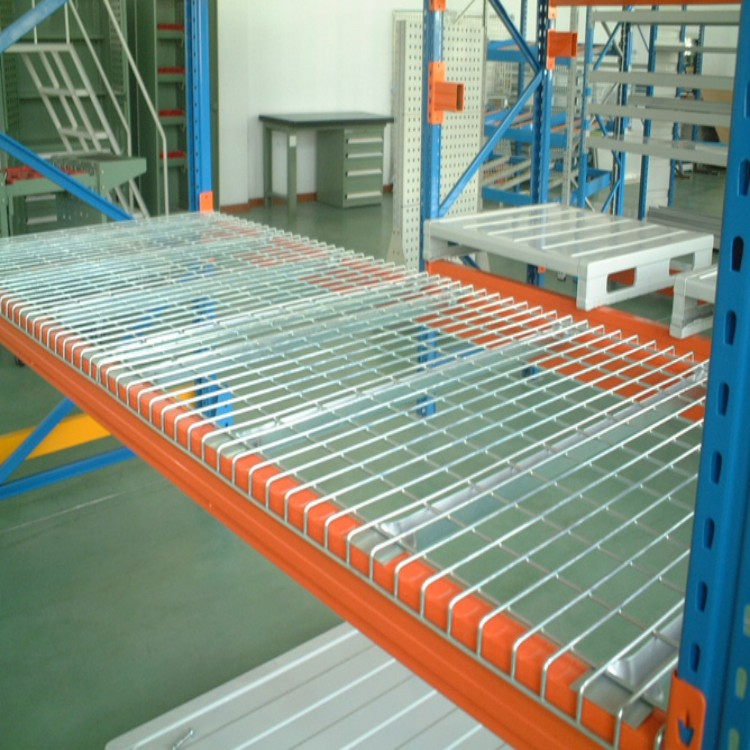
Shelving: Available with steel, dense ammonia board, or grid mesh, suitable for various pallet sizes.
Functional accessories: such as partitions, storage bin guides, oil drum racks, etc., to expand storage capabilities.
III. Features and Advantages
Efficient Storage and Retrieval
Goods Picking: Forklifts can directly access any storage position, supporting high-frequency incoming and outgoing operations, ideal for scenarios with a large number of SKUs and fast turnover.
Modular design: Shelves can be expanded horizontally or vertically to accommodate dynamic changes in warehouse size; adjustable shelf height for compatibility with various cargo dimensions.
Safe and reliable
Sturdy Structure: Columns and beams are connected with high-strength joints, featuring strong load-bearing capacity and excellent shock resistance.
Anti-slip and Damage-proof: Designed with deck boards or mesh to minimize the risk of goods slipping; layered storage to prevent compression, reducing loss rates.
Economicity and versatility
Low cost: Compared to other heavy-duty racks (such as drive-in racks), beam racks are more cost-effective and easier to install.
High compatibility: Supports various storage methods like pallets, cartons, and containers, compatible with forklifts, stackers, and other handling equipment.
Scalability
Composite system setup: Can be expanded from pallet racking to mold racks, mezzanine racks, and automated storage and retrieval system racks, catering to diverse needs.
Four: Application Scenarios and Industry Compatibility
Manufacturing
Store raw materials, components, and finished products, such as for mechanical manufacturing, automotive parts, and home appliance industries.
Logistics and Distribution
Product sorting, storage, and distribution, such as third-party logistics centers and e-commerce warehouses.
Wholesale and Retail
Manage various products, such as retail stores and wholesale warehouses.
Special Industry
Library/Archives: Stores books, documents, and archival materials.
Food and Beverage Industry: Store packaged food and beverage products.
Section 5: Selection and Installation Guide
Selection Points
Load Matching: Select shelves with appropriate carrying capacity based on the weight of the goods (single-layer load capacity of 1000kg-5000kg).
Size Customization: Determine the shelf levels and beam length by combining the warehouse height, forklift lift height, and product dimensions.
Material and Process: Prefer cold-rolled or hot-rolled steel columns, ensuring the surface treatment meets anti-rust performance standards.
Safety Devices: Verify the completeness of configurations such as column base guards, collision rods, and safety pins.
Installation Specifications
Site Preparation: Ensure the ground is level and free of debris, with ample space for operations.
Assembly Process: Secure columns according to design drawings, install beams and adjust for levelness, and add auxiliary facilities.
Acceptance Standards: Inspect the straightness of the shelves, the firmness of the connections, and stability to ensure there is no looseness or tilting.
Utilize and Maintain
Avoid Overloading: Use strictly according to the designed load to prevent structural deformation.
Regular Inspections: Check for bolt loosening, weld wear, and beam deformation monthly; repair or replace promptly.
Environmental Protection: Keep away from direct sunlight and humid conditions to prevent shelf corrosion.


