




- AllProduct Category
-
Rack Shelves
Overhead Racking
Slip-Sheet Shelves
Steel Pallets
Pallet Racks
Tightening Bracket
Warehouse Racks
Lightweight Shelves
Medium Shelves
Heavy Duty Racks
Mold Storage Shelves
Attic Shelves



详情描述
I. Basic Definitions and Core Functions
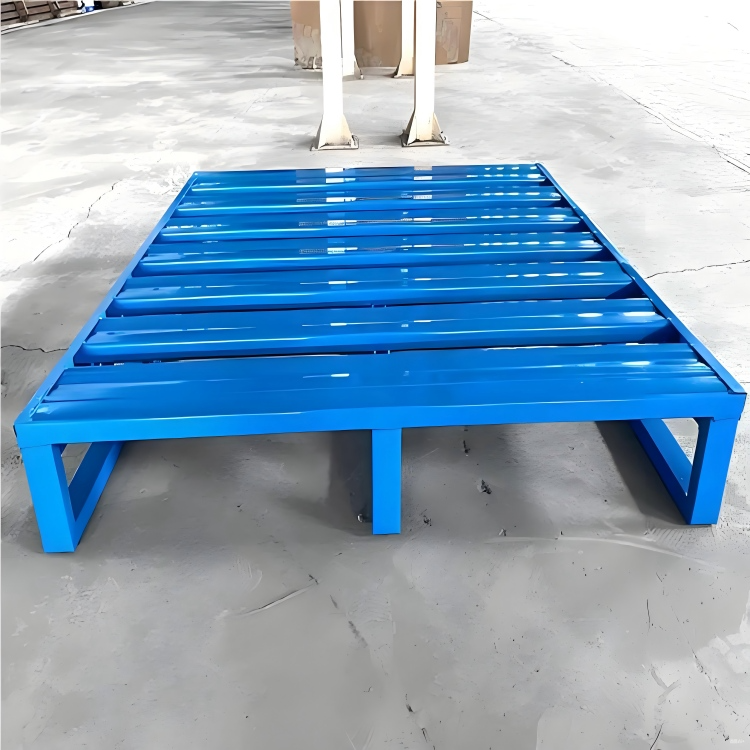
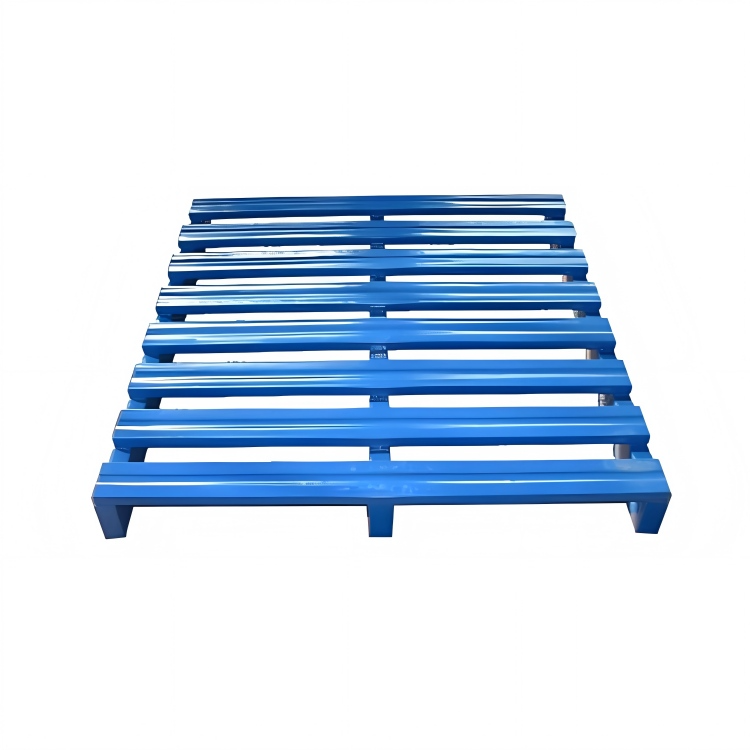
Steel Pallets, also known as metal pallets or iron pallets, are auxiliary storage and transportation equipment made from steel materials (such as Q235 steel) or galvanized steel sheets, through cold bending forming, riveting, and CO₂ gas shielded welding processes. Their core functions include:
Mechanical operation support: Compatible with forklifts, stackers, and other equipment for efficient loading, unloading, handling, and storage.
Unitized Storage: Serves as a cargo container unit, supporting ground stacking, shelf storage, and cargo turnover for intermodal transportation.
Environmental Protection and Standardization: Recyclable, compliant with international environmental regulations (no need for fumigation treatment upon export), and some models are designed according to ISO 6780 standards.
II. Structure Composition and Material
Basic infrastructure
Decking and Support: Single-layer decking is supported by longitudinal beams, pads, or legs, with height designed to accommodate forklift operations.
Lift Design: Available in two-way (bilateral) and four-way designs, the four-way design enhances space utilization and compatibility with automation.
Anti-slip and Edging: The surface is treated with anti-slip coating, and the edges are finished with edging technique to prevent goods from slipping off and getting damaged at the edges.
Material and Craftsmanship
Main Materials: Cold rolled steel plate, hot rolled steel plate, or stainless steel, with zinc coating for enhanced corrosion resistance.
Joining Process: Rivet connections reinforce structural stability, CO₂ gas shielded welding ensures welding quality.
Surface Treatment: Epoxy coating or electrostatic powder coating, enhancing corrosion resistance and cleaning convenience.
III. Features and Advantages
High load-bearing capacity and durability
Load Capacity: Dynamic load up to 2000kg, static load 3000kg, special design models can bear 1-3 tons on one side.
Service Life: High structural rigidity and strong impact resistance, with a service life of over 10 years.
Safety and Stability
Shelf Compatibility: High friction coefficient during use, preventing slippage under load, ensuring safety.
Structure Reinforcement: Interlaced reinforcing ribs on panels and linings, reinforced treatment on all sides of the support legs, evenly distributed load.
Environmental protection and economic efficiency
Recyclability: Recyclable and meets international environmental standards.
Cost-effectiveness: Compared to wooden pallets (prone to termite infestation, require fumigation) and plastic pallets (limited wear resistance), steel pallets offer a lower long-term cost of use.
Flexibility and customization
Custom Sizes: Available for customization according to forklift fork length, cargo dimensions, and storage requirements, with lengths such as 800mm, 1000mm, 1200mm, 1400mm, as well as widths and heights.
Structural Expansion: Supports the addition of I-beam reinforcing grooves, guardrails, and other accessories, compatible with automated systems (such as conveying rollers, automatic packaging).
Section 4: Application Scenarios and Industry Compatibility
Manufacturing
Automotive/Machinery Industry: Store complete vehicles and parts (such as engines, tires).
Electronics/Home Appliance Industry: Transporting precision equipment (such as computers, televisions).
Hardware/Mold Industry: Storage for stamping parts, die-casting parts, and molds.
Logistics and warehousing
Refrigerated Logistics: Withstanding low-temperature environments, suitable for cold storage facilities.
Pallet Racking: Four-way forklift design optimizes automated storage and retrieval efficiency.
Combined cargo transport: Compatible with container shipping, enhancing space utilization (e.g., grid-style pallets support high-level stacking).
Trade and Public Facilities
Mall: Stores products and supports rapid restocking.
Transport Hub: For the handling of cargo at stations, ports, and postal systems.


