
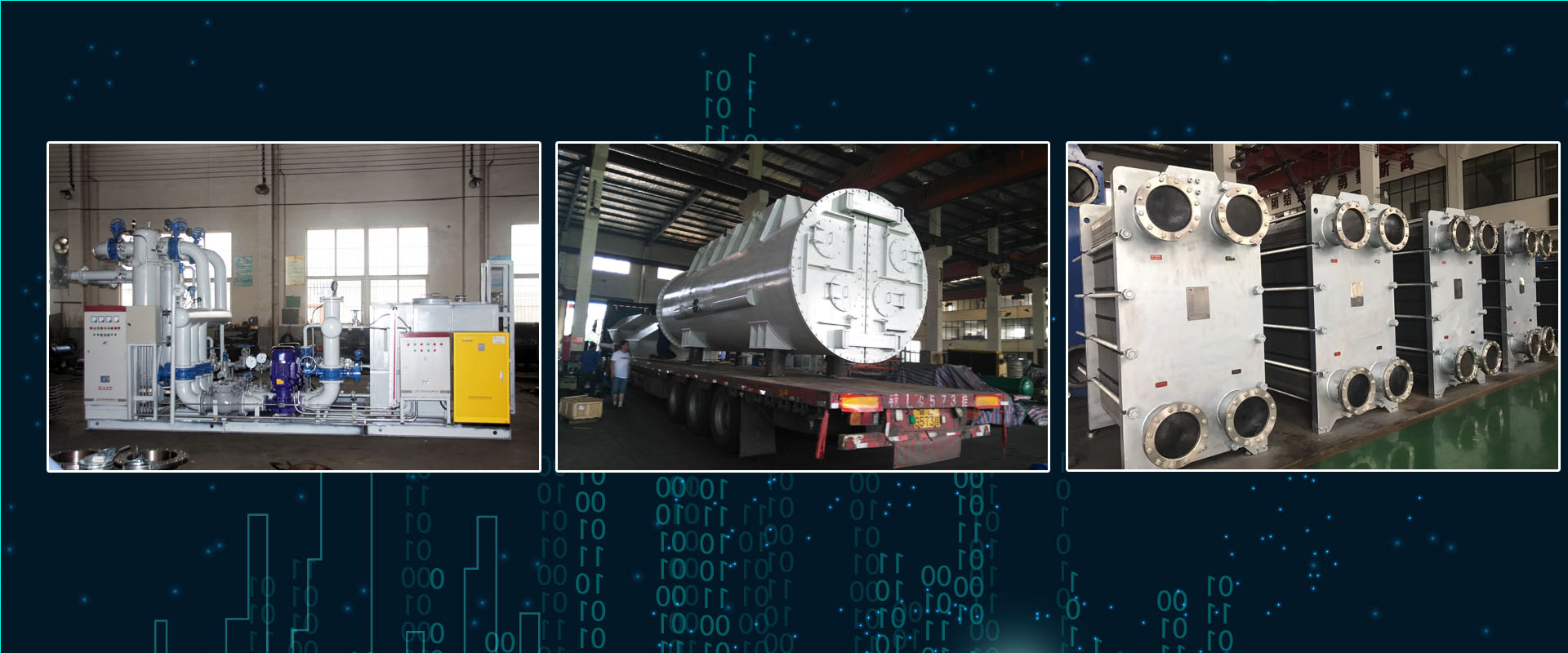


Tubular coolerAfter long-term operation, surface soiling can accumulate, increasing thermal and flow resistance, thereby gradually reducing heat exchange performance to the point where cooling requirements cannot be guaranteed. Therefore, our focus in maintenance should be on dirt removal. How should a long-term used tubular cooler be cleaned? Here, Yuanwang Heat Exchange introduces several cleaning methods for you:
(1) Mechanical Method
The company has adopted an electric pipeline cleaning tool, which is driven by an electric motor to rotate a flexible shaft. The shaft end is fitted with a nylon brush or wire brush for rotation cleaning. Water is injected around the shaft through a leak-proof cover to promptly flush out dirt.
b. Using a round tube, one end fitted with a wire brush of a diameter similar to the tube's inner circumference, the brush is rotated and pushed forward while in use. The dirt can accumulate within the tube's interior, preventing a buildup that would make the pushing process more difficult. This method is commonly used, although it is labor-intensive.
(2) Utilizing high-pressure pumps (pressures ranging from 10 to 20 MPa) to spray high-pressure water for cleaning yields good results, mainly used for inter-tube cleaning.
(3) The automatic cleaning of heat exchange tubes is achieved using sponge balls. Different hardness sponge balls are utilized depending on the type of scale. For particularly hard scales, a sandblasting sponge ball can be employed. Its function is to use a softer and more elastic sponge ball to enter the heat exchange tube, where it compresses and uniformly contacts the inner wall of the tube. As the ball moves relative to the tube wall, it continuously rubs against it, removing the deposited material.
(4) Chemical Cleaning Method:
a. The oil-side cleaning can be performed using a trichloroethylene solution in reverse circulation, ensuring the solution pressure is below the rated working pressure. The cleaning time for the tube-type cooler depends on the level of dirt, followed by introducing clean water into the cooler for rinsing until the water draining out is clear.
b. Employ carbon tetrachloride immersion. Pour the solution into the cooler and observe the color after 15-20 minutes. If the solution is severely contaminated, replace the liquid with a fresh batch and reimmerse until the流出 solution resembles a clean color. Then, rinse repeatedly with clean water. This cleaning method should be performed in a well-ventilated area to avoid intoxication.
News Center Co., Ltd.
