
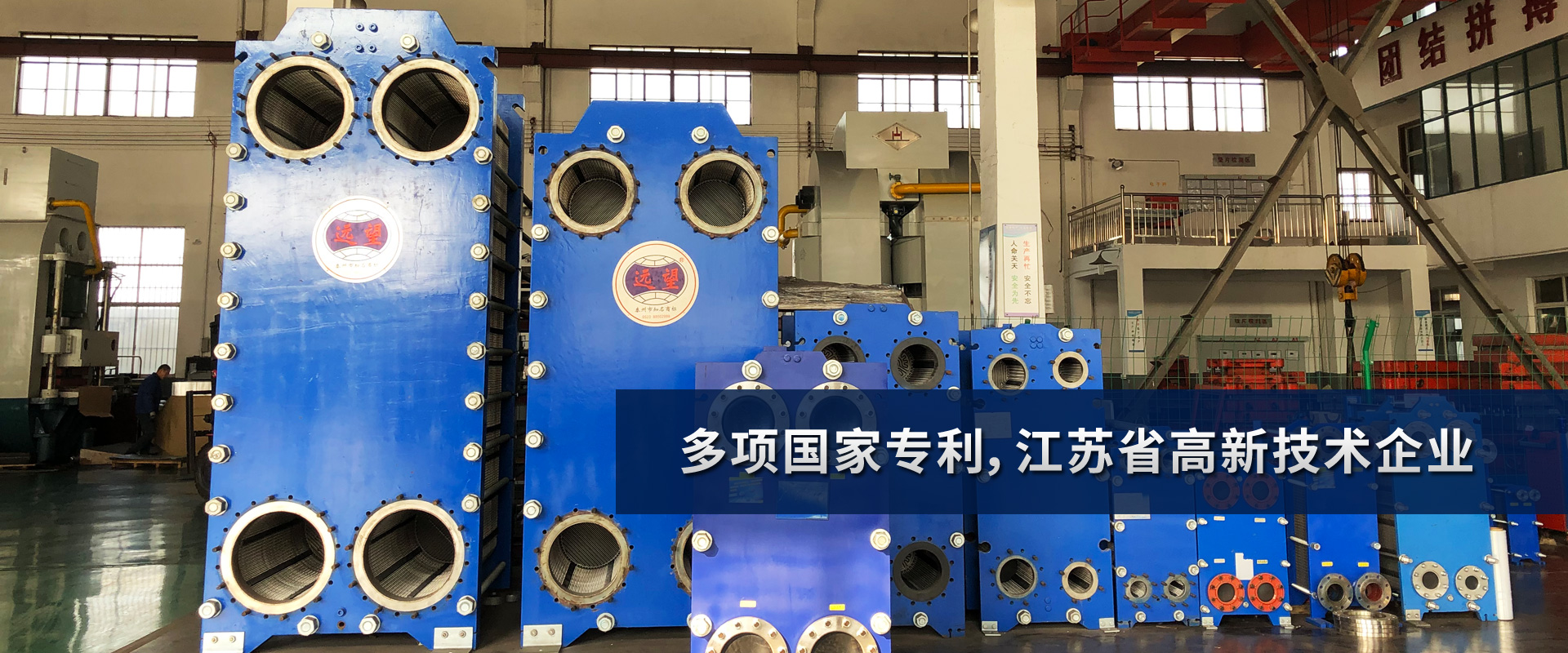
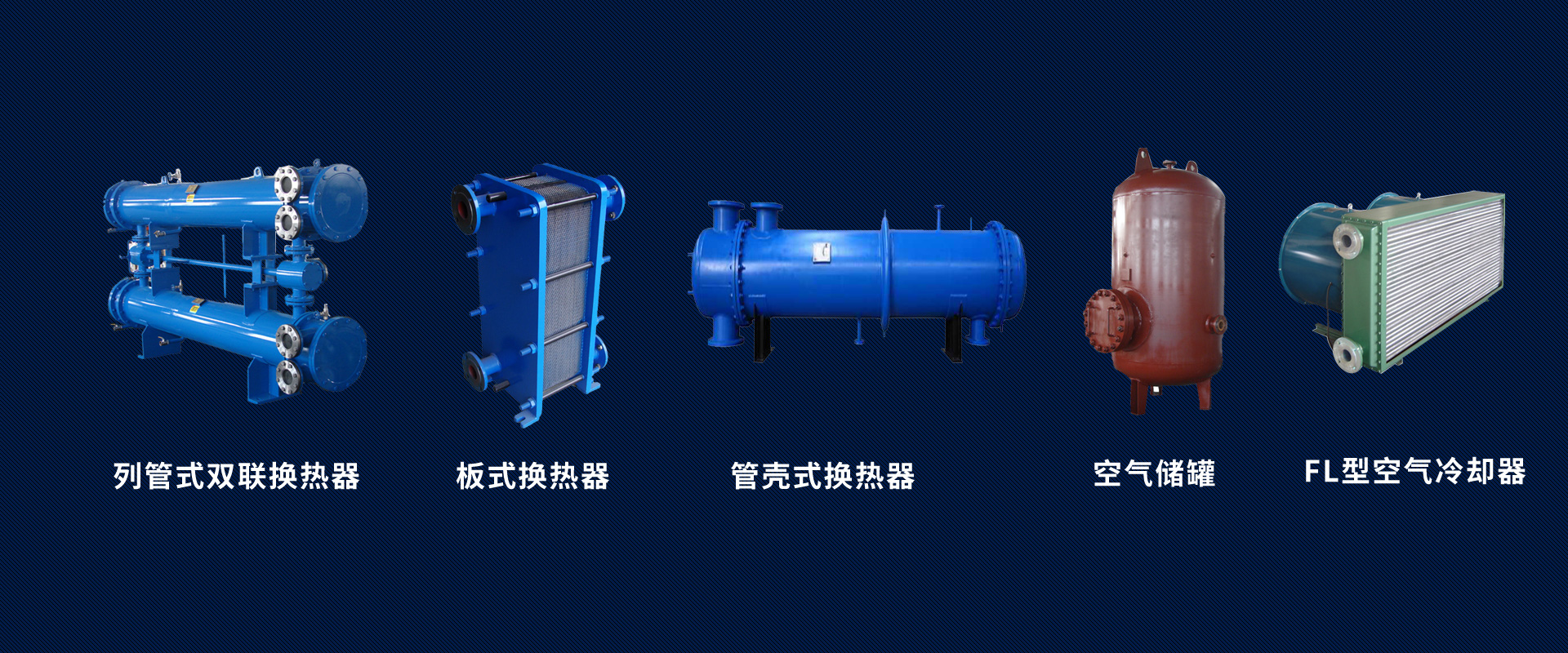

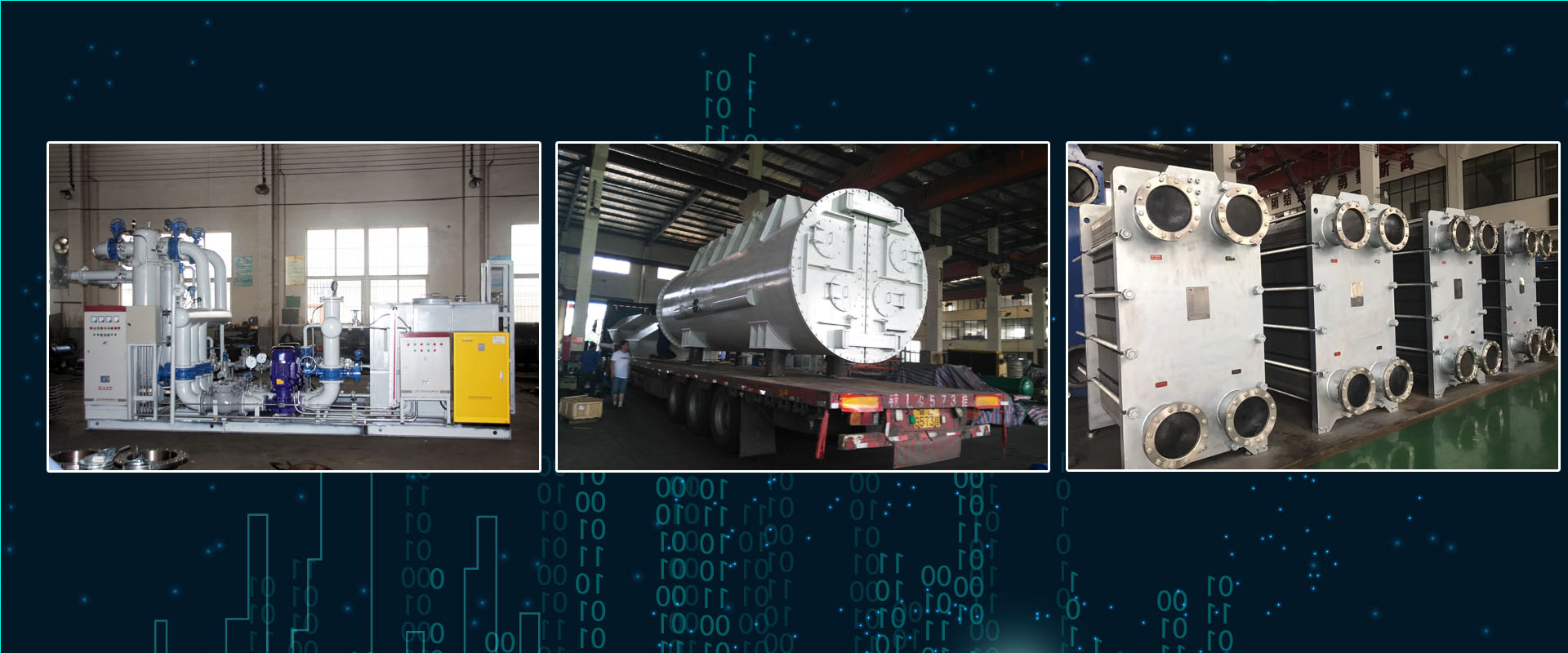


As industry technology continues to mature, the application scope of plate heat exchangers in industrial production is expanding. Looking back over the past few years, ...Plate Heat ExchangerThe market applications of our products have expanded to cover fields such as food, machinery, metallurgy, chemicals, oil, electricity, and centralized heating, achieving favorable application results.
As a professional manufacturer of heat exchange equipment, Yuanwang offers a brief analysis of the application of plate heat exchangers in the alcohol production process, in order to further promote the development of the equipment in the brewing industry.
(1) Cooling of Distiller's Grains Centrate. The distiller's grains centrate is the clear liquid separated from the distiller's grains at the bottom of the crude distillation tower, with a temperature of 80-82°C. Due to the high temperature, there is a significant loss of enzyme activity. Therefore, it must be cooled first through a plate heat exchanger.
(2) Secondary Steam Recovery from Fermented Juice. The secondary steam from the fermented juice is considerable. By using plate heat exchangers, this heat can be recovered and used to heat process water, condensate from the secondary steam in the evaporation section, and the centrifugal liquid from the distiller's grains, effectively saving energy.
(3) Cooling the fermentation broth. Traditional fermentation processes often employ serpentine coolers to spray cool the fermentation tanks, but this method consumes a large amount of water and is difficult to maintain. In recent years, some distilleries have adopted plate heat exchangers for cooling the fermentation broth, which has proven to be effective with no blockage issues observed.
(4) Condensation of Alcohol Vapor at the Top of a Distillation Tower. In 1985, Shanghai Alcohol Factory introduced a plate heat exchanger for the condensation of alcohol vapor in a rectification tower with an annual production capacity of 5,000 tons. This not only recovered waste heat but also saved water usage. According to actual production operation tests, the plate heat exchanger had lower resistance than the original shell-and-tube heat exchanger, with the tower top pressure less than 0.03 MPa, and the rectification system operation was unaffected.
(5) Cooling of 95% alcohol products. The cooling water consumption using plate heat exchangers is only 1/3 of that using coil-type heat exchangers, with a significant improvement in efficiency. Additionally, plate heat exchangers require less floor space.
(6) Final Product Cooling of Anhydrous Alcohol. For manufacturers of anhydrous alcohol, the cooling of the finished product should ideally be done using a plate-type stainless steel heat exchanger.
(7) Spiral plate heat exchangers replacing the saccharification mash. Due to the high concentration, viscosity, and solid content of the saccharification mash, it is necessary to design a large-scale plate heat exchanger with low pressure drop, wide spacing, and resistance to clogging when cooling the mash, taking into account the material properties.
Due to the limited application time of plate heat exchangers in the brewing industry and insufficient experience, the promotion and popularization of the equipment has been relatively slow. Experts suggest that heat exchanger manufacturers should design new plate heat exchangers with high thermal transfer efficiency, compact structure, flexible operation, and easy cleaning, tailored to the production characteristics of the brewing industry. This would enhance their suitability in the alcohol sector and thus expand the application scope of plate heat exchangers.
News Center Co., Ltd.
