
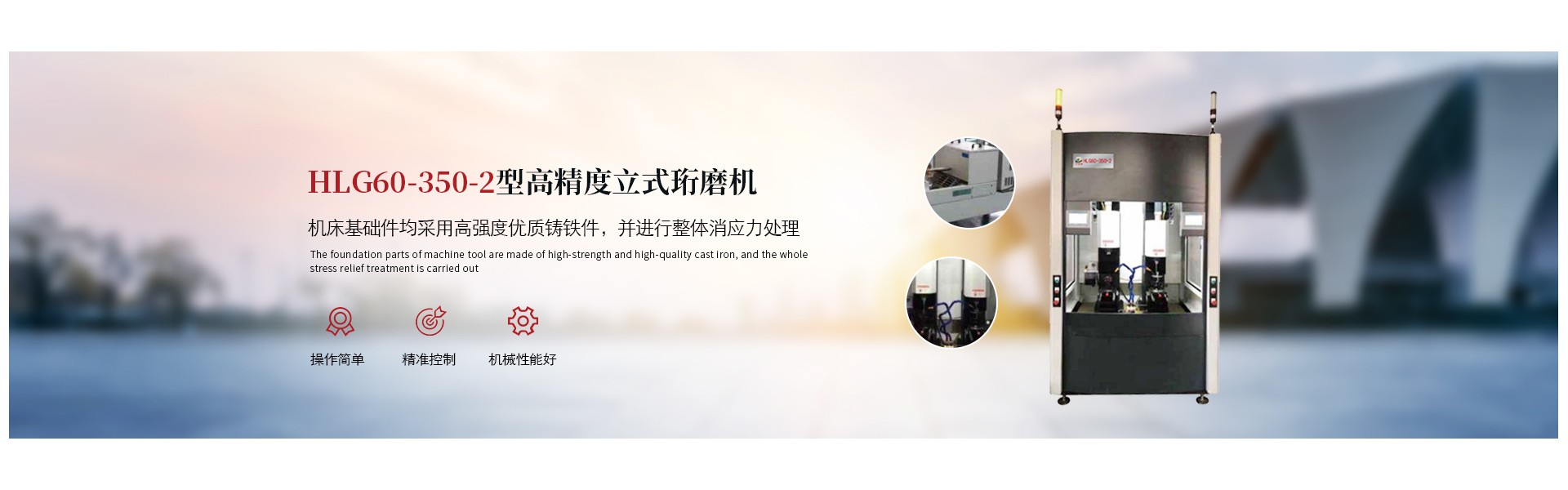





The machine tool for the honing machine features a variable-frequency motor and inverter to control the spindle's variable-speed rotation. The reciprocating and feeding movements of the honing machine are controlled by servo motors, allowing for variable-speed reciprocation. The reciprocating stroke positions are accurate and precise, enabling the honing machine to pause locally at specific positions for localized honing. The spindle feed system, driven by the servo motor, provides high-precision, quantitative feeding, ensuring accuracy and reliability. It can automatically compensate for feed, used for surface honing processing of related workpieces. Meanwhile, the honing tool or workpiece performs relative rotation and axial linear reciprocating motion simultaneously.
During the machining process, the abrasive stone of the honing head is radially fed under the action of the expansion and contraction mechanism, gradually processing the workpiece to the required size. Honing machines are mostly semi-automatic and often equipped with automatic measuring devices, allowing them to be integrated into automated production lines. In addition to hole honing machines, there are also external cylindrical honing machines for other surfaces, bearing raceway honing machines, flat honing machines, and curved surface honing machines, all of which enable honing. The feeding methods of honing heads are primarily divided into quantitative feeding and constant pressure feeding. During quantitative feeding honing, the feeding mechanism expands at a constant speed, forcing the abrasive particles into the workpiece. When the abrasive stone becomes blocked and the cutting force decreases, the feeding rate exceeds the actual amount of material being honed, causing the honing pressure to increase, leading to the detachment and fracturing of abrasive particles, enhancing the cutting action. In constant pressure feeding, due to the uneven surface of the workpiece, it is necessary to adjust the honing head's feed rate in real-time to ensure that the workpiece is subjected to a constant honing force.
