


The canopy of the bus stop shelter is too narrow, failing to provide adequate sun and rain protection; during the rainy season, passengers waiting can get wet.
• The signage is too small and not within the visual range when standing.
• 3. Some bus stops are too small, causing congestion when too many people are waiting for the bus.
• 4. Some bus line signboards lack lighting or have dim lights, making it difficult to see the directional text.
• The signboard is cluttered with too many advertisements, which is not only unattractive but also makes people feel oppressive.
• 6. Some platforms lack seating, which has caused much inconvenience for travelers carrying rice and children, especially for those with women.
•7. There are no trash bins near the waiting station, resulting in delayed waste disposal.
•8. No special consideration was given to the needs of blind passengers, etc.
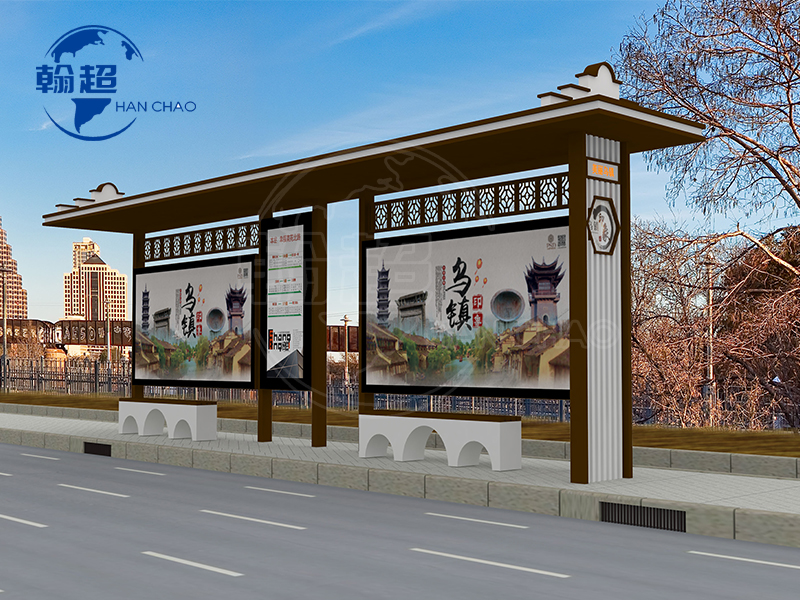
Principles for Optimizing Bus Shelter Design
• Overall: Provide waiting locations for passengers.
•2. Platforms: Remind train schedules, indicate the direction of travel, and label the platform name (font size, clarity); different train schedules have varying order of information.
• 3. Ceiling shade: Provides convenience for passengers to seek shelter from severe weather conditions such as rain, snow, wind, thunder, and hail.
• 4. Seat Rest: Provide a brief rest environment for passengers who may feel tired and uncomfortable during longer waiting times due to a high number of passengers.
• 5. Lighting: In poor light conditions or at night, appropriate lighting is needed to allow those in need to see clearly, reduce visual fatigue, and simultaneously enhance the environment's aesthetics.
• 6.垃圾 Can: Collects passengers' litter while waiting for the train, maintaining a clean waiting area and protecting the natural environment.
•7. Mobile TV: Reporting news, promoting science, introducing knowledge, enriching life.
• 8. Screen: Provides attractions tips, city transportation routes, and weather conditions for visitors.
• 9. Monitor: A gathering spot for bus station attendants, where accidents occur slightly more frequently; records the usage of the platform for easier handling after incidents.
•10. Color: A color palette that coordinates with the surrounding environment.
•11. Overall Structure: Utilizes an open spatial composition;
•12. Materials: Utilizing durable and easy-to-clean materials such as stainless steel, aluminum, and glass.
