



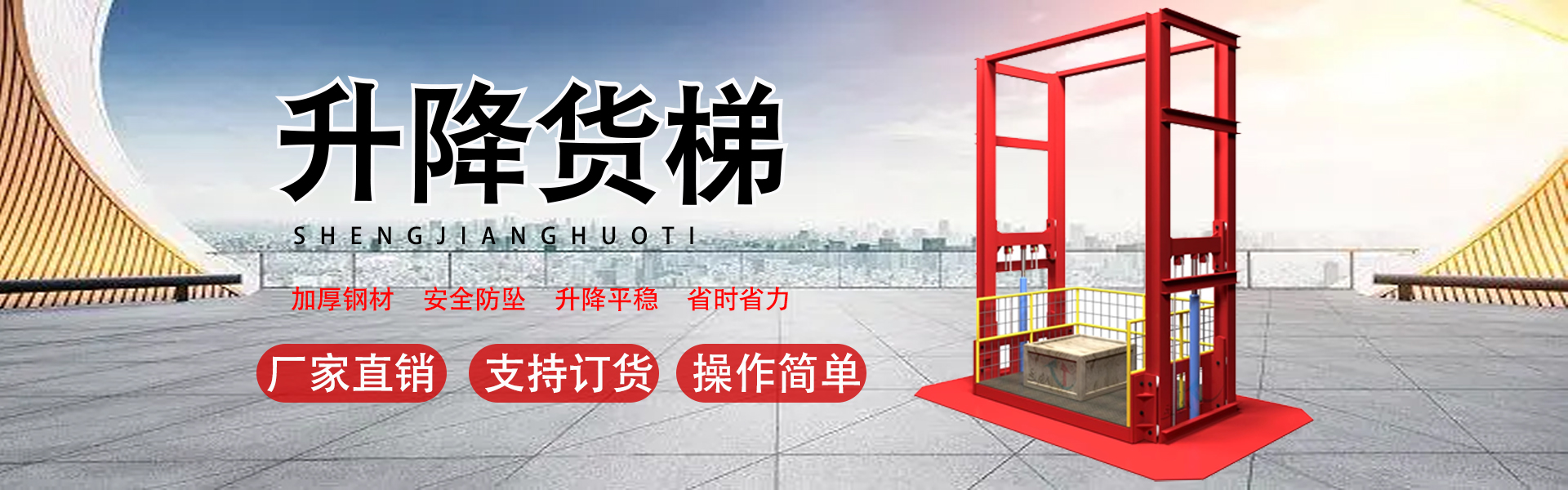


Hydraulic lift platforms primarily operate through the transmission of pressure by hydraulic oil, enabling lifting and lowering functions. Their scissor mechanical structure ensures a high degree of stability during lifting, coupled with a spacious work platform and high load-bearing capacity. This allows for a broader range of high-altitude operations and is suitable for simultaneous work by multiple people. It enhances the efficiency of high-altitude work and provides greater safety assurance. What issues may arise after the installation of a hydraulic lift platform? The following points outline potential problems:
A leak occurred due to loose parts, vibration, and heat in the machinery. The sealing surfaces and pipe joints of the machine can leak. Some defects, such as casting and machining, are difficult to detect during assembly and debugging. However, due to vibration and impact during operation, these defects are exposed, manifesting as oil (or water) leaks. Therefore, leaks are more likely to happen during the磨合 period.
2. Poor lubrication can occur due to the smaller clearance in newly assembled parts, and the difficulty in ensuring uniformity of this clearance due to assembly reasons. This makes it hard for lubricating oil (grease) to form a uniform film on the friction surfaces, thus failing to prevent wear. Consequently, lubrication efficiency is reduced, leading to early abnormal wear of the parts. In severe cases, it can cause scratches or binding on the precision mating friction surfaces, resulting in failure.
3. Looseness has occurred, with newly machined and assembled parts exhibiting deviations in geometric shape and mating dimensions. In the early stages of use, due to the effects of alternating loads such as impacts and vibrations, as well as factors like heat and deformation, combined with excessive wear, it is easy for the originally tight-fitting parts to become loose.
4. Rapid wear. Due to factors such as the machining, assembly, and adjustment of new machine parts, the friction surfaces are rough, the contact area of the mating surfaces is small, and the surface load distribution is uneven. During operation, the convex and concave parts of the parts interlock and abrade each other, with the fallen metal shavings acting as abrasives to further accelerate the wear of the mating surfaces. Therefore, parts (especially mating surfaces) are prone to wear during the磨合 period, with rapid wear rates. At this time, if overloading occurs, it may lead to component damage and early failure.
5. There are numerous operational errors. Due to insufficient understanding of the machine's structure and performance, especially for new operators, malfunctions and even mechanical accidents can easily occur due to operation mistakes.
