
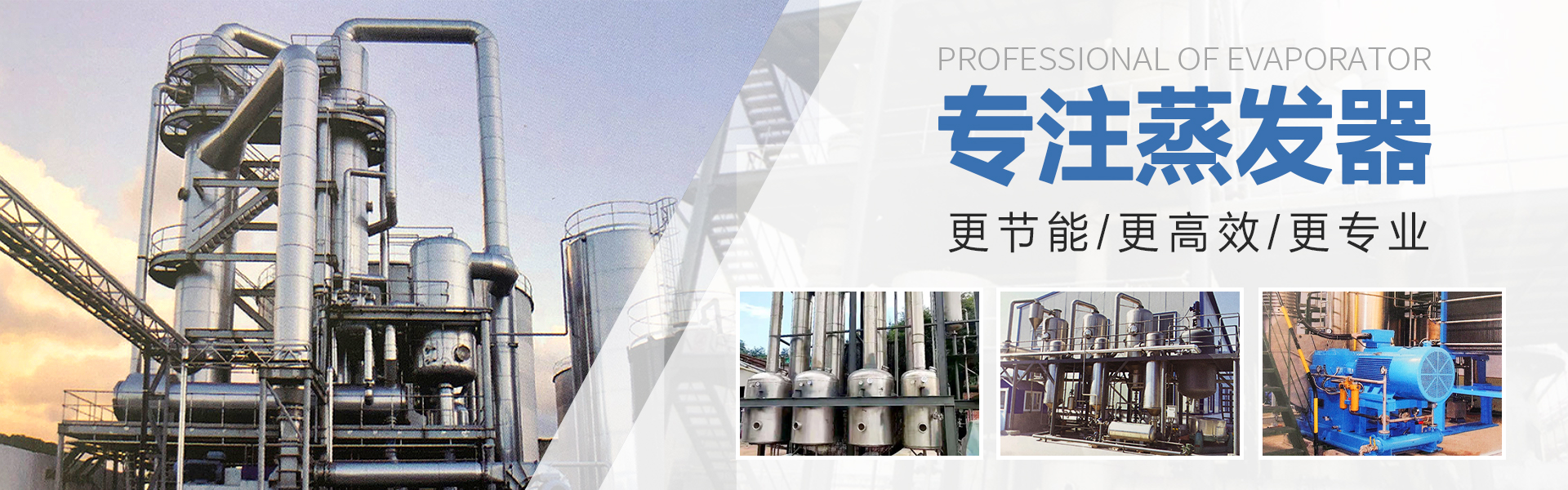
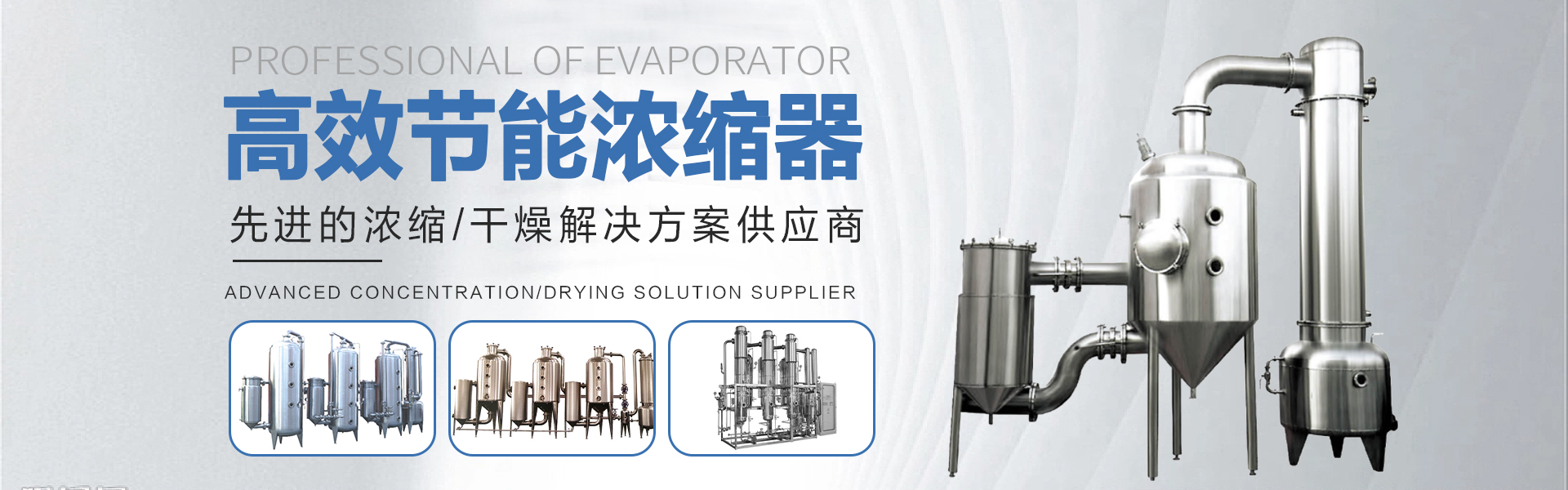

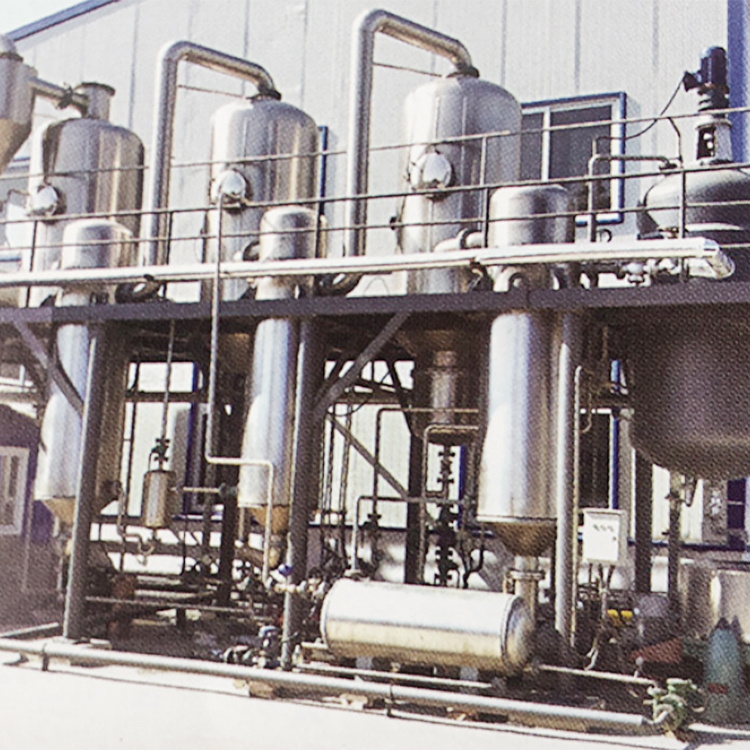
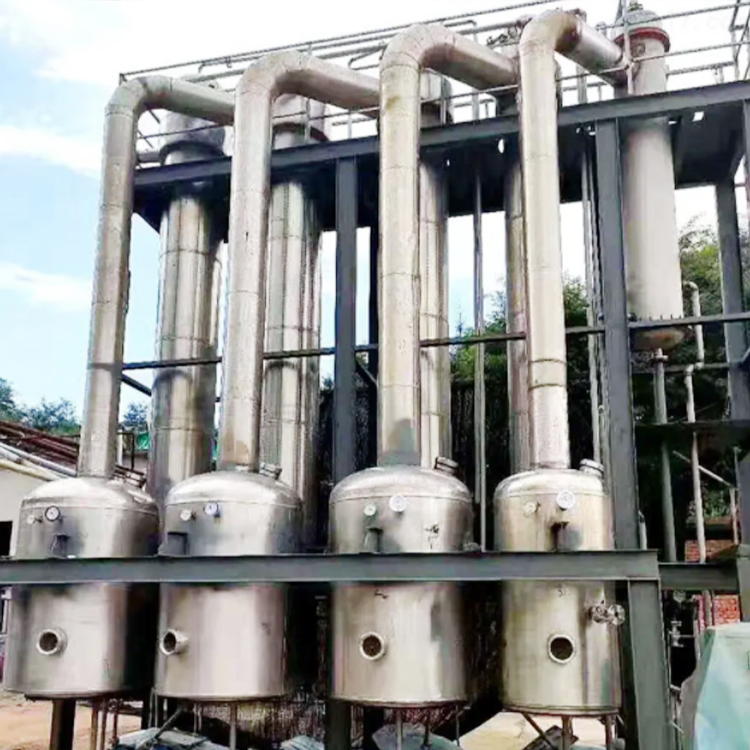
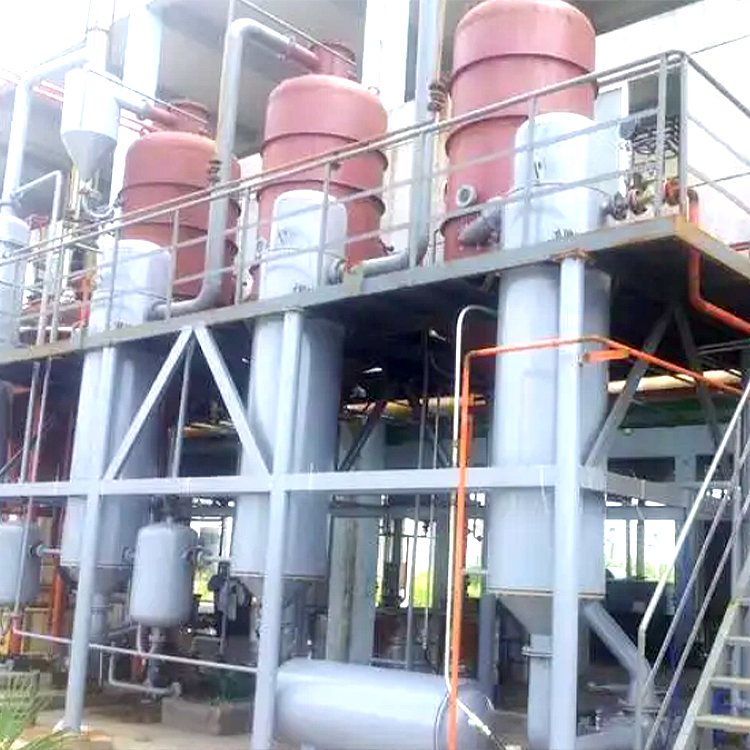
※The triple-effect evaporator can save heating steam. Each evaporator is referred to as a stage. ※Common types include double-effect, triple-effect, and quadruple-effect evaporators, etc.
※Evaporation is a process that uses heating to vaporize and remove part of the solvent from the solution, thereby increasing the concentration of the solution and promoting the precipitation of the solute. ※The necessary conditions for the evaporation process are the continuous supply of heat energy to the solution and the continuous removal of the solvent vapor produced.
Continuous evaporation operations can be regarded as intermittent heat transfer with constant temperature, where the temperature of the heating steam is generally constant. During the evaporation process, the boiling point of the solution gradually increases with the increase in concentration. The steam produced from the evaporator for heating the next evaporator is collectively referred to as secondary steam.
Operates typically under specific pressure levels, with low pressure to create a suitable temperature difference, allowing the liquid in the evaporator to vaporize.
Similarly, after a certain period of time, the temperature differences and pressure differences in multiple evaporators self-adjust to reach stability, allowing for continuous steam operation. Based on the flow direction of the secondary steam and the solution, the multi-effect evaporation process can be divided into:
① Co-current process. The solution and secondary steam pass through each stage in the same direction. Due to the higher pressure in the earlier stages compared to the later ones, the material liquid can flow by pressure difference. However, the solution in the final stage has a high concentration and low temperature, resulting in high viscosity and a low heat transfer coefficient.
② Countercurrent flow. The solution flows in the opposite direction to the secondary steam. A pump is required to deliver the solution to the preceding effect at higher pressure. The effects of concentration and temperature of the solution in each effect on viscosity are roughly offset, and the heat transfer conditions in each effect are basically the same.
③ Off-stream process. The secondary steam passes through each effect sequentially, while the feedstock enters and exits individually in each effect. This process is suitable for feedstock that precipitates crystals.※Due to the multiple reuse of heat energy, it significantly reduces the heat energy consumption. Therefore, multi-effect evaporation is beneficial for large-scale continuous production of extracts like tinctures, as well as for concentrating traditional Chinese medicine preparations and for evaporating high-salt wastewater.

