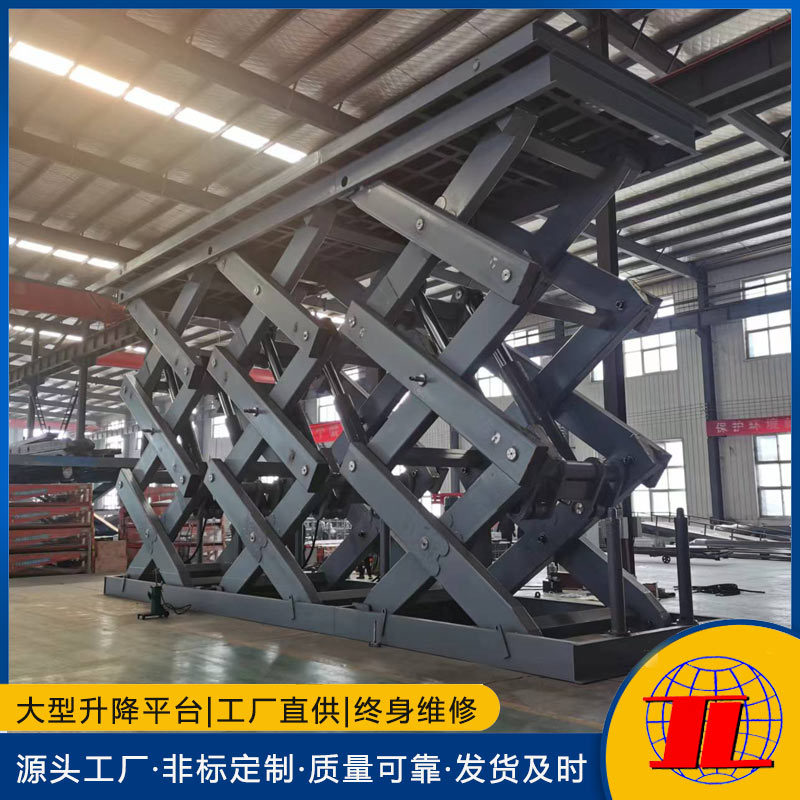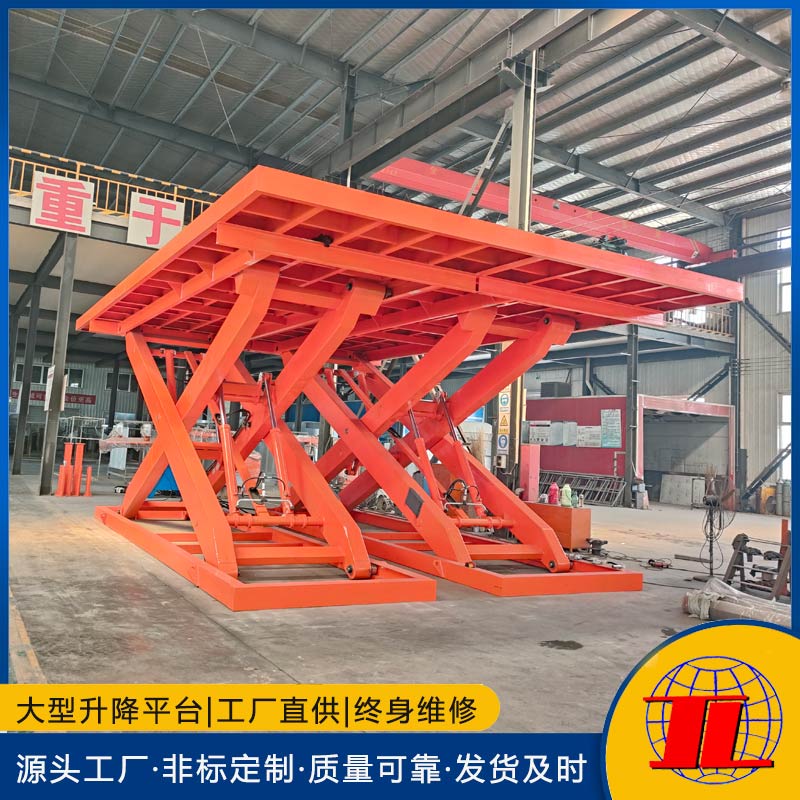
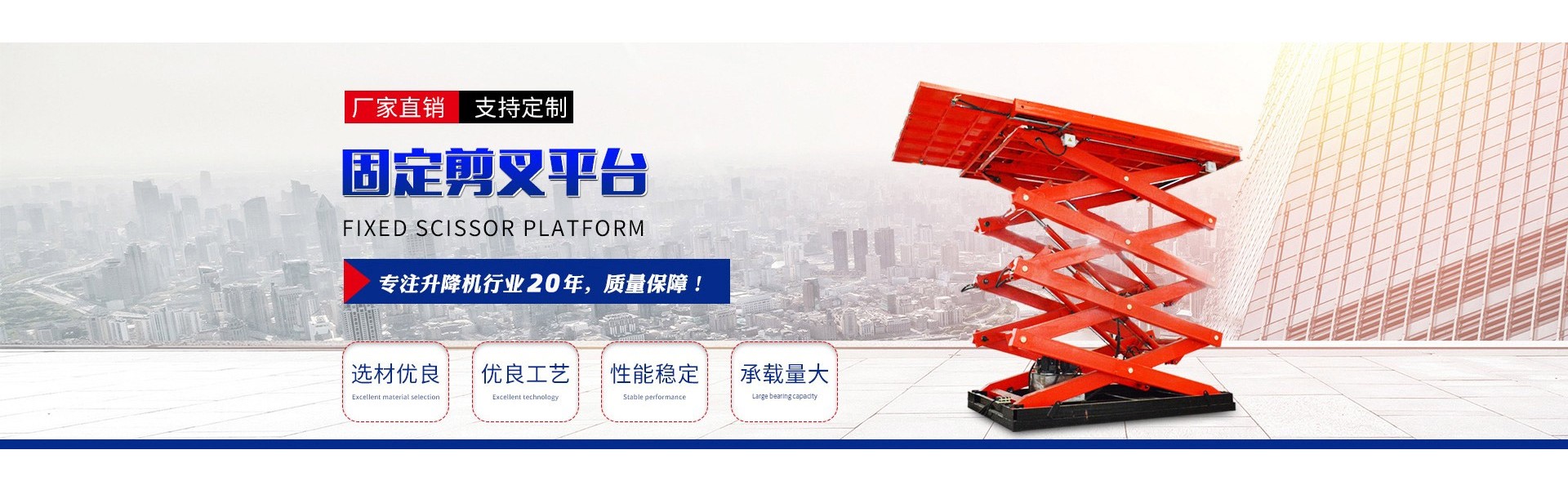
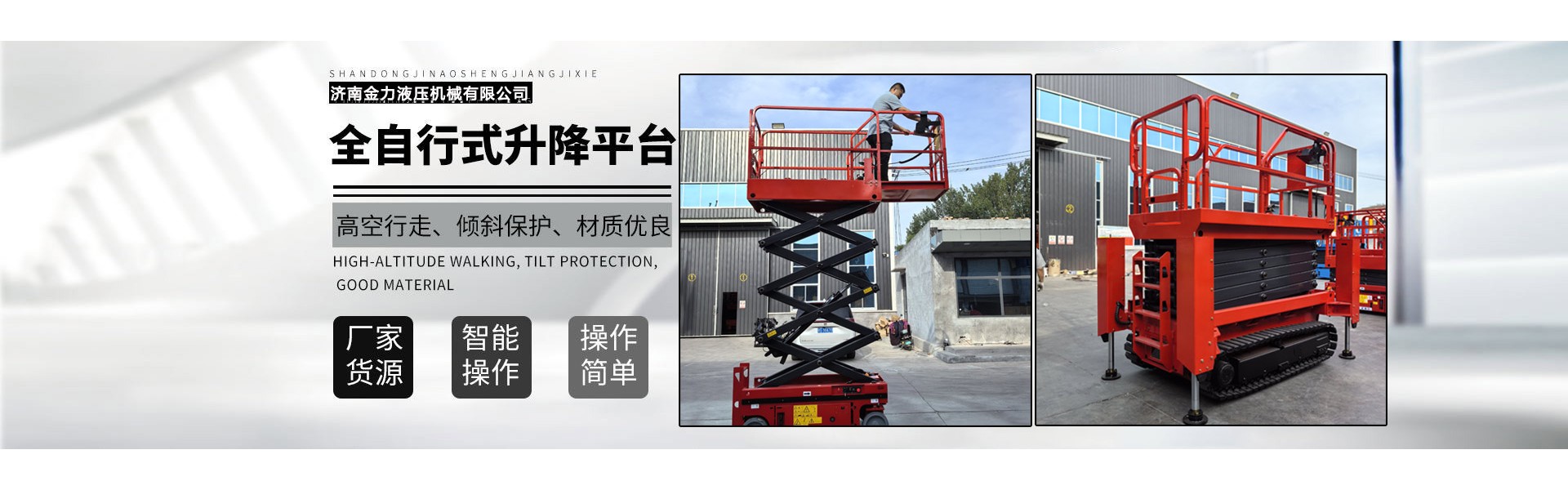


The working principle of the hydraulic lifting platform primarily relies on the pressure transmission of hydraulic oil to achieve the lifting function. Specifically, hydraulic oil is pressurized by a vane pump and passes through a filter, an explosion-proof solenoid reversing valve, a throttle valve, a hydraulic check valve, and a balance valve before entering the lower end of the cylinder, causing the cylinder's piston to move upwards and lift the heavy load. The returned oil from the upper end of the cylinder flows back to the oil tank through the explosion-proof solenoid reversing valve, with its rated pressure adjusted by a relief valve. When it's necessary to lower the heavy load, the hydraulic oil flows through the explosion-proof solenoid reversing valve into the upper end of the cylinder, and the returned oil from the lower end of the cylinder flows back to the oil tank through a balance valve, a hydraulic check valve, a throttle valve, and the explosion-proof solenoid reversing valve. Additionally, to ensure a smooth descent and safe braking of the heavy load, a balance valve is set on the return oil path to maintain pressure and keep the descent speed unaffected by the weight of the load; the throttle valve regulates the flow rate to control the lifting and lowering speed.