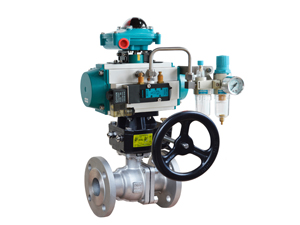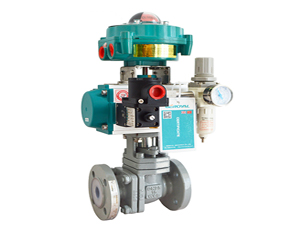


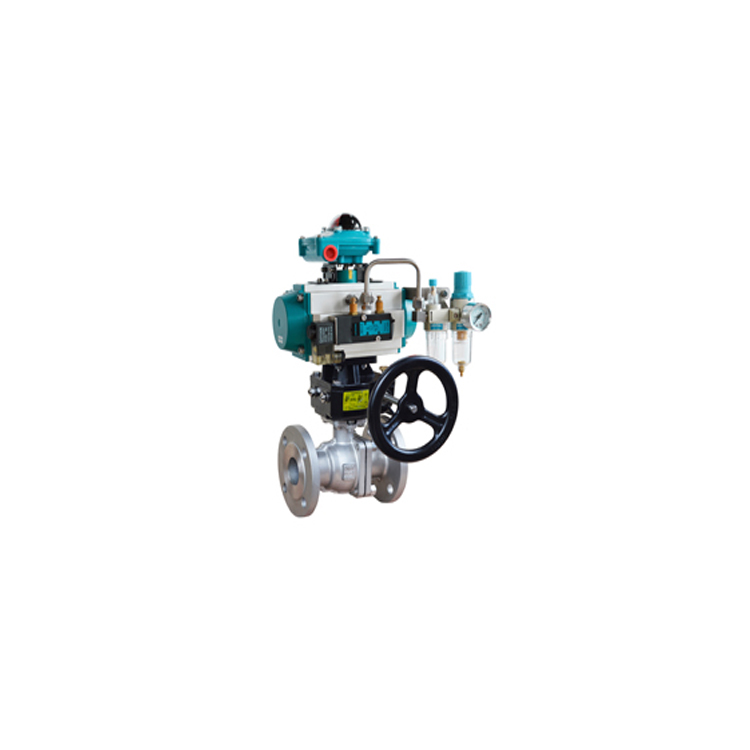
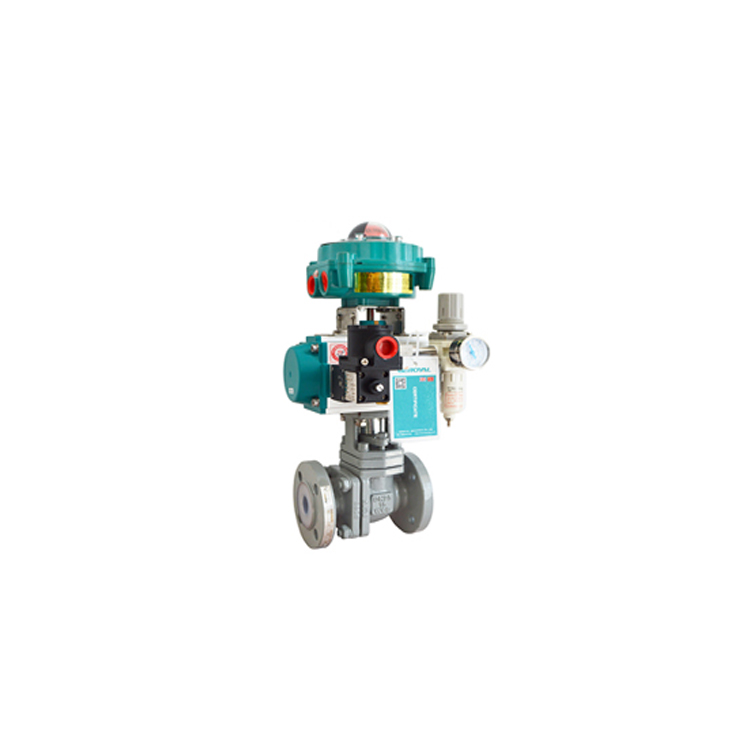

Pneumatic cut-off valves are a type of actuator in automated systems, composed of a multi-spring pneumatic diaphragm actuator or piston actuator, along with a regulating valve or gate valve body. They receive signals from regulating instruments to control the shutdown, opening, or switching of fluids within process pipelines. They feature simple structure, sensitive response, and reliable operation. They can be widely applied in industrial production sectors such as petrochemicals, chemicals, metallurgy, and others. The gas source for pneumatic cut-off valves must be filtered compressed air, and the medium flowing through the valve body should be liquid and gas without impurities and particles.
Pneumatic cut-off valves feature a soft sealing structure with both working and maintenance seals. They have a low torque requirement, moderate sealing pressure, reliable sealing, and are sensitive in operation. Liquid control for automatic control is easily achievable, and they have a long service life. Widely used in industries such as petroleum, chemicals, metallurgy, papermaking, and electroplating.
Pneumatic Cut-off Valve Performance Parameters:
1. Working Pressure: 1.6 Mpa - 42.0 Mpa
2. Size Range: DN6mm to 1200mm
2. Operating Temperature: -196°C to +650°C
3. Drive Methods: Manual, Worm Gear, Pneumatic, Electric
4. Connection Methods: Internal thread, external thread, flange, welding, butt welding, socket welding, ferrule, clamp.
5. Manufacturing Standards: National Standards GB, JB, HG; American Standards API, ANSI; British Standards BS; Japanese Standards JIS, JPI, etc.
6. Valve Body Materials: Copper, Cast Iron, Cast Steel, Carbon Steel, WCB, WC6, WC9, 20#, 25#, Forged Steel, A105, F11, F22, Stainless Steel, 304, 304L, 316, 316L, Chromium Molybdenum Steel, Low-Temperature Steel, Titanium Alloy Steel, etc.