


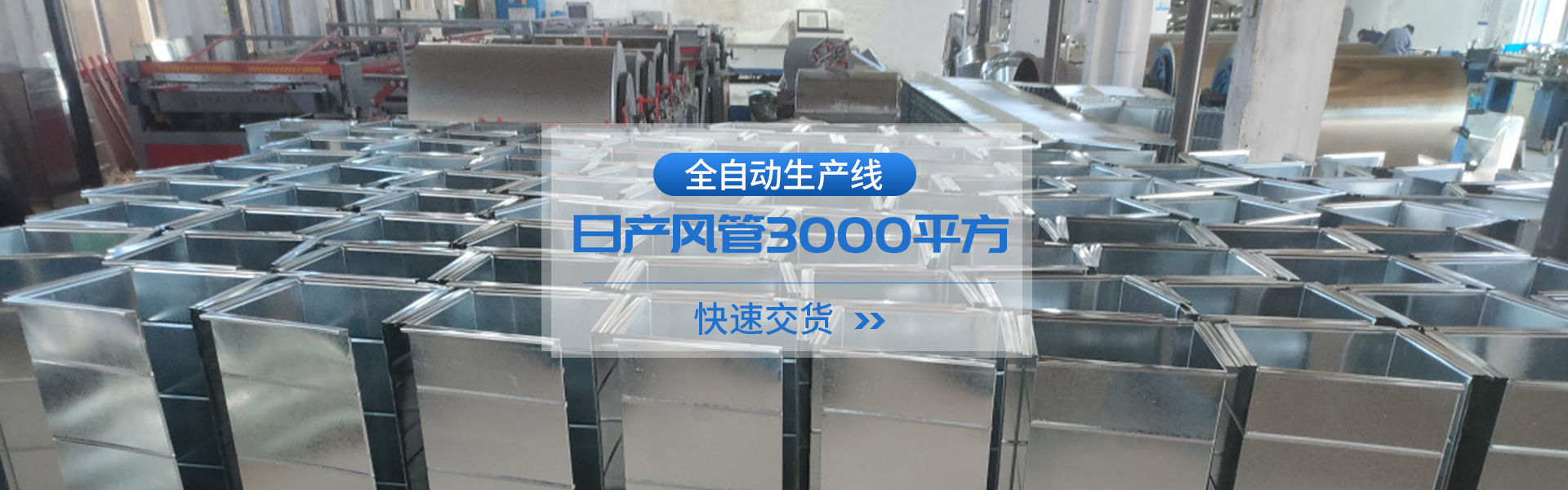

Ductwork is a piping system used for air transportation and distribution. The processed ducts come in two types: composite ducts and inorganic ducts. They can be categorized by cross-sectional shape and material, such as spiral ducts and rectangular ducts. The manufacturing of stainless steel ducts involves applying sealant to gaps such as the bite joint, rivet joints, and the corners of flange edges, with the surface dust and oil污 being cleaned off prior to applying the sealant.
The installation of spiral ducts significantly reduces the number of joints between pipes, minimizing leaks at the pipe joints. Typical spiral duct lengths range from 3 to 6 meters, whereas typical rectangular ducts are only 1 to 1.5 meters long; and connecting two spiral ducts requires only one pipe connector, whereas traditional rectangular duct connections often necessitate a completely separate double flange system.

The production of spiral duct accessories has been highly automated and systematized, featuring industrialized quality control. The installation time for spiral duct systems is only one-third that of similar rectangular pipes. As everyone knows, the air resistance of spiral ducts is significantly lower than that of rectangular ducts.
Advanced Bite-Forming Technology: The molds used in imported equipment are made of special steel, which maintains its surface integrity even after three to five years of use. This ensures that the zinc-coated steel plate surface remains undamaged, significantly extending the lifespan of the spiral ducts. Additionally, the joints are even and flat, the bites are tight, the connection is strong, and the sealing is excellent.
During spiral duct installation, the bolt holes of the hanger should be machined, and there should be no deformation after the equipment is installed. The spacing between the support and hanger should be no more than 5 meters and 3.75 meters, respectively. For vertical equipment, the spacing should not exceed 4 meters. For horizontal equipment, if the diameter or length is not greater than 400 millimeters, the spacing should not exceed 4 meters. If the diameter or length is greater than 400 millimeters, the spacing should not exceed 3 meters.
