





- AllProduct Category
-
Self-Priming Pump Series
Slurry Pumps Series
Submersible Pump Series
Wastewater Pump Series
Roz Vacuum Pumps Series
Centrifugal Pump Series
Metering Pump Series
Pipe Pumps Series
Rotary Vane Vacuum Pump
Chemical Pump Series
Mixed Flow Pump Series
Axial Flow Pump Series
Submersible Pump Series
Double-Suction Mid-Opening Pump Series
Diaphragm Pump Series
Vacuum Pump Series
Magnetic Pump Series
Screw Pump Series
Vacuum Unit


详情描述
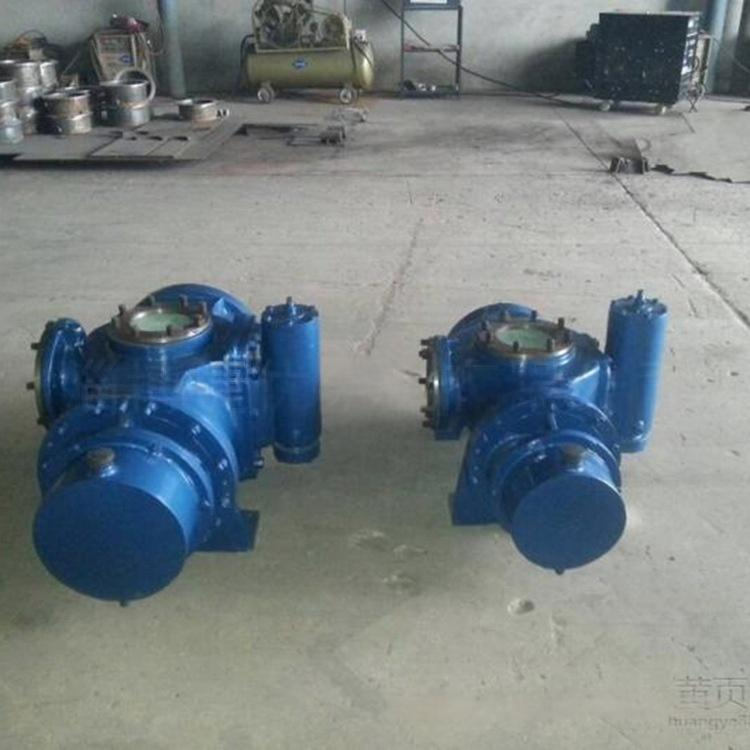
Axial flow pumps differ significantly in both their design and working principle from centrifugal pumps, and their performance characteristics are also vastly different. In practical operation, it is crucial to differentiate between them and adopt different usage methods to guide production practices and address production issues. The performance of axial flow pumps is represented by working parameters. Parameters such as flow rate, head, power, and efficiency are interrelated. If these relationships are depicted in a graphical form, they form the pump performance curves, which are obtained through experimental methods by pump manufacturers and provided to users as technical data. The variation patterns between flow rate and head, and flow rate and power, are similar. Generally, head and power decrease gradually as the pump flow rate increases, but there are turning points in the process; as the flow rate increases, head and power rise gradually before decreasing again. The highest efficiency is achieved at high flow rates; when the flow rate Q=0, the pump head and shaft power are approximately 1.5 to 2 times the highest efficiency. Operating an axial flow pump at low flow rates is not permitted due to the formation of vortices within the pump, which lead to a sharp decline in pump efficiency and an unstable operating condition, both of which are unacceptable in production.


