
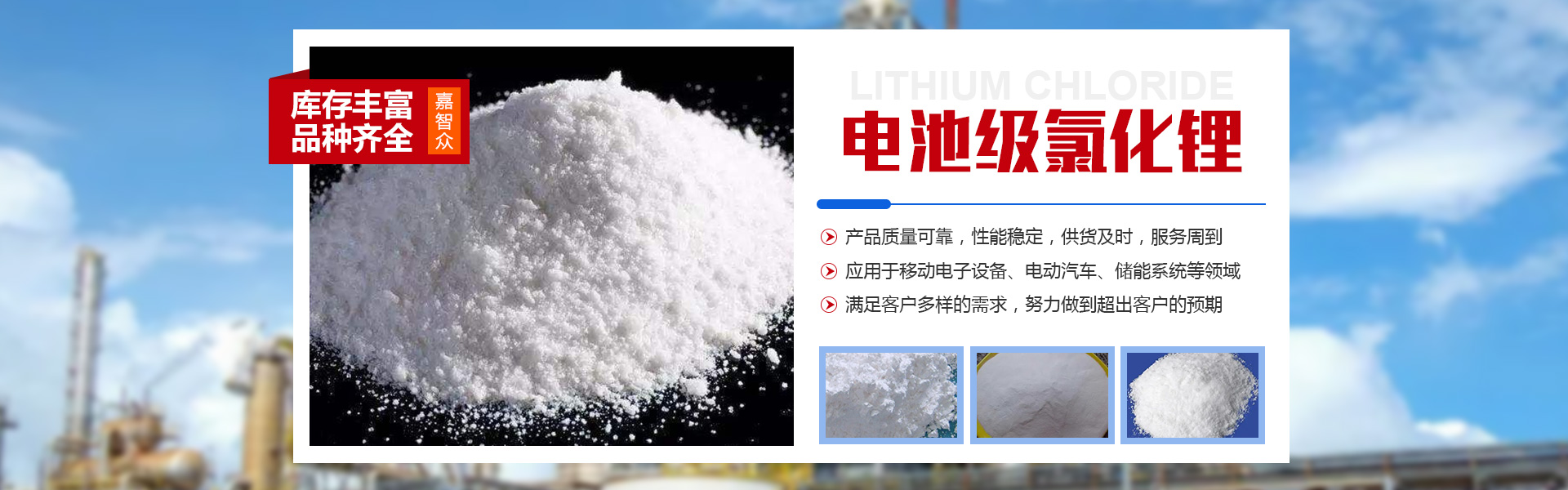

Lithium chloride is an inorganic compound with the molecular formula LiCl and a molecular weight of 42.39. It is a white crystalline substance that is hygroscopic. It has a salty taste, easily dissolves in water, acetone, pyridine, and other organic solvents. It is classified as low-toxic, but it has a strong irritant and corrosive effect on the eyes and mucous membranes.
Solubility
Lithium chloride has a sodium chloride-type structure, with chemical bonds that are not typical ionic bonds. This allows it to dissolve in many organic solvents, a property that can be utilized to separate lithium chloride from alkali metal chlorides.
Lithium chloride has a significantly higher solubility than other halides in the same group due to its smaller ionic radius and higher hydration energy (83g/100mL, 20°C). Its solution is alkaline.
Material Applications
Raw materials for producing metallic lithium. Flux used in the electrolysis process for metal production (such as titanium and aluminum production), as an aluminum welder, air conditioner dehumidifier, and special cement raw material, also used in flames. In the battery industry, it is used in the production of lithium-manganese battery electrolytes. Anhydrous LiCl is primarily used for the electrolytic preparation of metallic lithium, aluminum welders and soldering agents, and as a desiccant (dehumidifier) in non-freezing air conditioning units.
