

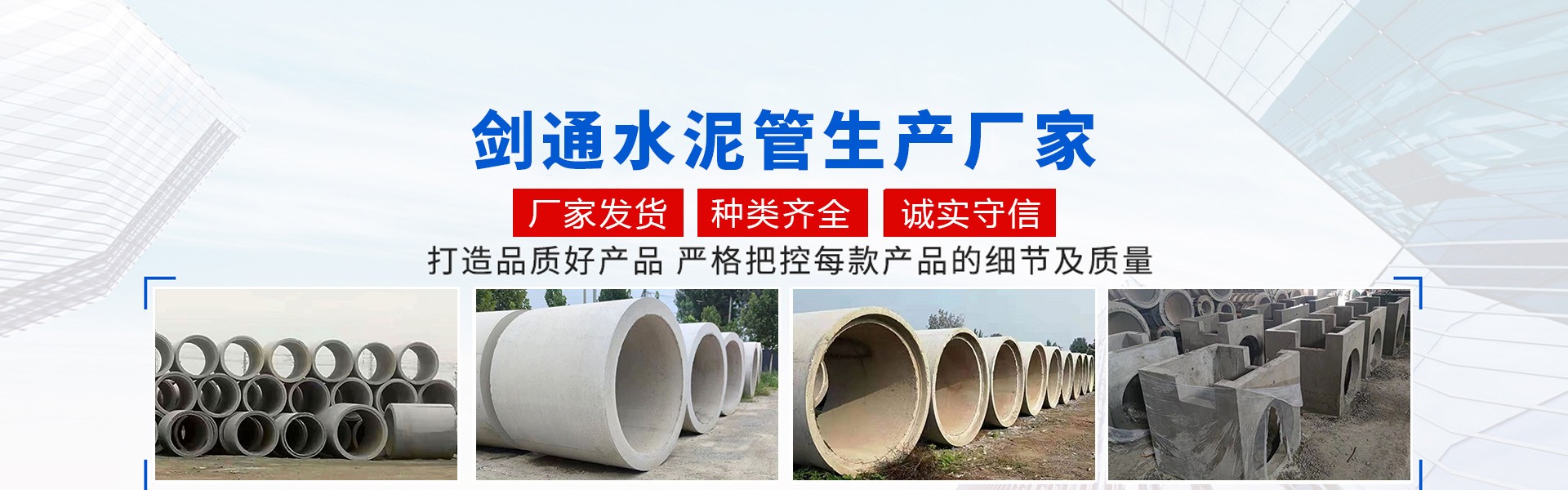

1: Concrete pipes possess sufficient strength, excellent plasticity, and low hardness, which is one of the reasons for their widespread adoption. Similar to the majority of other metallic materials, the tensile strength, yield strength, and hardness of concrete pipes increase with the decrease in temperature; however, their plasticity decreases with lower temperatures. More importantly, their impact toughness decreases slowly with the drop in temperature and there is no brittle transition temperature. Therefore, concrete pipes maintain adequate plasticity and toughness in low temperatures.
In general cement products, an increased slag content is common, which is also a significant factor affecting the corrosion resistance of cement pipes. At this point, a larger amount of activator is required to stimulate the cement pipe's latent hydration activity. The addition of anhydrite, which is formed through the hydration of clinker, is crucial for improving the water-cement properties. Increasing the anhydrite content can significantly enhance the early and late-stage strength of cement products.
At a cement addition of 10.5%, the cement pipes exhibit significantly improved resistance to atmospheric corrosion. However, as the cement content increases further, although the corrosion resistance can still be enhanced, the improvement is not pronounced. This is because, during the alloying treatment of cement pipes with cement, the type of surface oxide is changed to a type similar to that formed on the surface of pure cement metal. This tightly adhered, cement-rich oxide layer protects the surface from further oxidation. This oxide layer is extremely thin, allowing the natural luster of the drainage pipe surface to be seen through it, giving the cement drainage pipes a unique surface. Moreover, if the surface is damaged, the exposed drainage pipe surface will react with the atmosphere to self-repair, reforming this "passivation film" of oxide and continuing to provide protection.
News Center Co., Ltd.
