



Color-Through Pavement Material Manufacturer, Permeable Pavement Greenway Around the Lake, Guangzhou Concrete Building Materials, Steps for Permeable Pavement Construction
Agitation: The cement slurry in the permeable pavement mixture has a higher viscosity and less quantity. To ensure the cement slurry is evenly coated on the aggregates, a forced agitation mixer should be used, with a mixing time of over 5 minutes.
Pouring: Before pouring, the subgrade must be moistened with water. Otherwise, the rapid loss of moisture in the permeable pavement will weaken the bonding strength between aggregates. Since the permeable pavement mixture is relatively dry and hard, simply lay the mixed permeable pavement and good permeable pavement materials flat on the subgrade.
Vibration: Avoid vigorous vibration or compaction during pouring. Generally, use a flat vibrator to gently vibrate the permeable concrete mixture after it has been leveled, but be cautious not to use a high-frequency vibrator, as it will make the concrete too dense, reducing porosity and affecting the permeability. Additionally, a high-frequency vibrator can cause the cement slurry to separate from the coarse aggregate surface, settle at the bottom to form an impermeable layer, and thus lose its permeability.
Rolling: After vibration, further compacting and leveling of the permeable concrete mixture should be done using solid steel pipes or light roller compactors. Depending on the consistency of the mixture and surrounding temperature conditions, multiple rollings may be required. However, it is important to clean the rollers before rolling to prevent the adhesion of aggregates.
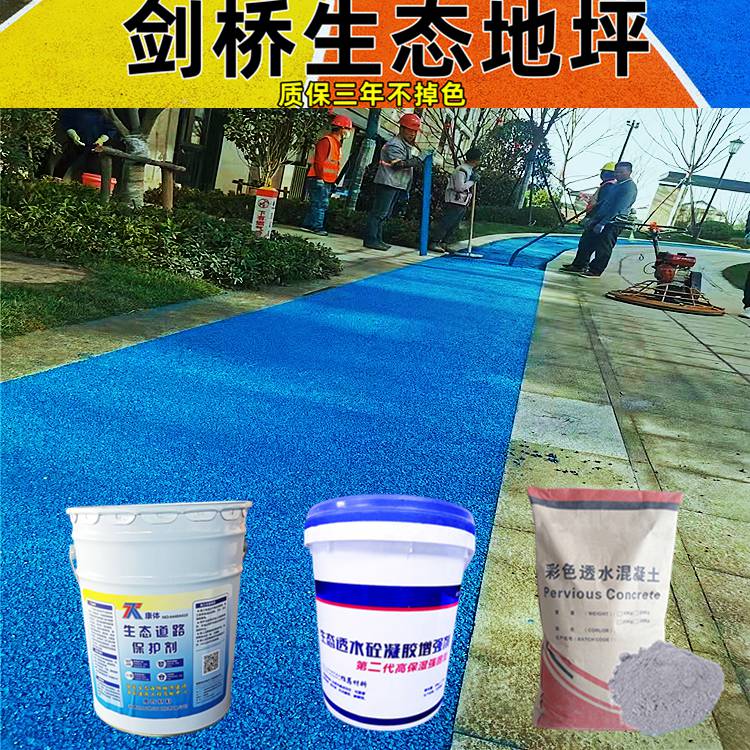

1. Performance characteristics of pervious concrete:
Porous concrete, also known as permeable concrete, sand-free concrete, and drainage concrete, is a type of lightweight, porous concrete made by mixing aggregate, cement, and binder with water. It lacks fine aggregate and forms a honeycomb-like structure with uniformly distributed voids, bonded together by a thin layer of cement paste on the surface of the coarse aggregate. This material is characterized by its breathability, water permeability, and light weight. It was developed to address the defects in urban road surfaces, allowing rainwater to infiltrate the ground and effectively replenish groundwater, while also eliminating the environmental hazards posed by pollutants like oil compounds on the surface. Additionally, it is an excellent paving material for protecting nature, maintaining ecological balance, absorbing noise, and reducing the heat island effect.
2. Advantages:
Reducing surface runoff, permeable concrete pavements can increase the infiltration of rainwater, thereby reducing the volume of urban surface runoff, slowing the speed of rainwater runoff, and ultimately decreasing the total volume of urban rainfall runoff. It plays a crucial role in mitigating urban flooding in textile cities.
2. Supplement groundwater and ensure water quality; permeable concrete, by connecting with the subgrade beneath the pavement, allows runoff to infiltrate the lower soil, maintaining stable groundwater levels and preventing water table decline. This also reduces the pollution from infiltrating surface runoff.
3. Enhance the ecological environment; permeable concrete boasts excellent permeability and moisture retention, closely mimicking the natural characteristics of grass lawns and soil surfaces, thereby reducing the impact on nature.
4. Improve urban thermal environment; permeable concrete with its porous structure effectively reduces ground temperature and alleviates the "heat island effect."
5. Noise Attraction and Sound Reduction: The permeable concrete pavement has an acoustic noise reduction effect. Due to the porous structure of permeable concrete, when sound waves strike its surface, the air movement within the small holes or gaps is induced by the sound waves, leading to the attenuation of the sound waves.
3. Construction:
Construction is not permitted when temperatures drop below freezing, as forced work can cause particle shedding and road cracking phenomena.
I. Product Introduction:
Cold patching material is aAsphaltRoad repair materials, suitable for all-weather use, ideal for use onComplexWeather and environmental repair for different typesAsphaltRoad surfaces, such as asphalt concrete roads, cement concrete roads, parking lots, airport runways, etc. After years of continuous improvement and refinement,AsphaltCold patch material performance is more mature. Both in quality and usage, it surpasses hot mixed asphalt and asphalt emulsion blends, and is favored for its simple operation and storage convenience.DurationEasy to mend, versatile in use, and environmentally friendly, these features have alreadyMany road repairsWidely applied in many urban roads, general highways, and expressways across the country.
II. Key Features
1. Suitable Weather and Environment
Wide temperature range applicable for cold patching, can be used inApplicable between -30 to 50 degrees, it boasts excellent cold patching and waterproofing performance, and can be installed in rainy, snowy conditions, and in puddles or holes.
2. Simple installation
Utilize cold patch materials, no need for adhesive oil during repair, materials are readily available, and there's no requirement for heavy construction equipment. Depending on the varying pavement repair situations, impact compaction and manual compaction methods can be employed.
3. Patching Easy
Cold patching material hasNot easyAging and bondingQuality goodFeatures: Repaired with anti-pitting, resistant to shedding and cracking, no need for re-repair.
4. Easy to store
BitumenFinished products with cold patching material can be stored outdoors at room temperature for up to two years, while sealed bagged products have a longer shelf life.
5. Immediate Traffic Access
Areas repaired with cold patching materials do not require traffic closure, are accessible.Instant MessagingVehicles to alleviate traffic congestion caused by road repair construction.
6. Eco-friendly
Cold patch materials are water-insoluble, thus they do not pollute the atmosphere or water, benefiting environmental protection.
7. Wide application
Cold patch materials offer excellent adhesion to various substrates such as asphalt concrete, cement concrete, and metal surfaces. They are suitable for repairs and maintenance on highways, general roads, municipal roads, airport runways, and bridges.
8. Low repair costs
Apply cold patch materials for construction. Not restricted by weather conditions or the size and quantity of potholes; timely repairs can prevent the expansion of potholes, save repair materials, and ensure that the repairsNo needHeating and stirring; can be used as needed at any time, leftover materials can be reused in the next repair, avoiding waste.
9. Social benefits
Cold patch materials enable timely road repairs, maintain smooth surfaces, ensure traffic flow, increase speed, reduce traffic accidents, decrease the frequency of road resurfacing, and extend the lifespan of roads.
Section 3: Instructions for Use
1. Clearing Potholes
Generally, the patched holes and surrounding debris should be cleaned thoroughly, with no sludge, ice blocks, or other debris left inside the holes. Highway and municipal road repair projects. The patched holes and trenches should have neat edges, and the debris should be cleared.Please provide the Chinese content that needs to be translated into American English.Solid until you see the face.
Fill in the holes and compact them.
Add sufficient cold patch material into the pothole until it is above ground level.About 1.5cm, for highway and general road repairs, the amount of cold patch material can be increased by about 10%. After filling, the pothole is filled.BetweenShould be higher than the road surface for four sides and curved. If the depth of the road damage is more thanWhen exceeding 5cm, the filling work should be done in layers of 4cm each, filling and compacting layer by layer. After even铺设, choose the appropriate compaction tool and method based on the actual repair environment, area size, and depth. For example, manual tamping, plate vibration tamping, roller compaction, etc. After compaction, sprinkle a uniform layer of stone dust or fine sand on the surface and sweep back and forth with cleaning tools to fill the surface gaps. RepairCompleteThe surface of the pits and grooves should be smooth and even, free of wheel marks. The surrounding area and corners of the pits and grooves should be compacted without any loose particles. The normal repair should achieve a sufficient degree of compaction.93% and above. The compaction of highway repairs must reach over 95%.
IV. Packaging and Storage:
25Kilogram multiwall kraft paper bags, store in cool and dry place, shelf life6Months.
