



This Issue's Focus: Hubei ProvinceJingzhou Sanda New District
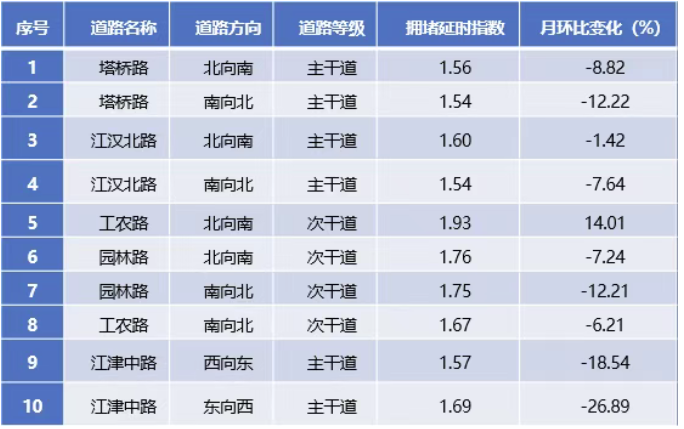
The optimized traffic flow in the Sand North New Area and its surrounding major congestion zones has significantly improved. According to data from the Amap platform, the average congestion delay index in the area has dropped by 8.7%. Among them, the traffic congestion index on Taqiao Road, a key bottleneck, decreased by 8.82% in the northbound direction and by 12.22% in the southbound direction. The regional traffic order has seen noticeable improvement.Overflow of Over-saturationGradually shifting"Operational under Control"During peak hours, the length of vehicle queues has been shortened, and the phenomenon of cross-regional traffic congestion transmission has been effectively suppressed.
Regional Overview
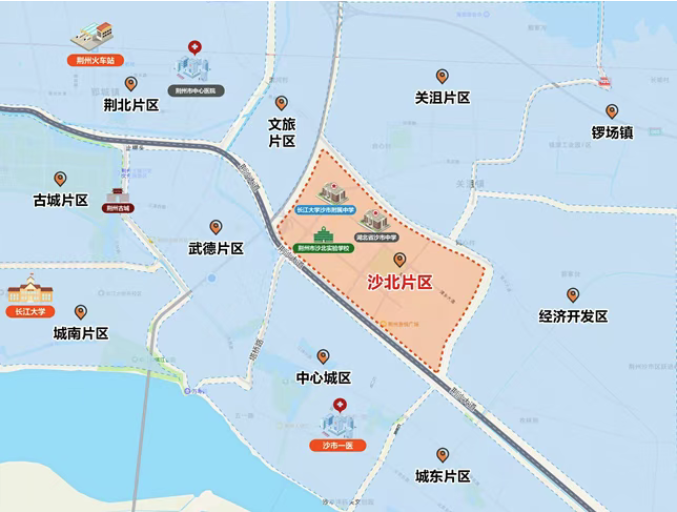
The Shabei New District, located in the northern part of the central urban area of Jingzhou City, is an integrated urban area that combines administrative, cultural, and residential functions. Situated at the intersection of two urban development axes, Jingsha Avenue and Jianghan Road, it serves as a crucial hub connecting the old city area and the emerging regions. The district is north of the Fuxing Avenue expressway and Guanju area, south of the central urban area, west of the ancient city, highway entrance, and train station, and east of the development zone, boasting significant locational advantages. The main roads within the district, such as Hongmen Road, Taqiao Road, and Jingsha Avenue, crisscross, forming the key supporting network for the traffic flow in Jingzhou.
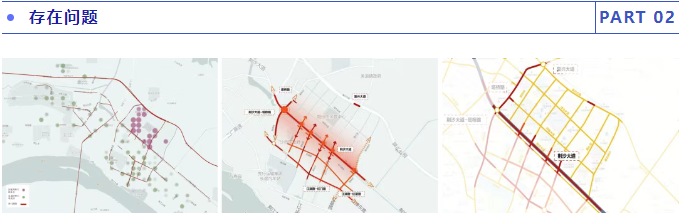
At the regional levelThe road network's capacity is insufficient, with the overlap of cross-border and commuting traffic. The main arteries like Jingsha Avenue are complex in function and lack proper diversification.Peak periods often experience saturation.
Lack of coordination in signal control, limited capacity of inter-regional connection nodes, prone to traffic congestion spread.
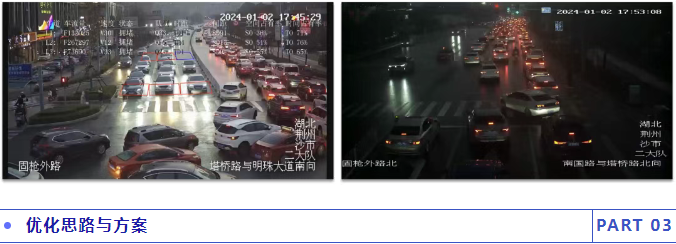
Mainline levelThe intersections at bottleneck sections like Tower Bridge Road have short distances and high traffic volumes.Peak periods often experience saturation phenomena.The five short bridges connecting the central urban area have limited traffic capacity.The river-crossing bridge has become a key "chokepoint" passage.Traffic congestion has intensified due to the peak travel rush.
Single-point levelThe peak traffic at the critical intersection leads to over-saturation, resulting in low green light utilization. The irrational phase timing and channelization design further exacerbate the overflow of vehicle traffic.
1. Regional Level
(1) Regional Maximum Traffic Volume Strategy
Based on the maximum carrying capacity of the downstream, enhance the traffic capacity of key road sections and nodes in the excavation area.
(2) Road network traffic balancing strategy, maximizing the utilization of road vehicle storage capacity
Based on the throughput capacity of bottleneck sections and the traffic flow each section can accommodate, control the overall flow entering the bottleneck sections from different sections.
(3) Intra-segment Upstream-Downstream Traffic Efficiency Matching Strategy
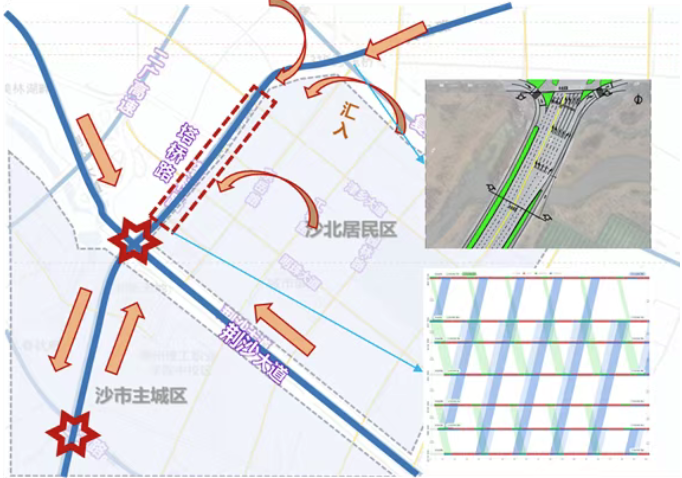
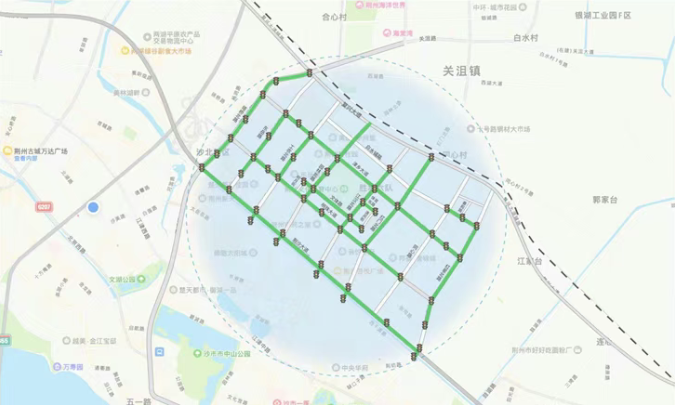
Based on the correlation of intersections at different time periods and regions (such as traffic volume, speed, intersection spacing, and queuing factors), dynamically define sub-area boundaries (e.g., during the morning rush hour, Taqiao Road between Jiangjin Road and Fuxing Avenue is one sub-area, and during off-peak hours, Taqiao Road between Nanguo Road and Fuxing Avenue is another sub-area). According to the dispersion efficiency in the central urban area and the traffic efficiency of bottleneck points and sections on various road sections, rationally allocate the traffic flow from the Sand North residential area, Guanju area, main urban area, and expressways to bottleneck intersections and road sections such as Taqiao Road, Jingsha Avenue, and Xigang Canal.
2. Critical Path Clearance
The critical path queue dissipates quickly, without obstructing the passage in bottleneck areas.
As for TOWER BRIDGE ROAD, after the green light is given at the upstream intersection of JINGSHA AVENUE - TOWER BRIDGE ROAD, optimize the phase difference, and the queuing vehicles will form several queues (north straight, east left turn) into the downstream section, dissipating at a saturated flow rate. First, optimize the dissipation of queuing, then optimize smooth traffic flow.
(2) Urban Traffic Queue Control: Balancing Upstream and Downstream Traffic Flow and Queue Length
Based on the downstream carrying capacity, control is in place for the areas along复兴大道-Tower Bridge Road, Jingsha Avenue-Tower Bridge Road, Jiangjin Road-Tower Bridge Road, Jingsha Avenue-Xingxing Road, and the intersection of Jingsha Avenue and the Western Canal.Short ConnectionThe traffic merging into the main congestion areas.
(3) Short-distance overflow sections such as Taqiao Road (Jing沙-Mingzhu) will implement "container-style" clearance to prevent traffic backflow.
(4) Coordinated control plans have been established for Jingsha Avenue, Taqiao Road, and other sections to reduce travel time while ensuring a pleasant driving experience.
3. Single Point
(1) In line with regional release strategies, maximize the efficiency of bottleneck intersections, such as optimizing traffic organization and signal control plans at the intersection of Fuxing Avenue and Taqiao Road, and optimizing phases at the intersection of Jingsha Avenue and Taqiao Road.SequentialResolve conflicts between the trailing vehicle and pedestrians.
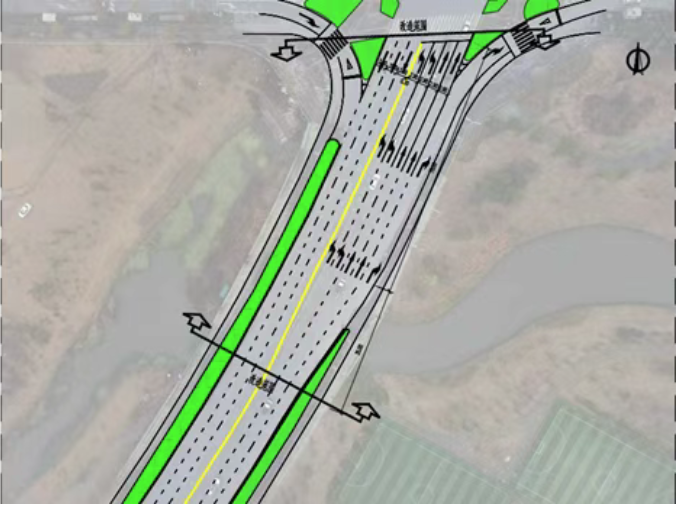
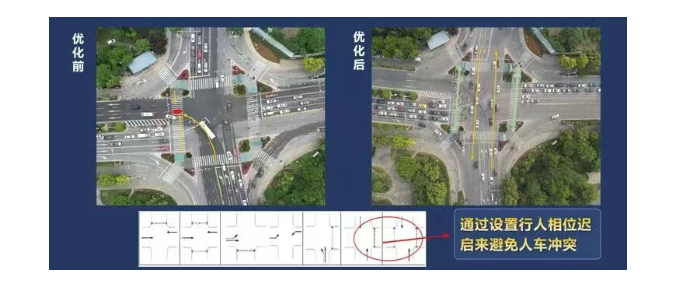
(2)Identify the intersection's traffic capacity, taking into account upstream and downstream traffic efficiency, traffic arrival volume, and queuing dissipation to develop traffic control plans, ensuring efficient utilization of green light time.
cription="" height="" hspace="" ismap="" opacity="" sizes="" title="" type="block" usemap="" vspace="" width="" data-width="" data-height="" data-croporisrc="" data-cropx1="" data-cropx2="" data-cropy1="" data-cropy2="" data-cropselx1="" data-cropselx2="" data-cropsely1="" data-cropsely2="" data-backw="" data-backh="" data-copyright="" data-oversubscription-url="" data-before-oversubscription-url="" data-galleryid="" data-gallerysupplier="" data-cardimg="" data-fileid="" data-imgfileid="506177434" data-positionback="" data-imgqrcoded="" data-imgid="" data-upload="" data-fromlib="" data-aiimageid="" data-aiimagesource="" data-cacheurl="" data-aistatus="1" data-retry="">4. Dynamic Green Wave
During peak hours, the traffic demands at intersections vary with different turning lanes and time periods. By utilizing vehicle passing data and data from entry zones, we implement dynamic green wave plans. These plans adjust the duration of green light phases in real-time based on detection data, accommodating short-term fluctuations in traffic volume, maximizing green light utilization, reducing the number of peak-hour plans, and preventing confusion caused by switching between multiple plans during the transition period.
Enhanced Performance
Post-optimization, the congestion index of the area and its surrounding roads (selected from the top 15 most congested road sections in the city) has seen an average decrease of 8.7% according to the Gaode Congestion Index.
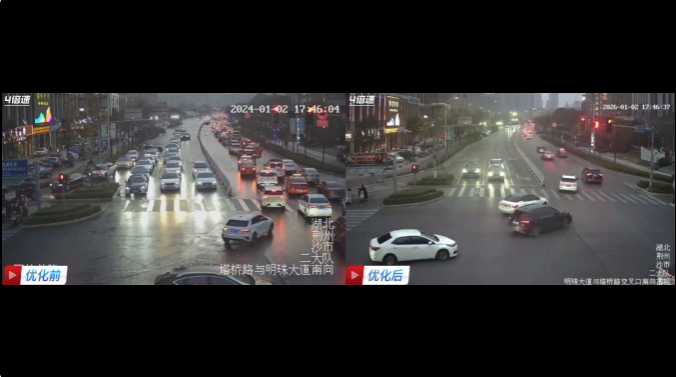
For example, at Tower Bridge Road, the before and after optimizations are as follows.
Jingzhou Sanda New District Regional Traffic Control Optimization ProjectAddressing the critical issues of over-saturation during peak hours, overflow traffic, and cross-regional congestion transmission in the Shabei New District, the company has implemented a core strategy of "regional collaboration." This strategy integrates "containerized" release, queuing control, and dynamic green wave techniques. A three-tier control system of "region-corridor-node" has been established, achieving traffic balance and bottleneck relief. After optimization, the average congestion index in the area has decreased by 8.7%, with significant alleviation of two-way congestion on the core bottleneck, Tower Bridge Road, and an improvement in the traffic efficiency of key corridors like Jingsha Avenue. The regional traffic has shifted from "disorderly overflow" to "orderly and controllable."
Jingzhou's ShaBei New District, situated in the northern part of the central city, serves as a new administrative, cultural, and living center at the municipal level. It is also a key hub connecting the old city with the emerging areas. Relying on the development axes such as Jingsha Avenue and Jianghan Road,Shanbei New DistrictContinuously promoting comprehensive traffic management, through signal coordination, channel decongestion, and dynamic green wave optimization, effectively alleviates peak-hour congestion and traffic overflow, enhancing road network efficiency. Currently,The Sand North New District is leveraging smart transportation to promote integration with urban functions and living environment, injecting momentum into the high-quality development of Jingzhou.
