


In recent years, with the intensification of bank branch distribution and the widespread adoption of intelligent equipment, traditional decentralized fire and safety management models have faced issues such as low efficiency in manual inspections, difficulty in tracing equipment status, poor inter-system integration, and delayed emergency response, which have become critical bottlenecks restricting the improvement of bank safety management levels.
Background of Construction
Industry Safety Requirements Escalate
In accordance with standards such as GA 38, banks must achieve a deep integration of "human defense, material defense, and technical defense," enhancing real-time risk monitoring and emergency response capabilities. At the same time, electrical safety and fire hazard risks have significantly increased.
Challenges in Safety Management
Security and fire protection systems are disjointed:Security systems such as video surveillance and access control operate independently of fire protection systems, resulting in a lack of information exchange and hindering effective coordination. The headquarters struggles to real-time grasp the overall risk situation, limiting the efficiency of emergency command.
Insufficient Risk Warning CapabilityLack of intelligent analytical tools makes it difficult to anticipate potential safety hazards such as equipment malfunctions, abnormal behavior, and early fires.
Inefficient operations and high costsFragmented systems lead to heavy maintenance workload, slow response times, and high costs. Equipment operation and maintenance rely on experience-based judgments, lack comprehensive lifecycle tracking, have high failure rates, and inefficient resource allocation.
Establishment Goals
The platform's construction aims to break down system barriers, integrate information resources, and enhance the intelligent and integrated levels of risk perception, early warning, handling, and management.Comprehensive network integration, intelligent risk prevention and control, unified command and dispatch, and efficient operation and maintenance management.Focusing on the core, we are constructing a multi-level联动 intelligent security hub, encompassing the "Headquarters-Branch-Bank Sub-Branch" structure.
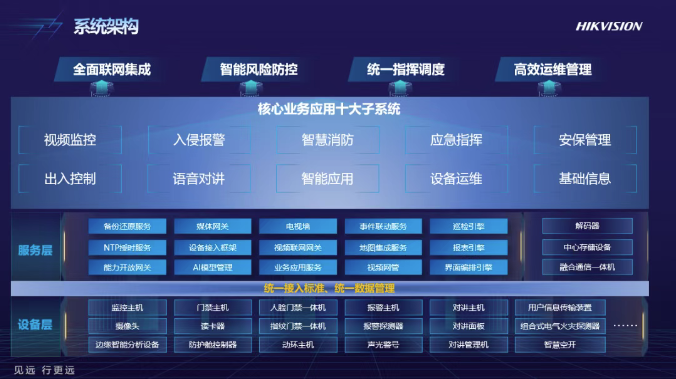
Specific goals achieved include:
Comprehensive Network Integration
Unified integration, centralized management, and interconnectivity of security and fire sub-systems across the entire bank.
Intelligent Risk Prevention and Control
Leveraging big data and AI analytics, we achieve intelligent recognition of anomalous behavior (such as stalking, loitering, and area breaches) and intelligent early warnings for fire hazards (such as abnormal equipment temperatures and early smoke detection).
Unified Command and Dispatch
Establish a headquarters-level (or branch-level) fire and safety command center to achieve comprehensive control over the security situation, supporting rapid emergency response coordination across departments and levels.
Efficient Operations Management
Achieve online status monitoring of fire and safety equipment, automatic fault alarms, and the digitalization of maintenance processes, reducing maintenance costs and improving equipment integrity rates.
Highlight Features
Unified Access and Integration
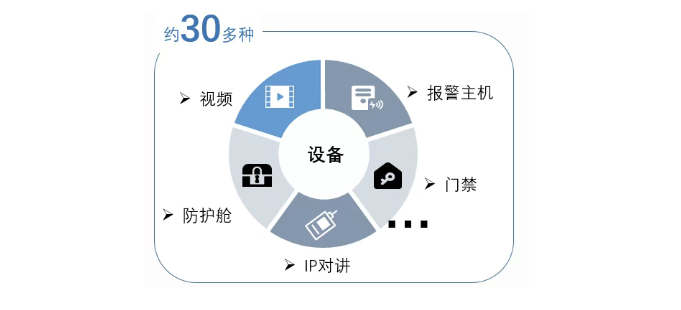
Develop or deploy robust equipmentNetwork Gateway IntegrationOur system is compatible with mainstream fire and safety equipment manufacturer protocols, supporting standards such as GB/T28181, ONVIF, and RTSP. It facilitates seamless integration of existing and new equipment, while establishing a unified equipment coding standard and data specification.
Unified Alarm Management and Interconnection
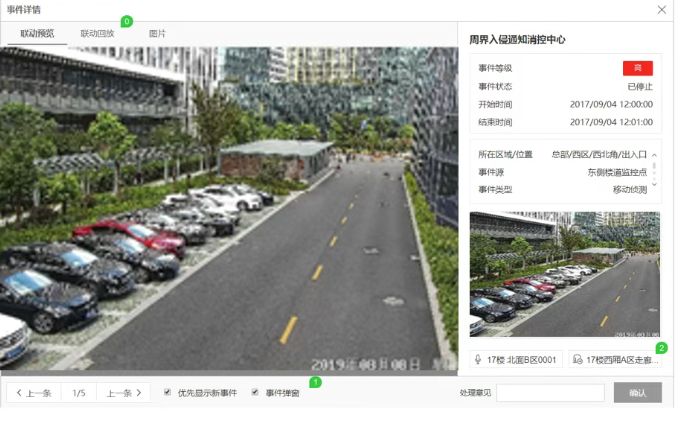
The system supports various event notification methods, including pop-ups for clients, large-screen wall displays, mobile app notifications, SMS, and emails, ensuring effective event communication. Users can be designated to handle incidents, and if not addressed promptly, the event will automatically escalate or be forwarded to other personnel or supervisors, ensuring a closed-loop for handling critical incidents.
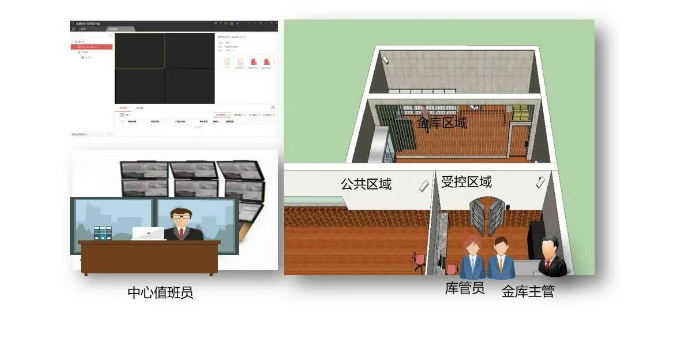
Gold Vault Remote Authorization
Introducing the vault guard feature, supporting multi-factor authentication for door access, standardizing business processes, and enhancing internal control management. During working hours (N+1Two warehouse managers undergo identity verification and central review authorization to open the door. During off-hours (N+1+1): Two warehouse managers and the supervisor conduct identity verification and central review authorization to open the door.
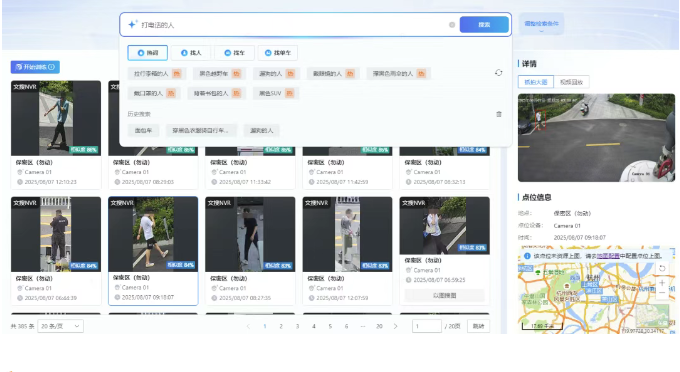
Large Model Application - Intelligent Text Search
For general security applications, combining large model technology, we achieve rapid video target retrieval based on "textual semantic descriptions."By searching "the person calling," you can quickly find all related images in the video, and then view the associated videos based on these images.
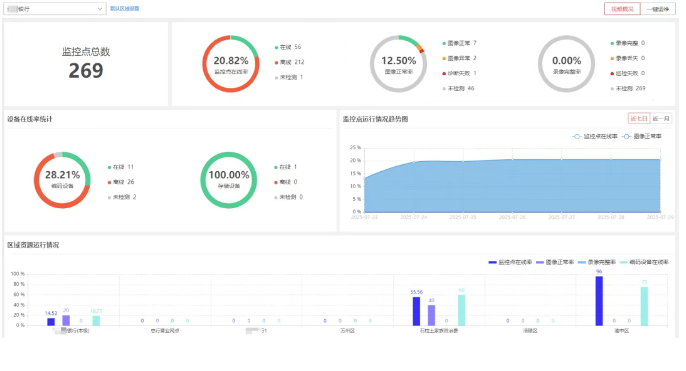
Equipment Assets & Intelligent Operations Management
Offer comprehensive fire and safety equipmentElectronic LedgerReal-time monitoring of equipment operation status, automatic fault diagnosis and alerting; full lifecycle management of operation and maintenance tickets.
Unified Operations Management Center
Offering functionalities such as operational environment management and status monitoring, making installation, deployment, and data backup more convenient and efficient, catering to the needs for rapid deployment and ongoing maintenance.
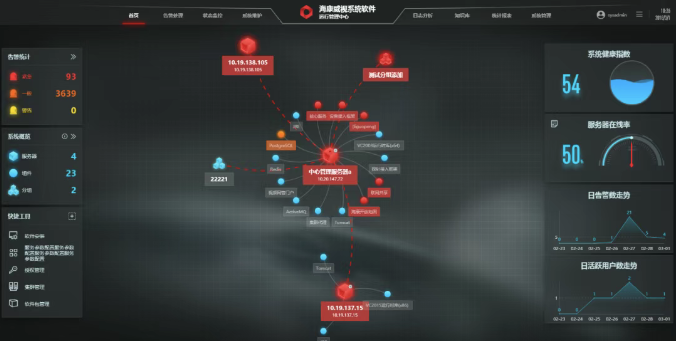
The construction of the bank's fire safety network platform is not only a technical upgrade, but also an innovation in the safety management model. Through the establishment of a “Comprehensive network integration, intelligent risk prevention and control, unified command and dispatch, and efficient operation and maintenance management.Our intelligent security system will achieve a leap from "passive defense" to "active management" and from "experience-driven" to "data-driven," laying a solid security barrier for high-quality business development.
