


LED Protection During the Plum Rain Season
As the rainy season stealthily arrives, the continuous rain and damp air bring many inconveniences to our lives.
With the continuous rainfall, indoor humidity will be very high, which is prone to cause issues with LED displays.Caterpillar or faulty lampboard malfunction symptoms。
Fault Phenomenon
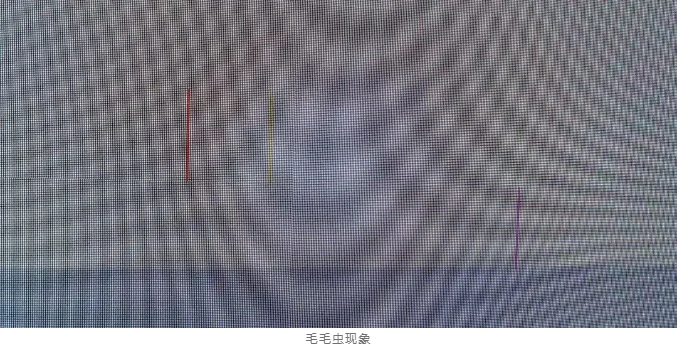
Caterpillar PhenomenonIt refers to a column of continuously lit stripe appearing on the display screen.The length of the bright bar is determined by the scanning number of the display. When the scanning number is N scans, the bright bar is a column of N lights that remain lit continuously, and it does not change with the scene. Unlike the scattered distribution of blind spots, the bright bar is too concentrated, making any bright bar on the unit display area very noticeable. The specific situation is shown in the figure.
Cause of the Failure
The equipment is being used in a site with a relative humidity of 86%. Since LEDs are moisture-sensitive devices, excessive humidity in the storage or operating environment allows water molecules to enter the core of the lamp through microscopic gaps, leading to corrosion of the solder pads due to moisture.Bond wireBreakpoints, moisture enters the chip surface; when the LED display is powered on, the water molecules undergo electrolysis on the chip surface.PN junctionA migration leakage occurred, resulting in a caterpillar effect.
LED Dehumidification
Full-color LED displayThe Ideal JobAmbient TemperatureFor22℃±5℃IdeaRelative HumidityPlease provide the Chinese content you would like translated into American English.30% to 60% non-condensableThere is no Chinese content provided. Please provide the text to be translated.Temperature difference not exceeding 2℃。
The plum rain season brings high relative humidity. To dehumidify, the most effective method is generally...Turn on the air conditioner's dehumidifier functionOr perhapsDehumidifier。
The usage time and power of the dehumidifier should be determined by the on-site environment, with the ideal relative humidity for LED performance being the best.
Extended non-use of a large screen, combined with the plum rain season, if there are already visible water stains on the light board, under the condition of air conditioning or a dehumidifier.Ensure fans are installed for air drying, maintain side-to-side ventilation on both sides of the screen, and strictly prohibit direct air from the air conditioner's outlet blowing onto the screen!
Based on the client used on-site, configure the LED transmission cardDehumidification feature:
LED Tool Client:

2 Daily use of large screens
Increase usage frequency.Recommend starting the screen at least 3 times a week, for at least 2 hours each time.If not in use for an extended period, you can simply turn off the control device. The large screen can remain powered on. When the large screen is without a signal and not displayed, it will be in standby mode with low power consumption.
3 Large Screen Environmental Audit
Plum Rains Season ConfirmedClose the windows of the room where the large screen is located.Especially near the screen, the windows are designed to prevent a continuous flow of moisture and blowing towards the screen.
4 We have added humidity and temperature gauges.
No content provided for translation.An additional temperature and humidity gauge has been added next to the large screen.On duty staffRoutine inspectionsOn-site, monitor changes in temperature and humidity, and intervene promptly to improve any anomalies.
