


日期:2023-08-26 浏览:75
It's not easy to accurately judge the sound quality of a piano. For those not professionally trained, it may be challenging to discern variations in sound quality among different pianos. However, by focusing on the following aspects, one can help assess the quality of a piano's sound. When selecting a piano, first listen for pitch accuracy, as a basic level of pitch correctness is necessary for an accurate judgment. In terms of pitch, start by playing the middle register, as the sound quality in this area largely determines the overall sound of the piano.
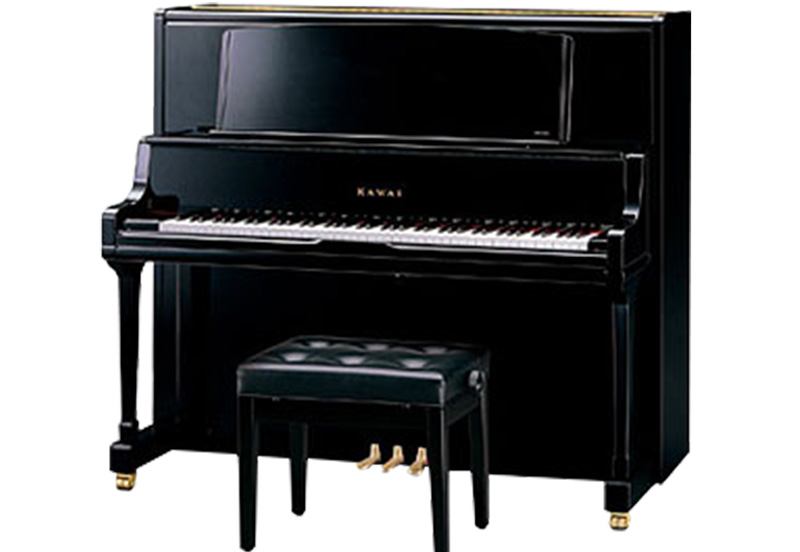
The mid-range requires the longest possible sound extension. The timbre should be beautiful and soft. The articulation should not be heavy or rigid, and the timbre should remain consistent with both light and heavy strokes. The only variation should be in volume. The bass range should be rich and powerful, with ample extension, and the articulation should not be short or weak. The treble range should be bright and clear. Avoid excessive flamboyance; the articulation should be pure without lingering overtones. When the piano's three sound ranges offer more satisfying timbres, attention should also be given to the natural transitions between them, without any noticeable seams; the timbre should be uniform; and the volume proportions should be harmonious.
When selecting a new piano, I prefer a mellow overall tone over a bright one. Because a piano with a mellow tone can potentially sound even better after some time of play, whereas a bright one might become too much over time. Of course, everyone has their own understanding of tone, and some differences are understandable, but they should not exceed a certain range.