


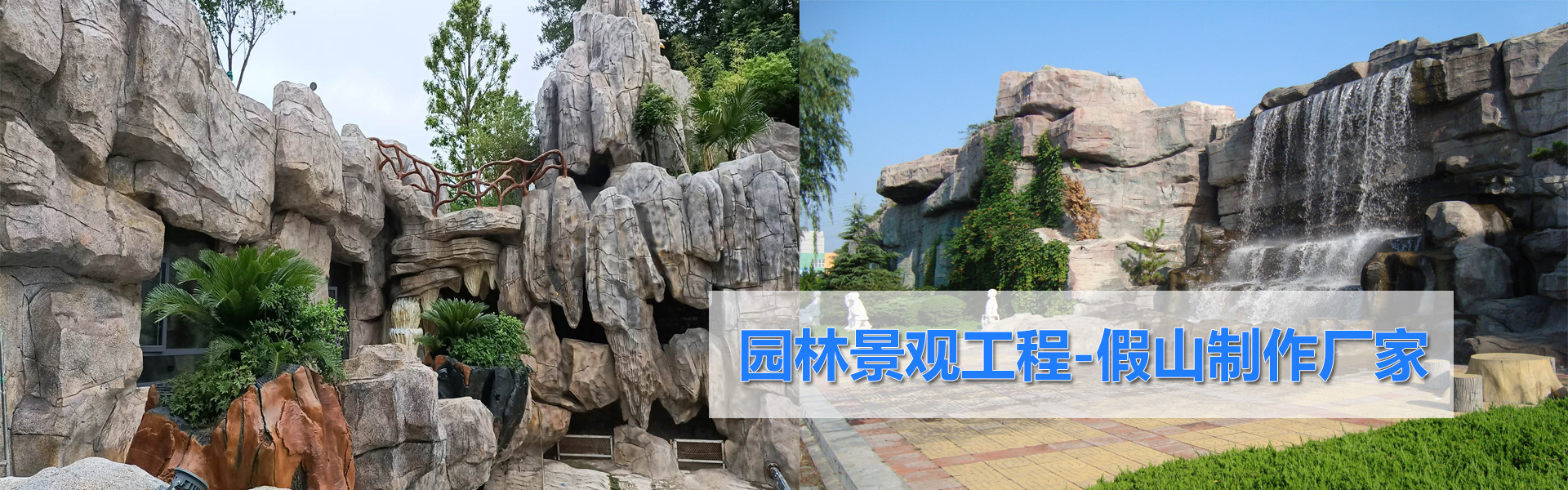


Artificial Rockery is a man-made landscape feature that mimics the appearance of natural stone, yet it is lightweight and cost-effective, making it easy to process and transport. It is widely used in garden and landscape design. Below are the precautions to consider in the production and processing of artificial rockery:
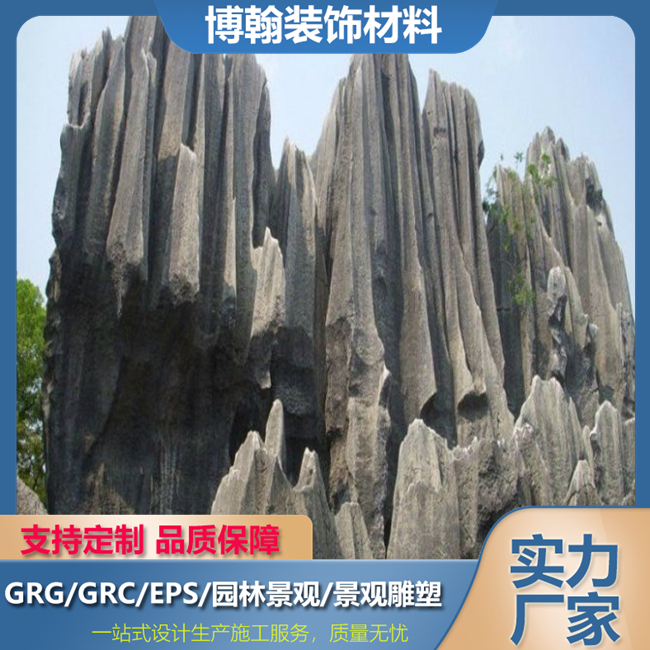
Design and Sample Production: Prior to production, design and sample making are essential to meet actual requirements, ensuring the artificial rock landscapes produced meet the design specifications.
Selecting High-Quality Raw Materials: Opt for suitable glass fiber, cement, stone powder, and other raw materials to ensure the quality and longevity of the artificial stone mountains.
Maintain Proportions: In the production process, it is crucial to strictly control the ratio of raw materials to ensure the strength and quality of the artificial mountains.
Manufacturing Molds: Producing molds for rock formations requires precision and durability to ensure the accuracy and consistency of the artificial mountains.
Forming Process: Mix raw materials such as glass fiber, cement, and stone powder, then place them into molds for shaping.
Surface Treatment: Sanding, carving, and coloring are performed on the artificial rock surface to achieve a realistic effect.
Quality Inspection: After production, a quality inspection is conducted to ensure the artificial rockery meets the requirements and standards.
Transportation and Installation: The artificial rockery is produced in modular form and care must be taken during transportation and installation to prevent damage and deformation.
In summary, the production and processing of artificial rock landscapes require attention to detail. Only by managing and controlling each stage can high-quality products be produced. Additionally, care must be taken during transportation and installation to avoid damage and deformation, ensuring the quality of the product.
