
公司主营:
15988191688

Product Center
Company Qualification
Used Wire & Cable Recycling, Jiaxing Waste Wire & Cable Collection, Long-term Cooperation, Honest Business Practice


Details Introduction
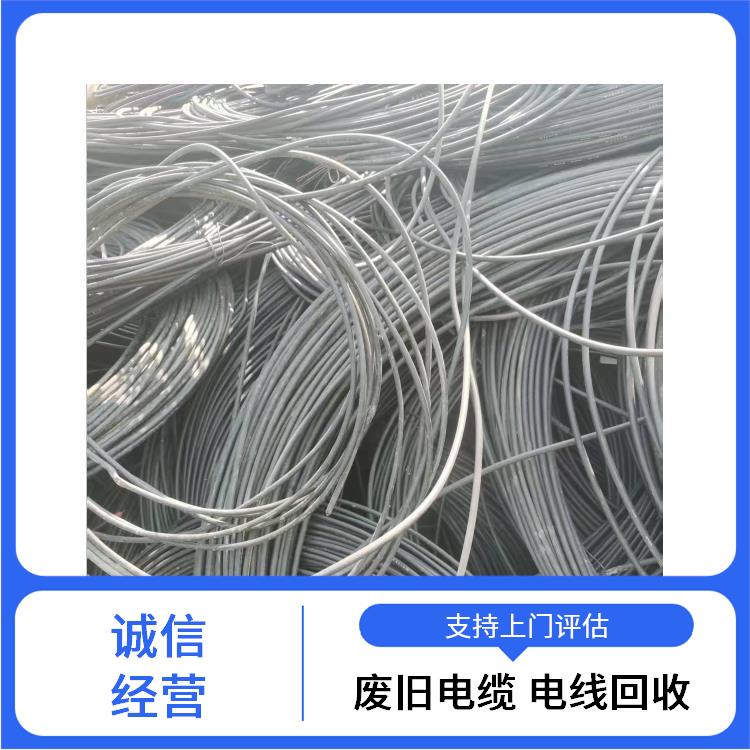
Recycled Cable Waste Collection
Cables that cannot be used normally are all classified as scrap. Some cables are handled by manufacturers for repair and replacement, while others that cannot be replaced are typically processed as scrap copper. The processing is entrusted to local scrap material recyclers for acquisition and handling. The recyclers are responsible for stripping the cables and recovering the copper, which is then sent to copper factories for cable or other copper product manufacturing, or directly smelted into copper ingots.
Wires and cables serve as the main arteries within buildings and are crucial as well. The lifespan of a building is typically around 70 years, while that of ordinary wires and cables is only 25 years. Wires and cables that have exceeded their service life tend to age easily, posing safety hazards that could threaten personal safety. After cables are phased out, they must be dismantled by personnel, and then sent to certain wire and cable recycling companies for unified processing. It is essential that these companies are legally registered businesses, as this ensures safety, environmental protection, and legality.
Major classifications of wire and cable recycling products
Notable main categories of wire and cable recycling products include medium and low-voltage power cables (up to 35 kV), high-voltage cables (above 110 kV), extra-high voltage cables (275-800 kV), and ultra-high voltage cables (1,000 kV and above). Additionally, they can also be categorized by current system as AC cables and DC cables.
Cables and wires are used for transmitting electrical power and facilitating the conversion of electrical energy. Broadly speaking, cables are also commonly referred to as such. Narrowly defined, a cable refers to insulated cables. It can be defined as: a body composed of the following parts: one or more insulated cores, along with their respective sheathings, a total protective layer, and an outer sheath. Cables may also include additional conductors without insulation.
The role of recycling and reusing waste cables and wires is irreplaceable by other industries. Prosperous countries view the recycling and reuse industry as an industry. With the rapid development of our country's economy, technological advancements, and the acceleration of product updates, an increasing number of goods will lose their value and become waste products, entering the recycling and reuse stage. Therefore, establishing a standardized waste product recycling market, ensuring effective use of useful materials, and proper disposal of hazardous materials, is a task for a strong, experienced non-ferrous metal recycling company. I'll give you a tip today to teach you how to recycle and reuse old items.
1. Nail a half-used spool of thread to the wall or a wooden shelf, making a simple hanging hook.
2. Use old spools as drawer pulls. Cut the old spools in half with a saw, then thread a screw into each piece and nail them onto the drawer.
3. Collapsible soft bamboo mats can be repurposed into sofa covers after they are worn out or develop holes.
4. Don't discard worn-out belts; they can be used for blade maintenance. When a blade becomes dull, rub both edges of the blade back and forth against the belt a few times to sharpen it and extend its lifespan. Avoid the damaged areas of the cushion and cut according to the shape and size of the sofa. Sew the cut ends with fabric, and tie a few straps at appropriate spots to secure it.
1. Hand-peeling Method: This method involves manual skinning, which is low in efficiency, high in cost, and the working conditions for workers are poor.
2. Incineration Method: This is a traditional method that involves burning the plastic sheath of waste cables to recover the copper inside. However, it produces significant smoke pollution. Additionally, during the incineration process, the copper wires are heavily oxidized, reducing the metal recovery rate. This method has been strictly prohibited by countries worldwide.
3. Mechanical Peeling Method: Utilizes cable stripping machines for processing. This method still requires manual operation, is semi-mechanized, with high labor intensity and low efficiency, and is only suitable for stripping thick cables.
4. Chemical Method: The technology for treating waste cables by chemical methods was proposed in the 1990s, with some research conducted on it. China also conducted research during the "Eight-Five" period. A major drawback of this method is that the waste liquid produced cannot be disposed of, which has a significant impact on the environment, hence it is rarely used.
5. Cryogenic Method: This method was also proposed in the 1990s, using liquid nitrogen as the refrigerant to make the waste cables脆 at low temperatures. Then, through crushing and vibration, the plastic sheath is separated from the copper wire segments. China also initiated research on this method during the "8th Five-Year Plan" period. However, the drawback of this method is its high cost and difficulty in industrial production.
周经理 (Mr.)
15988191688
18839669145
15988191688@139.com
Lingping District, Canal Street, Wan Yue City South District
b2b.china9.net © Zhongshang 114 Hebei Network Technology Co., Ltd.Address: Room 6009, Oriental New World Center, No.118 East Zhongshan Road, Qiaoxi District, Shijiazhuang City, Hebei ProvincePlatform Service Hotline: 4006299930
