



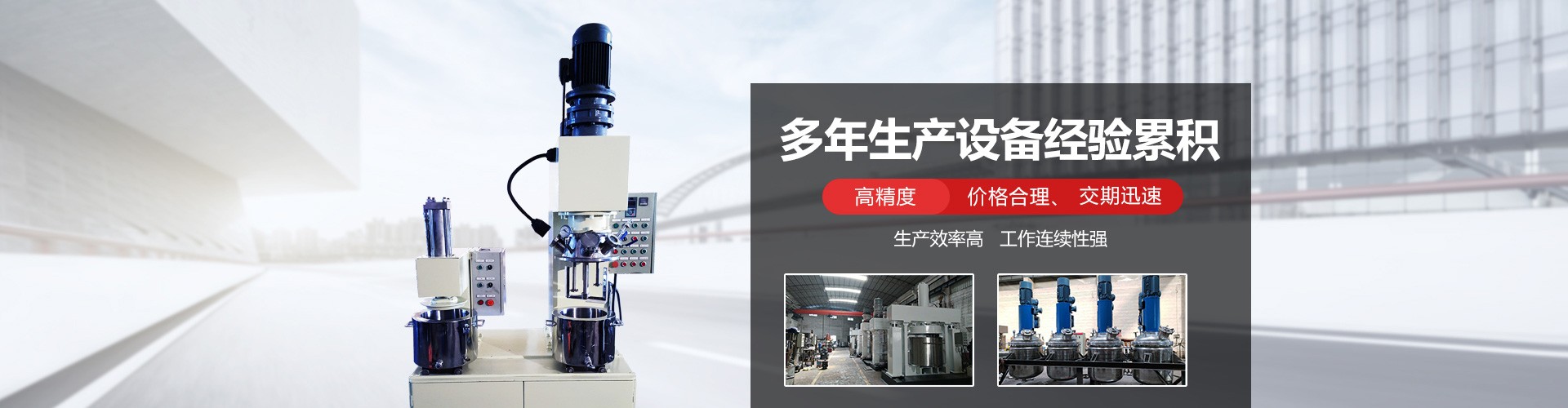

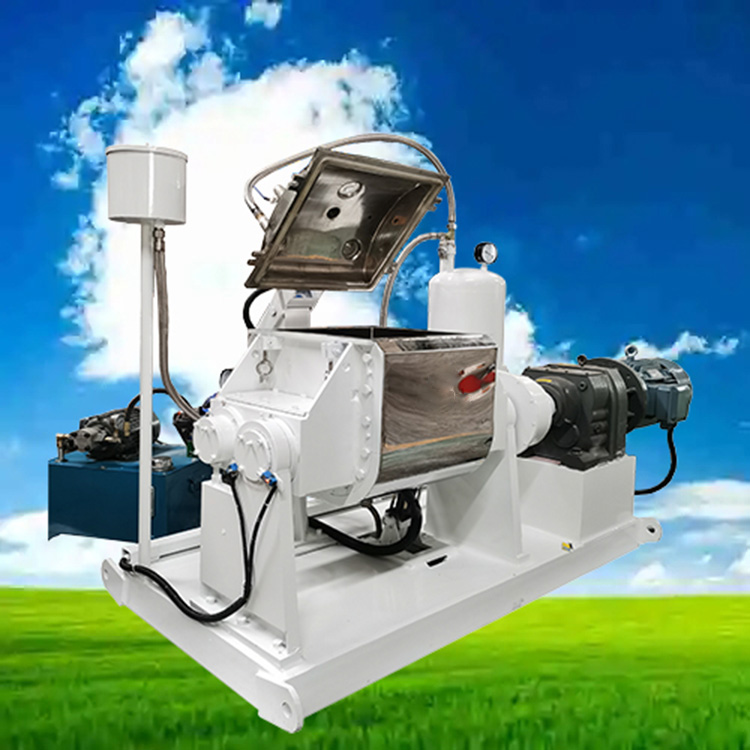
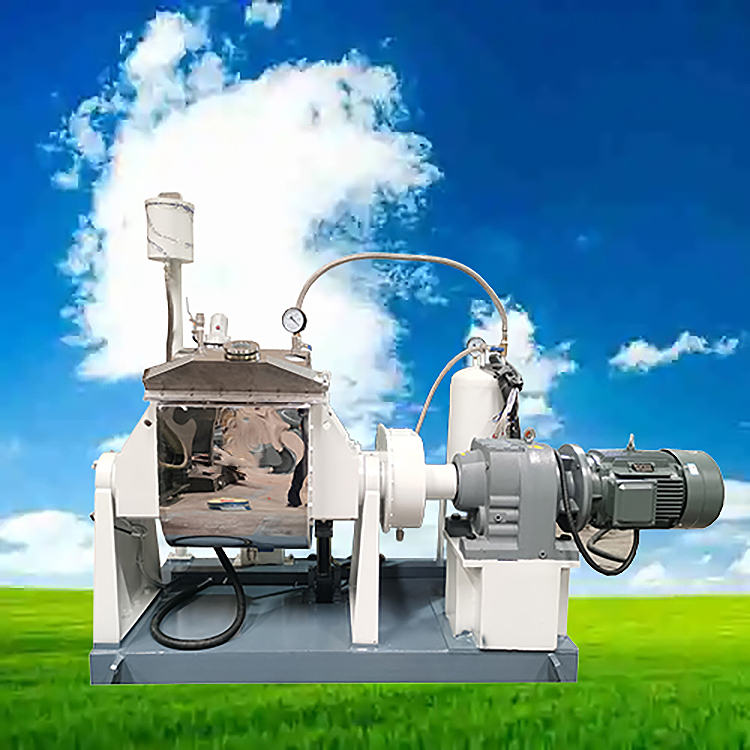
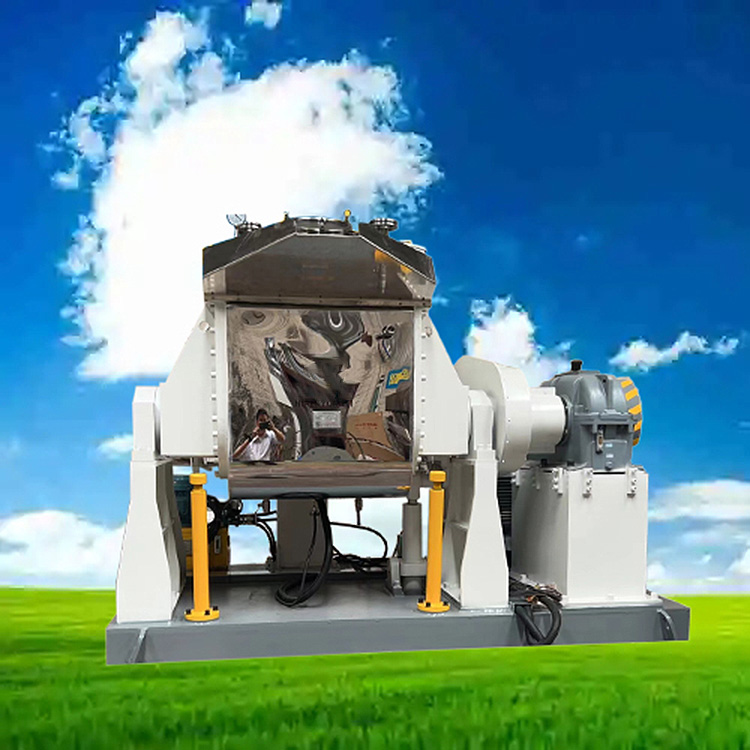
The discharge methods of the kneading machine include hydraulic tilting, ball valve discharge, and screw extrusion. The cylinder and paddle contact parts are all made of SUS304 stainless steel, ensuring product quality.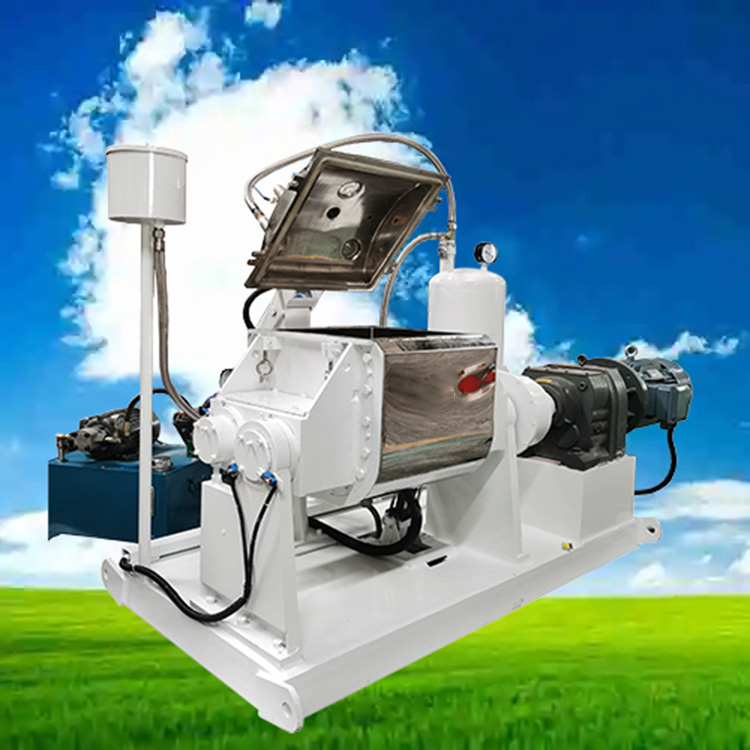
Vacuum mixing machine structure:
The vacuum intensive mixer is mainly composed of six major parts: the intensive mixing part, base part, hydraulic system, transmission system, vacuum system, and electrical control system. The intensive mixing part consists of cylinder bodies, impeller shafts, wall plates, cylinder covers, etc. The hydraulic system is operated by one hydraulic station controlling two small cylinders and two large cylinders to open/close the large cover and flip the mixing cylinder. The system is designed with a pressure of 7.0 Mpa. The electrical control system includes manual and automatic control options, which are user-selectable for convenience and reliability. The transmission system is made up of an electric motor, reducer, and gears, which are matched with the mixer model's motor. During the transmission process, the motor's synchronous speed can be transmitted through a flexible coupling to the reducer, and then to the output device to drive the slurry at the specified speed. Speed regulation can also be achieved with a variable-frequency inverter.
Blending machine light industrial enterprises are trending towards semi-automated and automated development. Blending machines are also aiming for automation, and the automation of consumption equipment for blending machine processing has fundamentally changed the quality of blades. CNC processing equipment fundamentally solves the advancement of automation technology, marking the first step for enterprises to enter the mid-to-low-end market of light industrial automation, catering to the theoretical needs of blending machine users. The spirit of the blending machine's volume reflects the enterprise's process level, which determines the blade manufacturing capability. It guarantees the production of high-quality, high-grade products, ensuring that the blending machine maintains the advantages of high processing frequency and product accuracy, essentially realizing the automation of the entire production process.
Mixer machines offer comprehensive functions, a wide variety, and are highly versatile, particularly suitable for industries such as glass adhesives, silicone adhesives, silicon rubber, medium to high viscosity sealants, paste materials, chewing gum, bubble gum, plastics, rubber, dyes, pigments, inks, food bases, architectural paints, carbon, cellulose, aluminum silver paste, hot melt adhesives, pulp, cellulose, battery paste, dyes, silicone resins, and cosmetics. Our company's production requirements allow for the manufacture of three types: vacuum, atmospheric pressure. Heating is achieved through jacketed heating, thermal oil, and electric or water bath heating methods. Discharge options include hydraulic tilting, ball valves, and screw conveyors.
-/gbahehf/-
