
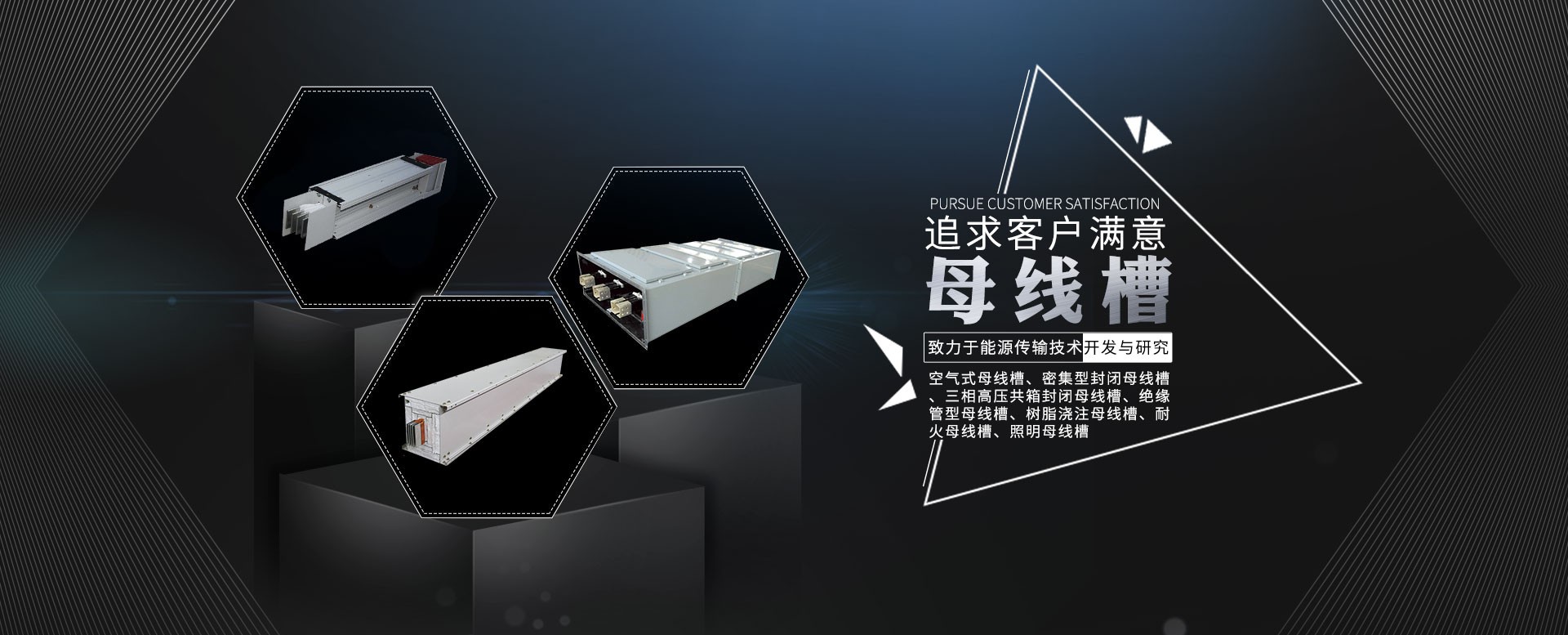

Busbar trunking provides convenient tap-offs. An insert-type busbar trunking refers to its method of distributing power from the main line to branches using insertion. At regular intervals, there are tap-off boxes, making the tap-off process very convenient.
Cables require on-site splicing, resulting in poor reliability, a particularly noticeable drawback even for pre-fabricated branch cables. Mainly due to the need for factory customization, the branch connections use open "C" type clamps, which may eventually fail to maintain proper tension. Additionally, the cost of each branch head is substantial, hence the limited application of pre-fabricated branch cables to date. To cut power to any floor, busway power does not need to be interrupted; simply remove the busway junction box when it is unloaded. However, operating to cut the branch power of pre-fabricated branch cables while they are live is extremely dangerous.
Busway槽具有优异的散热性能. The insulation material of the cables (insulation of the core wire and sheath) serves both as an insulator and an thermal insulator. As a result, when power cables are laid in the bridge, they can be installed in two layers more, due to considerations for heat dissipation. The busway utilizes air conduction for heat dissipation and, through the tightly contacting steel shell, releases heat, thereby demonstrating its superior heat dissipation performance compared to cables.
Busbars require minimal maintenance; routine maintenance typically involves measuring the temperature rise of the housing and core bolts, as well as the junction temperature of the incoming line box. If 4.8-grade core bolts are used, they need to be tightened regularly. However, if 8.8-grade high-strength bolts are used, they do not require regular tightening. Cables, due to factors such as material wear, aging, and shorter lifespan, necessitate regular inspections, maintenance, and even replacement.
In terms of current-carrying capacity, cables can currently only reach an area of 1000mm², with a rated current of 1600A. However, such large-sized cables are rarely used in actual engineering due to their size and weight. In engineering, it is common to use cables with an area of 400mm² or less for power distribution, which requires multiple cables to supply power simultaneously. In contrast, busbars can achieve a rated current of up to 6300A, demonstrating their superior current-carrying capacity, which is unmatched by cables.
The busbar槽 has a strong overload capacity, which depends on the high working temperature of the insulation material used. The insulation material for the busbar employs materials with a working temperature of 105°C. Now, radiation cross-linked flame-retardant wrapping tape (PER) and radiation cross-linked polyolefin heat-shrinkable tubes with a working temperature above 140°C have been developed. The insulation material for cables typically operates at a constant temperature of 95°C to 105°C, making the busbar's overload capacity significantly greater than that of cables.
