

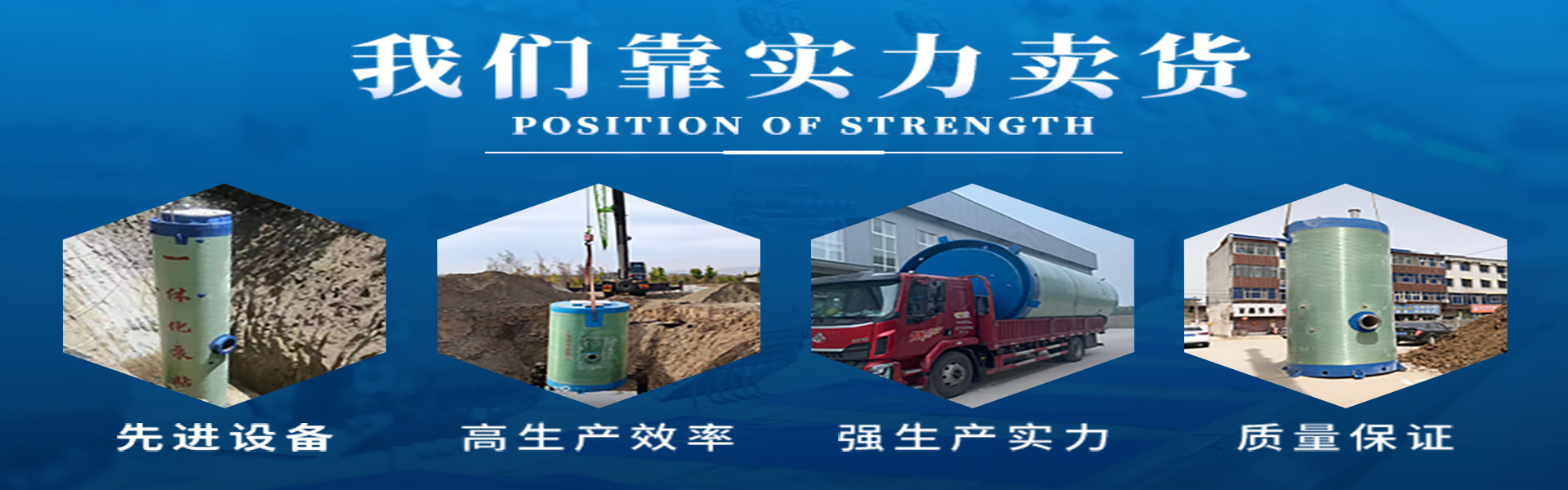


With the advancement of technology, the drawbacks of traditional concrete pumping stations are becoming increasingly apparent, and they no longer meet the needs of people's lives. In contrast, glass-fiber reinforced plastic integrated precast pumping stations have come into the spotlight. These integrated stations offer several advantages, such as a smaller footprint, zero water pollution, no noise, no need for bottom cleaning, and a longer lifespan, making them popular among consumers. Today, I will explain how to choose an integrated pumping station.
Due to the fundamental nature of the pump in a pump station integration, it is essential to select the pump first before choosing the pump station. Flow rate is one of the critical performance parameters of a pump, as it relates to the purification volume of water. When selecting a pump, it is typically taken that 1.1 times the normal flow rate is the maximum. Next comes the head, which usually requires a pump type selection with an additional 5% to 10% head allowance after amplification.
Integrated pump stations also have requirements for terrain and landform. They must be constructed in accordance with national regulations and standards, which can be referenced from the contents of the "Pump Station Design Specification." The placement of the pump station should ideally be on a firm geological foundation with favorable geological conditions, avoiding poor foundations such as soft soil, loose sand, and expansive soil. It should not be situated in areas with active fault structures.
The medium used in municipal sewage discharge directly determines the selection of the precast pump station's shell and pump material. Generally, factors such as the content of flammable and explosive gases, the content of corrosive media, and the viscosity and density of the discharge medium must be considered when selecting the type. These factors must all be taken into account to correctly choose the pump and shell materials.
The determination of the effective volume of an integrated pump station is related to the size of the pump, so by determining the water flow, you can ascertain the number and model of the pumps, thereby identifying the pump station's effective volume.
