
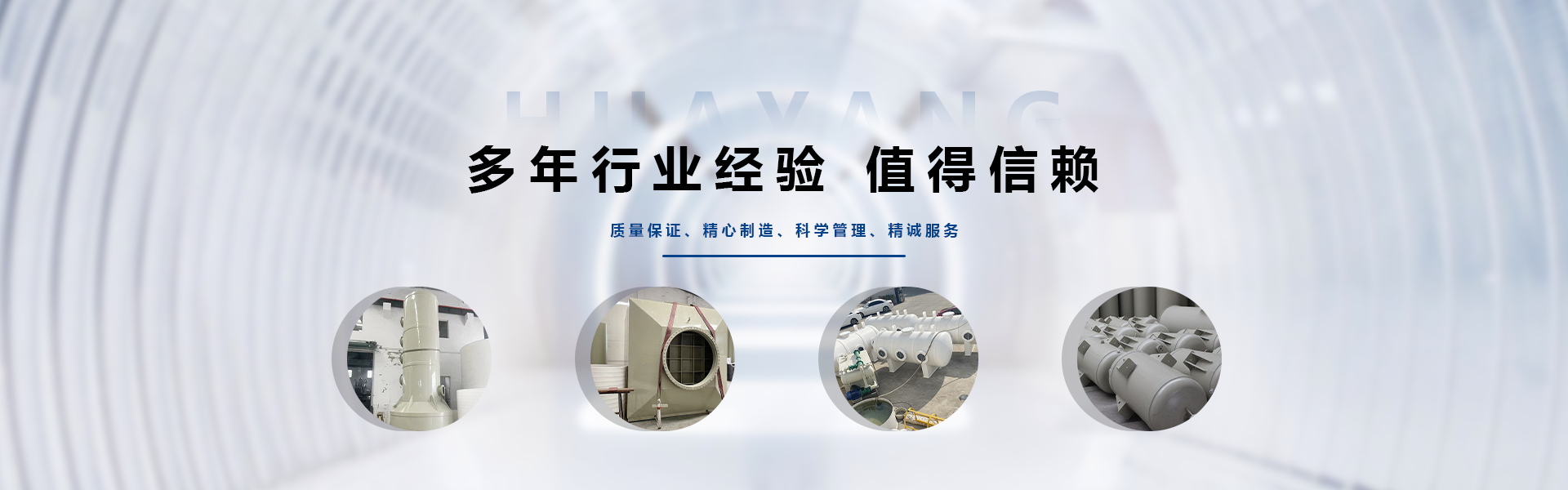

The waste gas purification tower consists of the main body, filling layer, demisting layer, circulating spray water piping, and circulating water trough, among other components. The waste gas purification tower finds applications in various industries such as the electronics industry, semiconductor manufacturing, PCB production, LCD manufacturing, steel and metal industry, electroplating and metal surface treatment, acid pickling process, dyeing, pharmaceuticals, chemical industry, odor control, and flue gas combustion. Below is an introduction to the washing process of the waste gas purification tower.
Wastewater Treatment Tower Washing Process:
The basic principle of the flue gas purification tower is to utilize the contact between gases and liquids to transfer pollutants from the gas to the liquid, and then separate the clean gas from the contaminated liquid to achieve the goal of purified air.
Particulate pollutants in the air stream come into contact with the cleaning liquid, where droplets or a film spread to adhere to the air particles or increase their moisture content, allowing the particles to be separated and removed through the action of gravity and inertial forces. Gaseous pollutants are then transported into the cleaning liquid via turbulent flow, molecular diffusion, and other mass transfer phenomena, as well as chemical reactions, achieving separation from the incoming gas stream. Chemical substances can be added to the cleaning liquid to absorb and control gaseous odor substances.
Waste gases are treated through a packed scrubber tower using a counter-current liquid absorption method, where the liquid is sprayed downward from the top of the tower in a mist or small droplets. The waste gases reach the gas-liquid contact point from the bottom (counter-current flow). This process cools the waste gas temperature, adjusts the gas, and removes particles. After passing through a mist elimination section, the treated gases are released into the atmosphere.
