
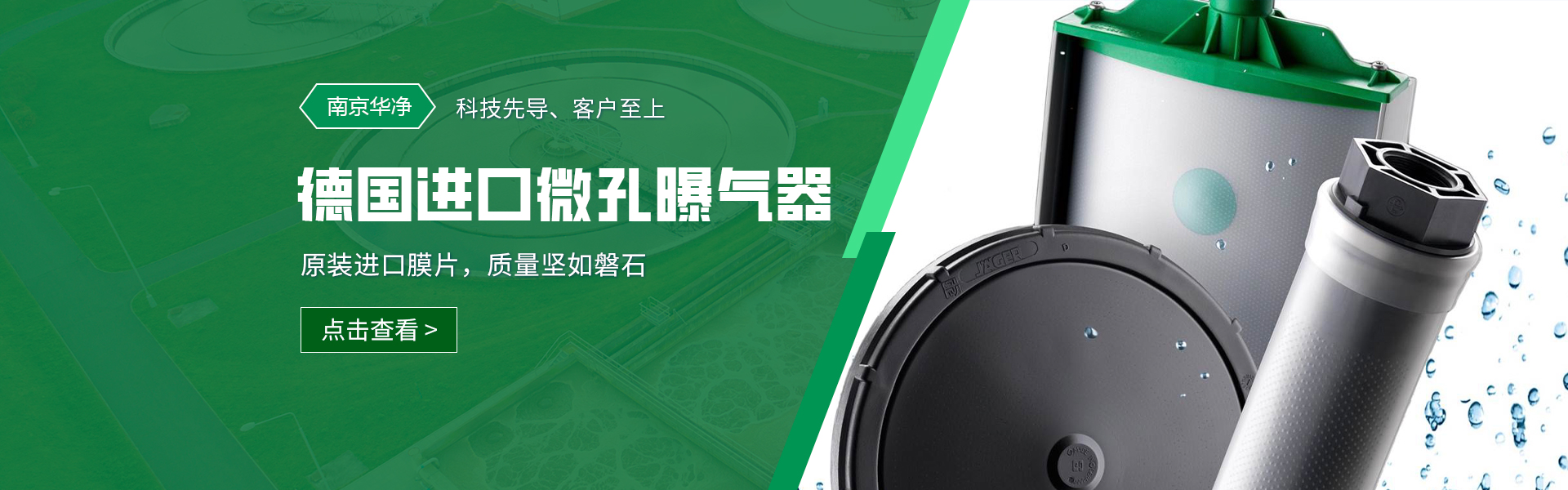

Micro-porous aeration blowers are widely used in the wastewater treatment industry, especially in sectors with large wastewater discharge volumes and high treatment difficulties. These blowers perfectly address the challenges of wastewater treatment in these industries, while also significantly alleviating the issue of water supply tension.
Here's how to select a microporous aeration device.
1. To minimize the energy consumption of the aeration system as much as possible, the air resistance loss of the aerator should theoretically be zero; to ensure uniform aeration distribution along the length of the bio-reactor, the resistance of the aerator should be sufficiently high.
2. To ensure high oxygen utilization, the bubble diameter diffused by the aeration device should be sufficiently small; to achieve thorough mixing of the wastewater and maintain the activated sludge in a suspended state, the bubble diameter diffused by the aeration device should be sufficiently large.
The diffused bubbles from the aeration device should be smaller to ensure a higher oxygen utilization rate. For thorough mixing of the wastewater and to maintain the activated sludge in a suspended state, it is preferable to have larger bubble diameters in the aeration device.
