
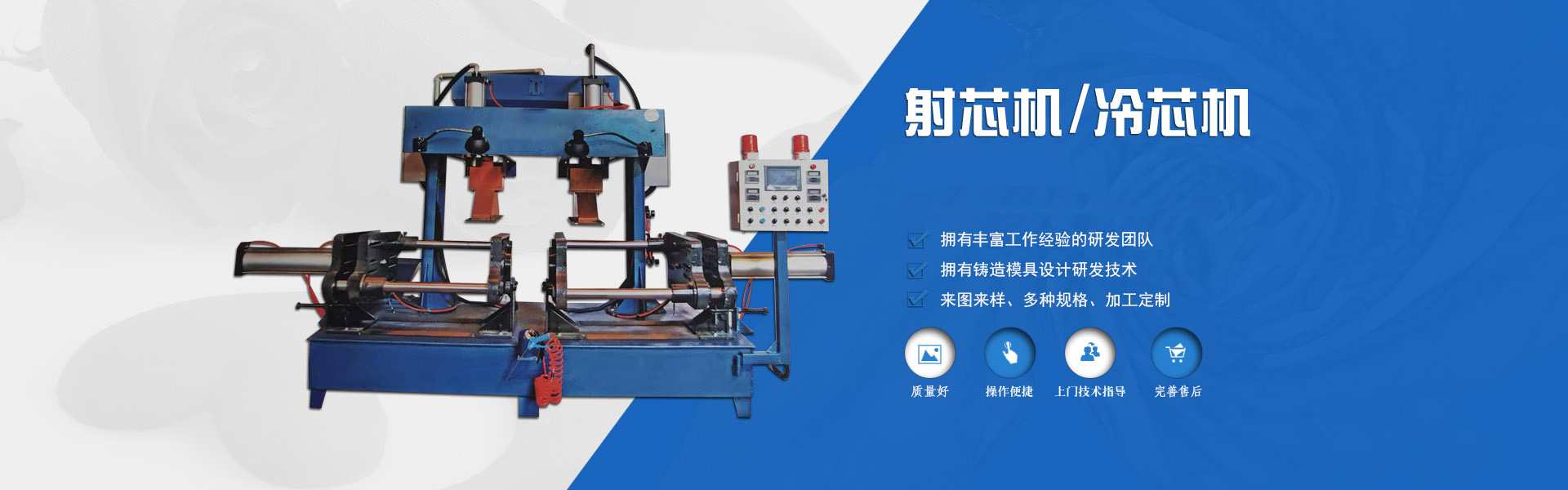


The film-coated sand overlay casting process involves the molding of metal parts, including mold making, sand preparation, core making, core shaping, mold assembly, and casting. The resulting models are metal molds, and the film-coated sand is used as the raw material for sand preparation. Core making and shaping are carried out using core shooters, with cores stacked vertically during mold assembly to form an overlay casting system. This process features high forming strength, good fluidity, and the ability to produce complex-shaped sand cores with excellent surface quality and good collapsibility, making casting clean-up easier. The use of core shooters for core making and shaping ensures high production efficiency, easy demolding, and high dimensional accuracy of the sand molds. The overlay casting system, composed of core stacking, withstands high pressure during casting and has strong filling power, resulting in high yield and high rate of finished products. This not only ensures quality but also reduces production costs, enabling large-scale production of high-precision small castings.
The use of film-coated sand hot-core box shot-blasting machines for core making or casting, offers low investment and high returns. From an equipment investment perspective, purchasing a single shot-blasting machine for film-coated sand is sufficient, which is generally achievable for most manufacturers. In terms of personnel allocation and labor consumption, the high efficiency of core making with shot-blasting machines results in a high surface finish on the internal casting cavities, making the castings easier to clean. The film-coated sand cores or molds have high strength and good collapsibility, allowing for the casting of complex shapes. The surface finish of the castings is much better than sand casting, with higher dimensional accuracy and easier cleaning, improving the cleaning conditions.
Shot sleeve machines are widely used in the overlay casting process of coated sand, producing coated sand cores with precise dimensions, smooth appearance, and excellent resistance to high-temperature collapse. The cores can be stacked in multiple boxes for simultaneous casting, significantly increasing work efficiency and the yield of finished products. They are extensively applied in the casting processes for mechanical components.
