
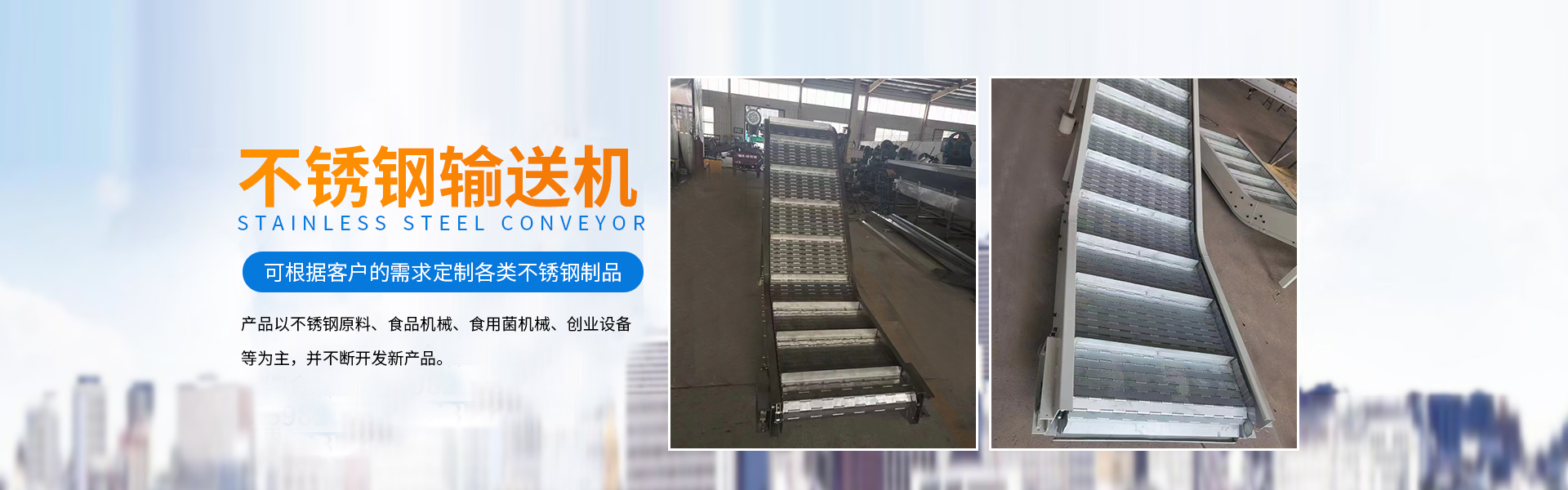

The Structure of the Non-powered Conveyer: The non-powered roller conveyer, also known as a roller conveyor, comes in two types: long roller tracks and short roller tracks. The long roller tracks have cylindrical, conical, and curved surfaces, with cylindrical long roller tracks being widely used. The curved sections of the roller tracks use conical rollers or double rows of cylindrical rollers to facilitate item turns. Short roller tracks can reduce the spacing between rollers and are lighter in weight. The roller tracks are generally slightly inclined; when the items are heavy and the track is long, the slope can be set at 1% to 1.5% to make pushing easier. To allow items to slide down by themselves, the slope can be increased to 2% to 3%. Many factors influence the self-slide slope, and most are determined through experimentation. When the track length is less than 10 meters and the items weigh less than 200 kilograms, the track can be laid horizontally. Self-slide roller tracks are difficult to control the speed of item descent, so the length is generally not long. The width of the roller track is 100 to 150 millimeters wider than the item width. The curve section has a minimum curvature radius of 3 to 4 times the width of the roller track. The spacing between rollers is one-third to one-fourth the length of the items being conveyed, and when high stability is required for item conveyance, the spacing can be set to one-fourth to one-fifth of the item length. The diameter of the rollers is determined by the load size.
News Center Co., Ltd.
