
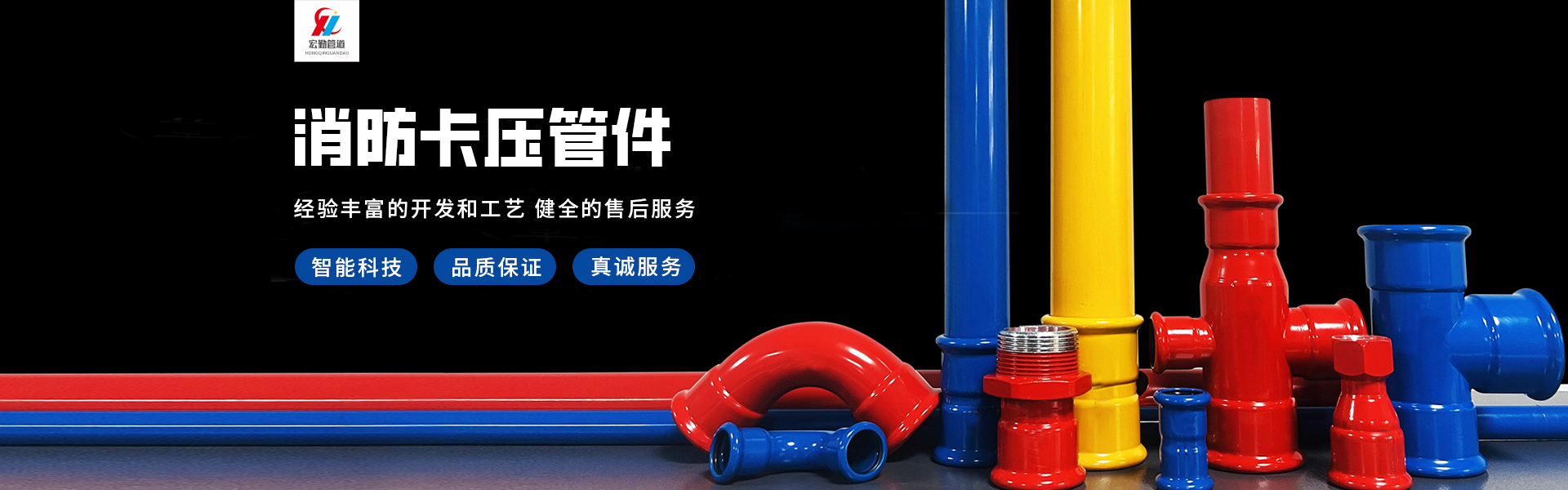
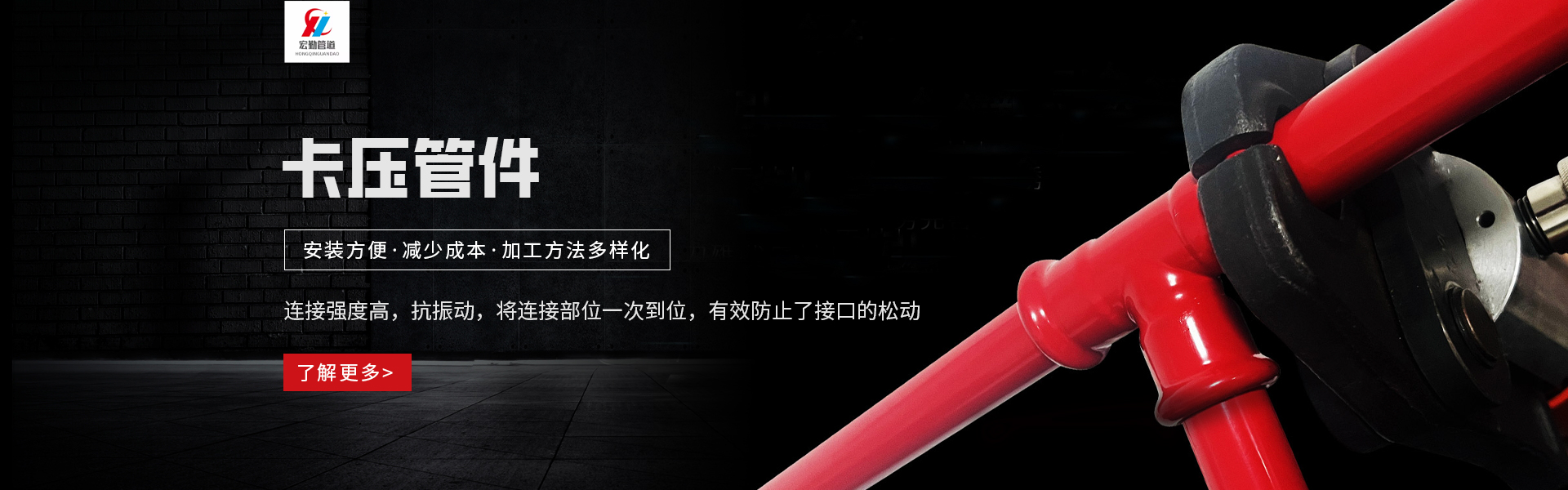


The press-fitting pipe fittings feature reliable and safe connections, convenient and quick construction, suitability for embedded installation, maintenance-free updates, and relatively superior cost-effectiveness. Therefore, they are a more advanced type of connecting component in potable water systems, water supply systems, heating systems, steam systems, industrial oil pipeline systems, and industrial gas pipeline systems. They are suitable for pipeline connections of water, oil, and gas.
How do we install compression pipe fittings? Let's find out together below.
First, use a pipe cutter to cut the pipe to the construction size, then use a stainless steel specialized file or an angle grinder to remove burrs from the cutting surface. When cutting, ensure the pipe's cut is perpendicular to its centerline. The end of the pipe should be smooth, flat, and clean without any oil stains.
2. Prepare for connection by first marking the insertion length of the pipe with a dedicated line marker around the pipe end. Next, ensure the O-ring seal is properly positioned; never use lubricant during installation. Then, vertically insert the pipe into the carbon steel clamp pipe fitting, ensuring it does not歪斜 to prevent damage or leakage due to the seal being cut or falling off. After insertion, confirm the distance from the marked line on the pipe to the end. For nominal diameters of 15-25, the distance is 3mm; for diameters over 32, it is 5mm.
3. Conducting Cardan joint connections
The claw of the clamping tool should be snug against the convex part of the pipe fitting, with the tool's claw perpendicular to the pipe's axis. After initiating the operation, the claw should bite tightly onto the pipe fitting until slight vibrations occur, at which point the clamping process may be completed.
After the press-fit connection is completed, use a 6-point gauge to check if the press-fit process is intact. If the press-fit is not properly seated, perform the press-fit connection again using the standard process, and then confirm again with the 6-point gauge. When connecting to an internal and external threaded adapter, tighten the threads first, followed by the press-fit.
4. Inspection: After the clamp is applied, a specialized hexagon gauge should be used to check the integrity of the clamp connection. Once the entire carbon steel clamp pipe fitting is installed, a pressure test should be conducted. This can be done using either water pressure or air pressure. The water pressure test should be at 1.5 times the working pressure, and the air pressure test should be at 1.05 times the working pressure.
