

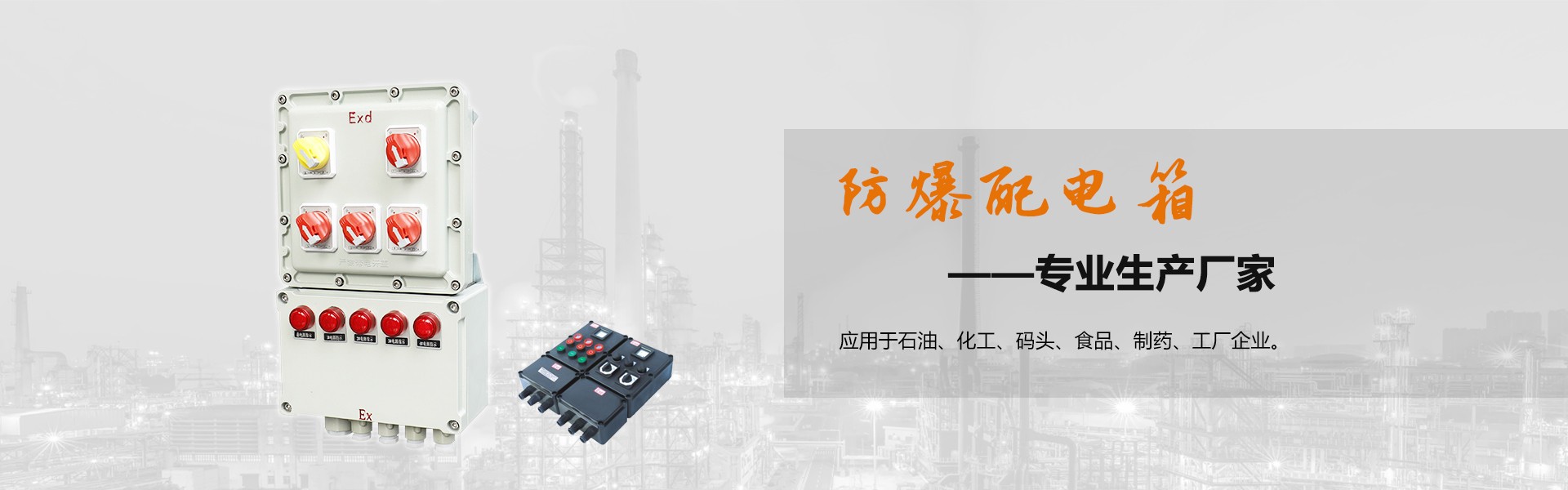

Section 1: Explosion-proof Distribution Box Assembly
Before assembling the box, the main mating dimensions of the parts should be reviewed to avoid any discrepancies.
During the assembly process of explosion-proof boxes, parts are not allowed to磕,碰, or scratch the explosion-proof surface, ensuring the smoothness of the surface.
3. It is strictly prohibited to strike or use inappropriate wrenches and spanners when tightening the bolts and nuts during the assembly of the explosion-proof box.
4. Pressure testing is conducted on explosion-proof boxes prior to assembling electrical components, with a pressure increase to 1MP and maintenance for 10-12 seconds. The box should ensure no significant deformation and no leaks.
5. When assembling electrical components in explosion-proof boxes, pay attention to the correct installation position, ensure they are securely fastened, and guarantee the stability of the box.
6. Explosion-proof boxes are marked with a numbering machine during assembly, ensuring clear and complete wire numbering. Pay attention to the wire sequence, color, and diameter when wiring to avoid confusion and ensure clarity.
7. Electrical equipment is adjusted according to electrical design requirements after installation.
8. After debugging, securely fasten the wiring harness, install the wireway cover, and ensure the grounding wire is properly connected. Use a Φ20-30 round bar to wrap 6-8 turns around the grounding wire to minimize movement damage.
Before securing the lid, apply a uniform layer of 0.1-0.3mm thick 3# calcium-based grease to the explosion-proof surface of the box body. This is for corrosion and water resistance.
When tightening the lid, use an 18N·m torque to cross, symmetrically, gradually, and evenly tighten each screw.
Safety Equipment Techniques and Maintenance
Start simple, then complex.
This experience holds two meanings: First, when addressing faults, one should initially use simple and straightforward methods that the maintenance staff are proficient in, followed by more complex, precise, or less familiar techniques. Second, when troubleshooting, start by eliminating apparent, obvious, and common issues, and then address more challenging, previously unhandled疑难 faults.
2. External debugging first, followed by internal processing.
External refers to various switches, buttons, sockets, and indicator lights exposed outside the electrical equipment housing or seals. Internal refers to the printed circuit boards, components, and various connection wires inside the electrical equipment housing or seals. The process is to first conduct external debugging, followed by internal handling. This means using switches, buttons, and dials on the electrical equipment panel to debug and inspect without disassembling the equipment, thereby narrowing down the fault range. Begin by eliminating faults caused by external components of the electrical equipment, then repair internal equipment issues, and strive to avoid unnecessary disassembly.
First mechanical, then electrical.
Electrical equipment is based on the principle of electrical-mechanical integration, particularly advanced equipment that combines mechanical, electrical, and instrumental systems. The mechanical and electrical components work organically together, representing two aspects of a single whole. Often, when mechanical parts fail, it affects the electrical system, rendering many electrical components non-functional. Therefore, do not be deceived by superficial appearances; look beyond them to the essence. A malfunctioning electrical system is not always due to electrical issues; it could be caused by faulty mechanical components. Hence, it is often more effective to first inspect and repair any mechanical system failures, and then address the electrical issues, achieving better results with less effort.
