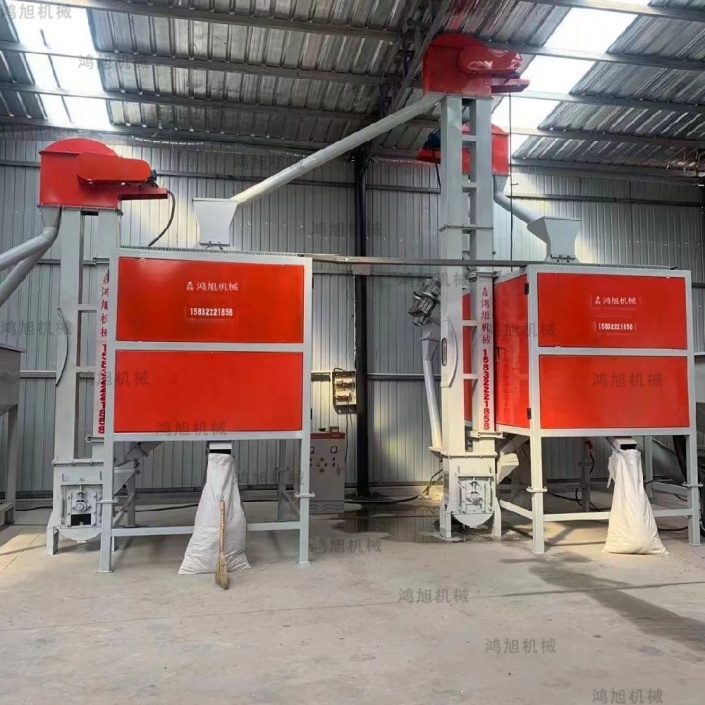






The separation principle of the silicone particle separator utilizes the different vibration states and characteristics of silicone particles under varying vibration frequencies and amplitudes. By automatically controlling and adjusting the vibration parameters, the goal of separating silicone particles is achieved. As silicone particles move on the vibration sieve surface, they are subjected to the sieve's vibration force and centrifugal force, thereby exhibiting different vibration states and characteristics under various vibration frequencies and amplitudes. Different vibration sensors and controllers can be installed to monitor and adjust the sieve surface's vibration parameters in real-time, enabling the automatic separation of silicone particles of different sizes. The silicone particle separator is composed of a vibration sieve, vibrator, controller, sensor, and feeder, among others. The vibration sieve is the core component, made of high-strength, highly corrosion-resistant, and non-deformable stainless steel. The vibrator serves as the power source, utilizing a high-performance vibration motor to provide sufficient vibration force and frequency for the quick and even movement of silicone particles on the sieve. The controller is the intelligent part of the separator, receiving vibration signals from the sensors and controller commands to regulate and control the vibrator, thereby achieving the separation of silicone particles. The feeder is an auxiliary component, responsible for delivering silicone particles into the vibration sieve to ensure even distribution on the sieve surface, thereby guaranteeing separation accuracy and efficiency. The silicone particle separator can process mixed plastics containing silicone, rubber, and plastic from household appliances, such as the separation of plastic and silicone from crushed battery cases, the separation of plastics from refrigerators, the separation of plastics from broken electronic toys, and the separation of mixed plastics from other waste materials after metal removal. The purpose of solid waste separation is to obtain the recycling value of waste resources. Purification of plastics typically involves the use of a silicone rubber separator, which is designed to remove silicone, rubber, sawdust, rubber sheets, and other impurities, and offers a good purification rate.