
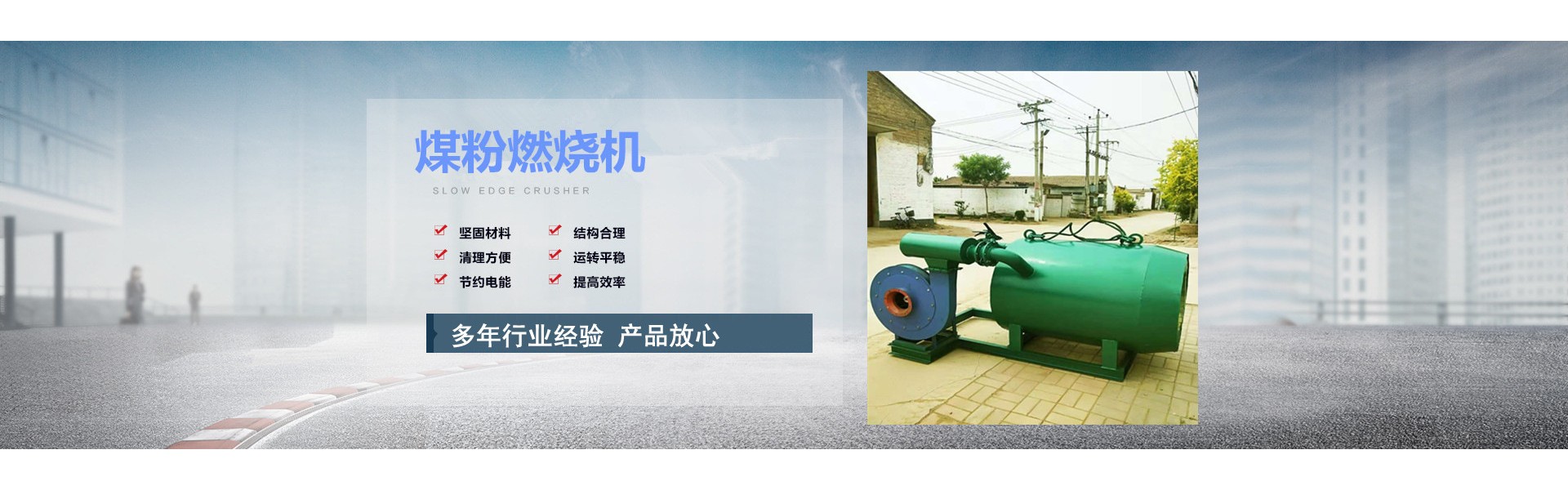

The Coal Milling Spray Powder Machine is a new type of coal-burning equipment, primarily used in industrial boilers, residential heating boilers, heat-conducting oil furnaces, and various other boiler models. It can replace fuel oil, natural gas, and electric heat energy equipment, thereby saving up to 50% of energy. This product can reduce the labor intensity of personnel, lower costs, enhance economic benefits, and meet environmental standards.
The coal mill powder spray machine is a new type of equipment that grinds raw coal into fine powder, and many people may not be very familiar with it. Technical personnel will introduce the main industries in which the coal mill powder spray machine is applied.
The foundry: More convenient during annealing, with even heat distribution, reducing labor intensity and workforce by 40%, and saving coal by 40%.
Twin: Smelting Applications: including lead, aluminum, antimony, and other non-ferrous metal refining.
Three: Roller Dryer: Dries slag, water slag, chicken manure, distiller's grains, feed, useful fertilizer, gypsum, coal slime, raw coal, with a fuel-saving rate of 40% for food.
Four: Thermal oil boiler: Replacing solid coal and electric heating, with a coal-saving rate of 40%.
Five: Industrial Application in Chemical Plants: Replacing lump coal and gas generators to supplement insufficient heat.
Six: Kiln: Drying slag, water slag, chicken manure, distiller's grains, feed, valuable fertilizer, gypsum, coal sludge, raw coal, achieving a 40% fuel-saving rate in food production.
To prevent coal dust from blocking the conveying pipeline and ensure proper output from the separator, it is crucial to confirm that the primary air flow of the coal mill reaches the specified low flow value. The coal mill can grind raw coal to meet the quality requirements of coal dust, but it is not permissible for items such as metal blocks, stone pieces, wooden pieces, and other coarse, hard debris to enter the coal mill, as this may affect the service life of the mill. It is also not allowed for items like cotton threads, iron wires, and fishing lines to enter the coal mill, as these elongated, linear debris can entangle the deflector door of the separator, impacting the normal operation of the separator and potentially causing coal dust accumulation and fire. Therefore, the coal conveying system should be equipped with comprehensive debris removal facilities.
The grinding roller is a component used for grinding coal powder, with the roller shell made of the same material as the mill disc lining, ensuring a lifespan and replacement that matches the lining. During use, the roller shell wears unevenly, with one side experiencing more wear. Once the wear reaches a certain level, the roller should be flipped to utilize the material properly. Maintenance of the coal pulverizing machine should be consistent, with checks after each shutdown for loose bolts on all mechanical parts, ensuring they are securely tightened. Inspect the lubricant level in the main bearing housing and top up as needed, using lithium-based grease through the axial end cover nozzle. After the coal is prepared as raw material, it is added to the hopper, fed into the machine by a cutter, broken by the hammerhead inside, and then blown out as fine powder with a screen residue less than 0.08mm by an internal fan. This fine powder is suspended and burned with excess air in the combustion chamber, ensuring complete combustion of the coal, resulting in a higher heat rate than other coal-burning furnaces by twice or more.
Due to the rotation of the grinding components, the coal powder milled by the coal mill atomizer is ejected to the air ring (a circular hot air passage equipped with equal flow guide vanes is called the air ring). Raw coal enters between the surfaces of the two grinding components through the feed pipe, where it is crushed and milled into coal powder under pressure. Hot air passes through the air ring at a higher speed into the drying space, drying the coal powder and carrying it to the coarse powder separator at the top of the grinding area. After separation, coarse powder that does not meet combustion requirements is returned to the grinding area for re-grinding; qualified coal powder, due to the drying agent, is carried out of the mill to the primary air pipe. The debris carried by the incoming coal, such as stone, pyrite metal pieces, and wood, is ejected to the air ring but falls into the debris box as the upward hot air is not sufficient to prevent their descent.
The coal pulverizer is a machine that crushes coal lumps into coal powder, serving as an essential auxiliary equipment for coal powder furnaces. The coal pulverizing process involves the crushing of coal and the continual increase in its surface area. To increase surface area, overcoming the intermolecular forces between solid particles requires energy consumption. Coal is ground into coal powder in a coal pulverizer primarily through three methods: crushing, impact crushing, and grinding. The crushing process consumes less energy, while the grinding process requires more. Different coal pulverizers combine two or three of these methods during the pulverizing process, but the primary method depends on the type of coal pulverizer.
