



Cultivation Techniques:
1. Planting: Transplanting is best between March and April. Small seedlings should be transplanted with soil, and larger seedlings with a ball of soil. During the peak summer heat, place them in semi-shaded areas for care. In winter, be mindful of frost protection.
2. Soil: Required is a loamy, fertile, well-drained slightly acidic soil. For potted plants, mix 5 parts garden soil, 2 parts coal soil, and 3 parts coarse sand to create the culture soil. Generally, repotting is recommended every 2 years.
3. Irrigation: Keep the soil moist during the growing season. Water thoroughly when the soil dries out, and in the early morning or late evening during the peak summer to prevent wilting of the leaves. Maintain dry soil during winter.
4. Fertilization: Apply well-composted organic fertilizer as base fertilizer during repotting, apply thinly and frequently during the growing season, apply well-composted organic fertilizer in February-March and September-November, and fertilize with a 3:7 mixture of fertilizer and water 3-4 times.
5. Pruning: It's best to remove flower buds promptly when they bloom to prevent nutrient depletion. For potted landscapes that have been shaped, attention must be given to pinching and pruning to prevent excessive growth of branches and leaves, maintaining the original posture. It's ideal to perform pruning and pinching during the spring and autumn growth periods.
Chinese Podocarpus Plant Culture:
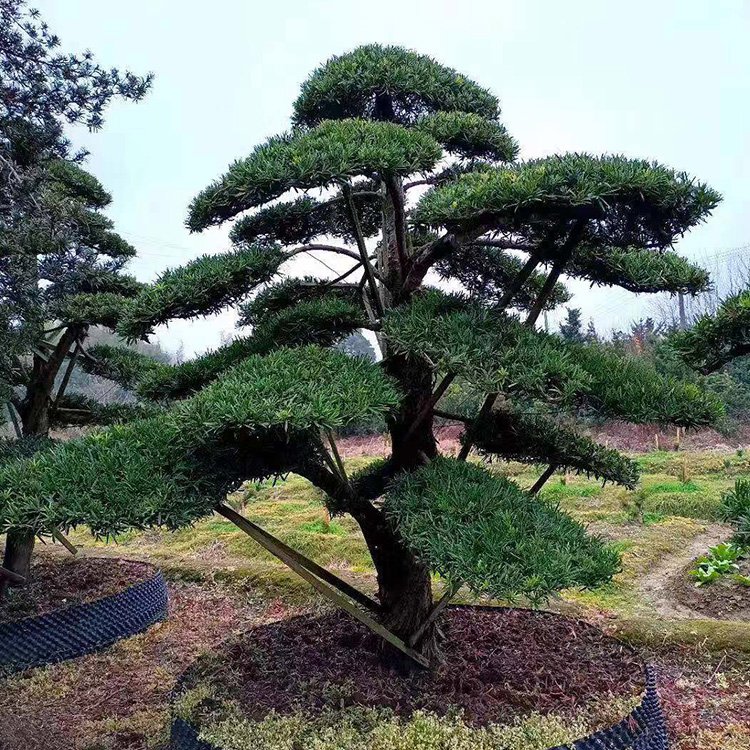
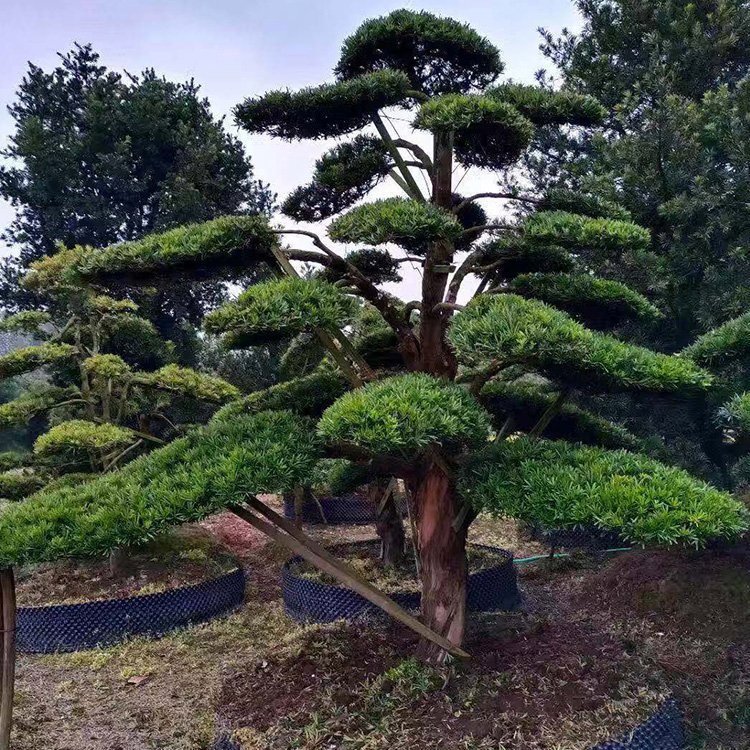
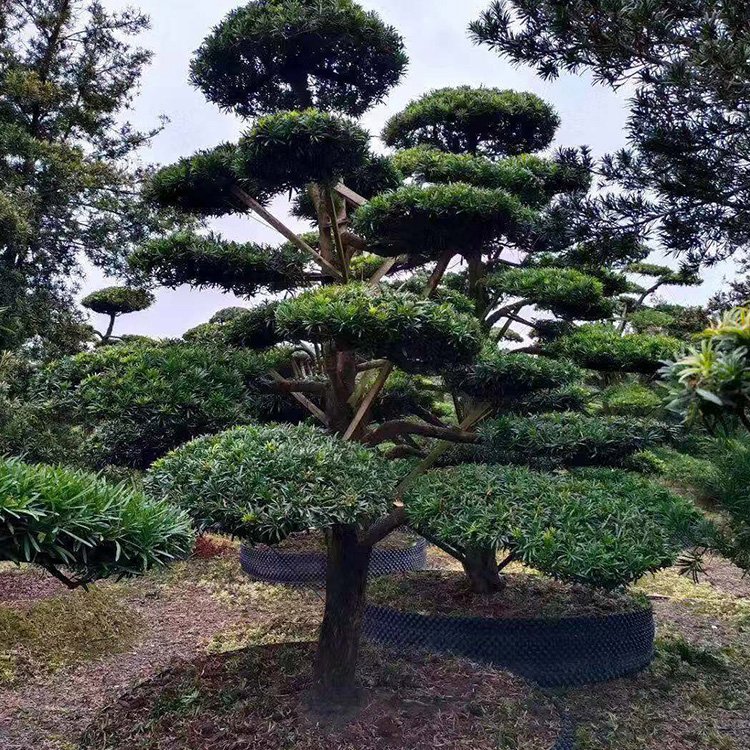
Lohansong trees exude an elegant and upright aura, possessing a majestic and robust air of pride. They symbolize longevity, wealth preservation, and good fortune, making them ideal greenery for courtyards and residential areas.
Lohassia Distribution Range: Lohassia is native to provinces and regions in China such as Jiangsu, Zhejiang, Fujian, Anhui, Jiangxi, Hunan, Sichuan, Yunnan, Guizhou, Guangxi, and Guangdong. It is also distributed in Japan.
Larix potaninii Growth Habits: Prefers warm and humid conditions with fertile sandy loam, can also grow on coastal plains. Not tolerant of extreme cold, thus only potted in North China. Long lifespan. Adores ample sunlight and has some tolerance to shade. Requires a mild and humid climate with no intense summer heat and humidity, nor severe winter frost. Light frost can cause the tender leaves and autumn shoots to turn completely yellow. Hence, it is not cold-resistant outside of the subtropical regions in South and Southwest China, and is only potted in North China. Demands a slightly acidic soil rich in humus, loose, fertile, and well-drained, as it turns yellow in alkaline soil, grows slowly, and can live for hundreds, even over a thousand years.
