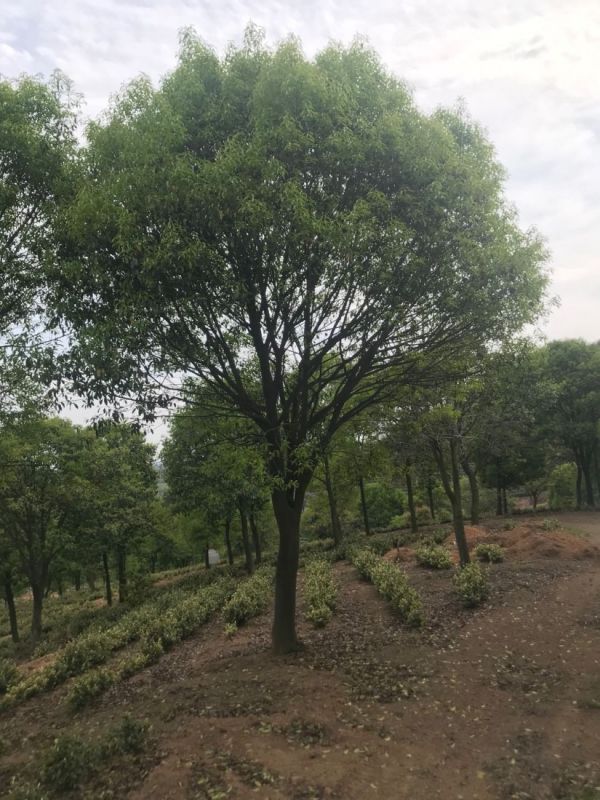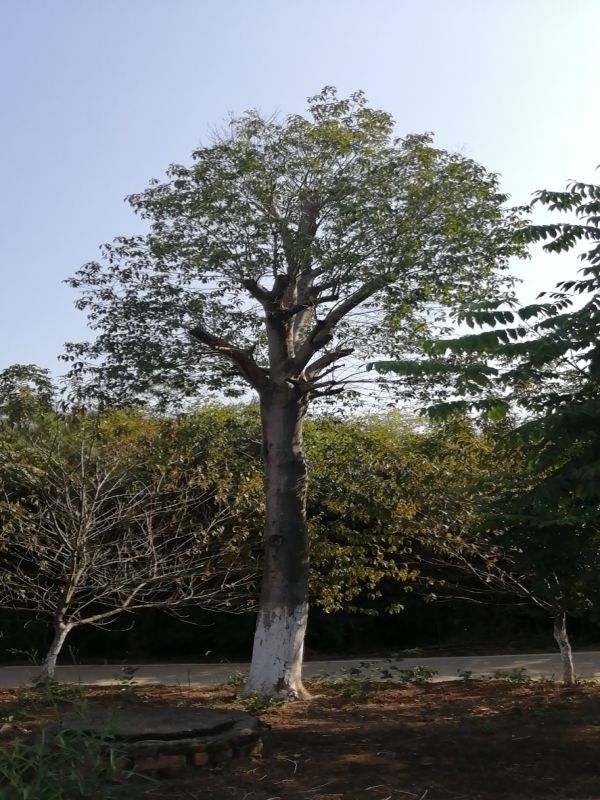


Chinese Holly Tree, also known as Wild White Ash Leaf, Mahonia, and Coral Mahonia, belongs to the genus Mahonia in the family Aquifoliaceae. The tree can reach a height of 13 meters; the crown is ovate, with smooth bark in a grayish green color. The branches are light green. The leaves are alternate and ovate to lanceolate, thin herbaceous, with scattered shallow serrations along the margin, and a glossy deep green surface. The flowers are solitary, dioecious, arranged in corymbs, borne at the branch tips and axils of the leaves; they are bright purple-red with a fragrance. The drupes are ellipsoid, deep red when ripe, and persist through winter. Flowering period is in May, and fruit ripening period is from October to November.
Primarily propagated through sowing, but also suitable for cutting propagation.
Harvested after fruit ripens in autumn, the fruit skin is removed and cleaned thoroughly. The seeds are then treated with wet sand and cold stratification to accelerate germination, with sowing completed before March of the following spring. Seedling stage
Grows slowly and requires careful cultivation and management. Holly seeds often need to germinate the following year if not pre-treated for germination.
Transplanting with tender branches is recommended during the plum rain season. Cut the cutting to 6-8 cm long, remove the lower leaves, leave 1-2 upper leaves, and shorten them by 1/3. Soak the cutting in a 200 mg/L NAA solution for 3 hours, then insert it to a depth of half its length. Use a mixture of sand or perlite and peat soil (3:1) as the substrate. After insertion, cover with a shade house, spray water frequently to maintain moisture, and roots should develop within about a month.
Red Holly trees commonly adopt natural sympodial central leader shapes, round-head shapes, conical shapes, or mixed central leader shapes. They grow multiple times a year, making them highly pruning-tolerant. In summer, one shaping is required. In autumn, based on different landscaping needs, they can be trimmed flat or shaped into a sphere, with appropriate thinning to maintain a certain canopy and branch shape.
After 2 to 3 years of cultivation in the nursery, the seedlings can be transplanted and established. Transplanting is best done in spring, ensuring that the roots are not damaged during digging and that the seedlings are transplanted with soil. Pay attention to weeding and watering during the initial planting period, and strengthen management. Holly is prone to infestation by white ants, and sooty mold may occur between dense branches and leaf scorch areas, so timely prevention and treatment are necessary. In colder areas during winter, measures such as piling soil for insulation can be taken. The main disease is leaf spot disease, which can be controlled with carbendazim and chlorothalonil.