


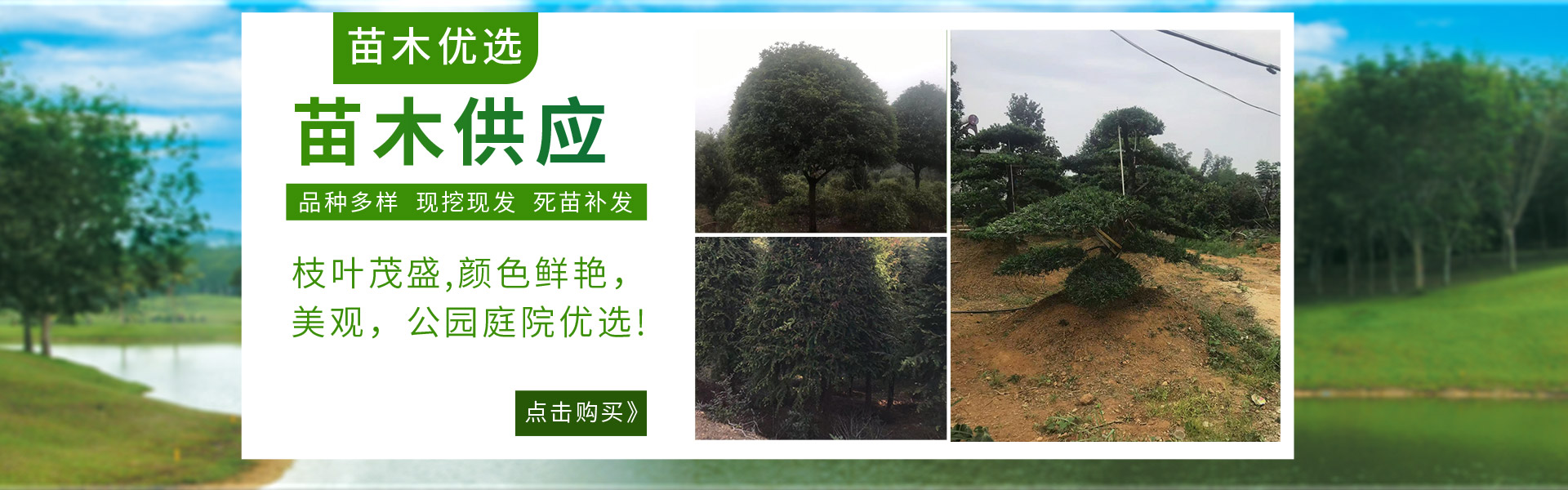


Cinnamomum camphora growth habits:
The camphor tree has a relatively wide distribution area and thrives in temperatures ranging from -7 to 16°C. It is slightly shade-tolerant and prefers sunlight, but is not tolerant of extreme cold. It can grow in warm and humid environments; it is moderately tolerant of waterlogging, but during transplantation, it is crucial to maintain soil moisture, as waterlogging can lead to root rot and oxygen deprivation, resulting in death. However, it is not tolerant of drought, barren soil, or saline-alkaline soil. The camphor tree has a well-developed taproot, is deep-rooted, and has strong wind resistance. Additionally, it grows at a moderate pace and has a massive canopy like an umbrella, providing shade and relief from the heat.
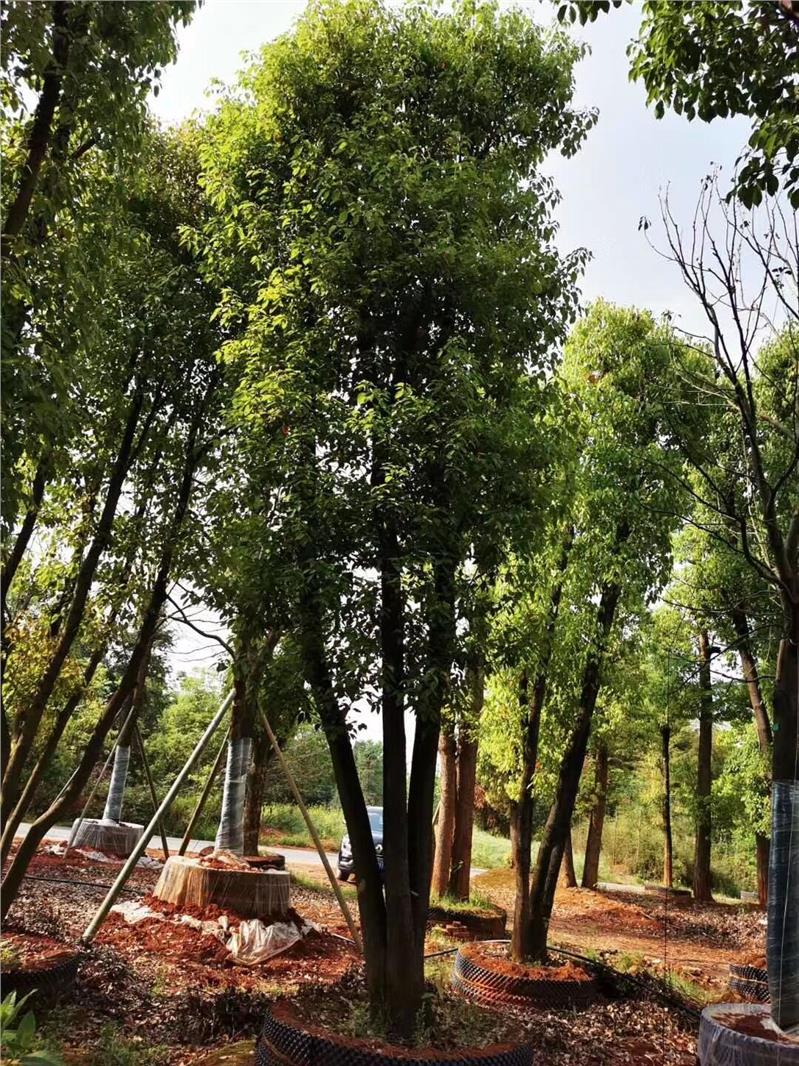
Lauan trees are predominantly found in the regions south of the Yangtze River in China. They emit a camphor scent and can be used to extract camphor oil. Lauan trees can resist attacks from harmful gases like sulfur dioxide and ozone, and they also repel flies and mosquitoes. They can withstand short-term flooding, making them excellent for landscaping. Moreover, their high-quality wood is a crucial raw material for furniture manufacturing. Currently, the lauan tree has been designated as the city tree of Yibin City, Sichuan Province, where its cultivation area is relatively extensive, significantly promoting the improvement of the urban environment.
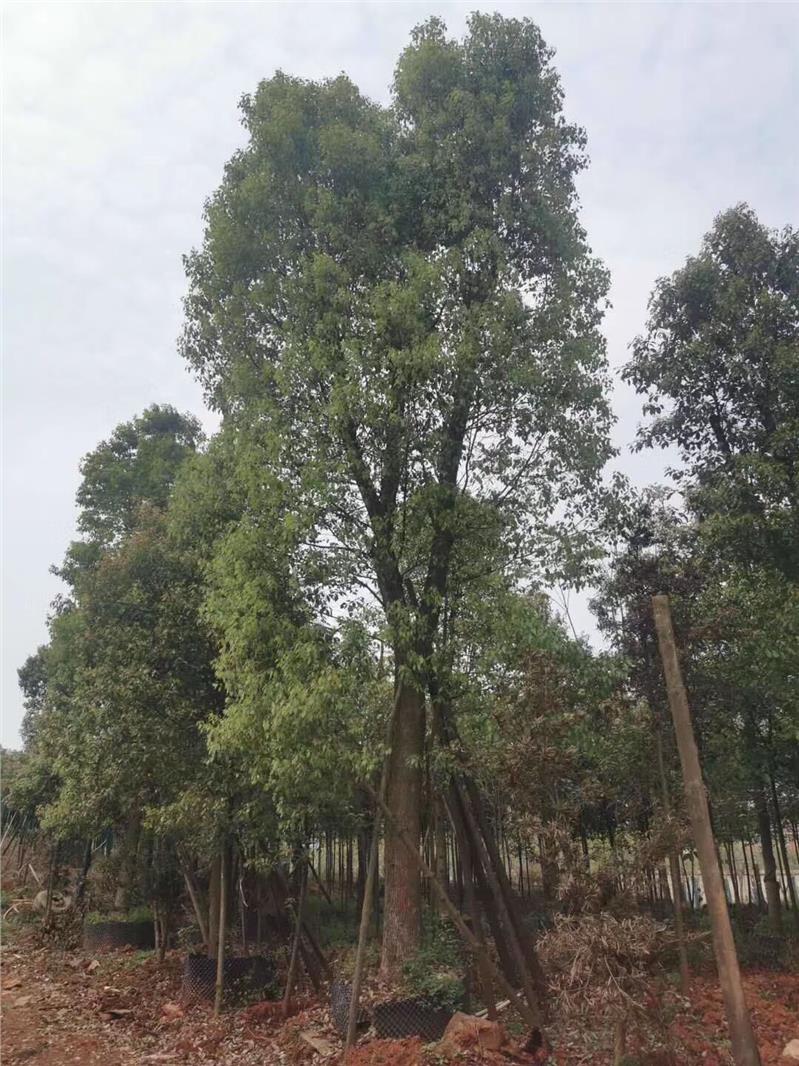
Camphor Laurel (Cinnamomum camphora (Linn) Presl) is an evergreen large tree in the Lauraceae family, known for its subtropical evergreen broadleaf characteristics. It is primarily distributed south of the Yangtze River, with Taiwan, Fujian, Jiangxi, Hunan, and Sichuan being the main cultivation areas. It thrives in warm and humid climates and is not tolerant of cold. It is suitable for regions with an average annual temperature above 16-17°C and a minimum temperature above -7°C. The Camphor Laurel is not picky about soil types, performing well in deep, fertile clay loam, sandy loam, acidic, and neutral soils. It can also grow in saline-alkaline soils with a salt content below 0.2%.
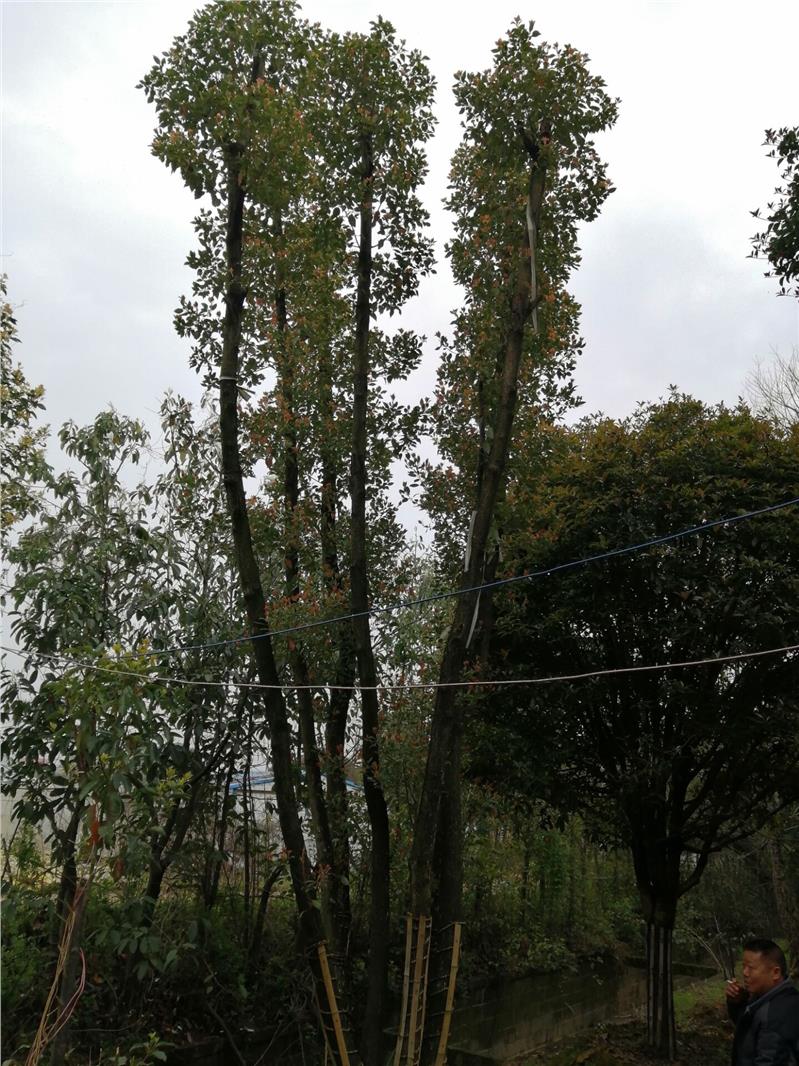
Morphological Characteristics:
1. Evergreen large tree, up to 30 meters tall, diameter up to 3 meters, crown broadly ovate; branches, leaves, and wood have a scent; bark is yellow-brown with irregular longitudinal cracks. Apex bud broadly ovate or spherical, scales broadly ovate or nearly round, slightly covered with silky hair on the outside. Branches are cylindrical, light brown. Leaves are alternate, ovate-elliptic, 6-12 cm long, 2.5-5.5 cm wide, with an acute apex, broad cuneate to nearly round at the base, entire margin, soft骨质, sometimes wavy, green or yellow-green above with a glossy appearance, yellow-green or gray-green below, dull, both surfaces or the lower surface slightly pubescent when young, with free three-veined, sometimes transitioning to faintly visible 5-veined at the base, midrib prominent on both surfaces, with 1-3-5 lateral veins on each side of the upper part. Basal lateral veins have a few branches towards the leaf margin, lateral veins and branches have prominent axils above and distinct glandular pits below, often covered with soft hair; petiole slender, 2-3 cm long, concave on the ventral side and convex on the dorsal side. Young bark is green and smooth, gradually becoming yellow-brown or gray-brown with longitudinal cracks as it ages; winter bud is ovate.
2. Panicles are axillary, 3.5-7 cm long, with peduncles, with the rachis 2.5-4.5 cm long, densely or sparsely pubescent with greyish to yellow-brown fine hairs, particularly evident at the nodes. Flowers are greenish-white or tinged, about 3 mm long; pedicels are 1-2 mm long. The calyx is sparsely pubescent on the outside, densely pilose on the inside, with an urceolate tube about 1 mm long, and ovate lobes about 2 mm long. Fertile stamens are 9, about 2 mm long, with the filaments pilose. Sterile stamens are 3, located in the inner whorl, arrowhead-shaped, about 1 mm long, pilose.
3. The ovary is spherical, about 1mm long, with a style about 1mm long. The fruit is ovate or nearly spherical, 6-8mm in diameter, purplish-black; the fruit pedicle is cup-shaped, about 5mm long, the top flat, 4mm wide, base about 1mm wide, with longitudinal grooves. Flowering period: April to May, fruiting period: August to November.
