


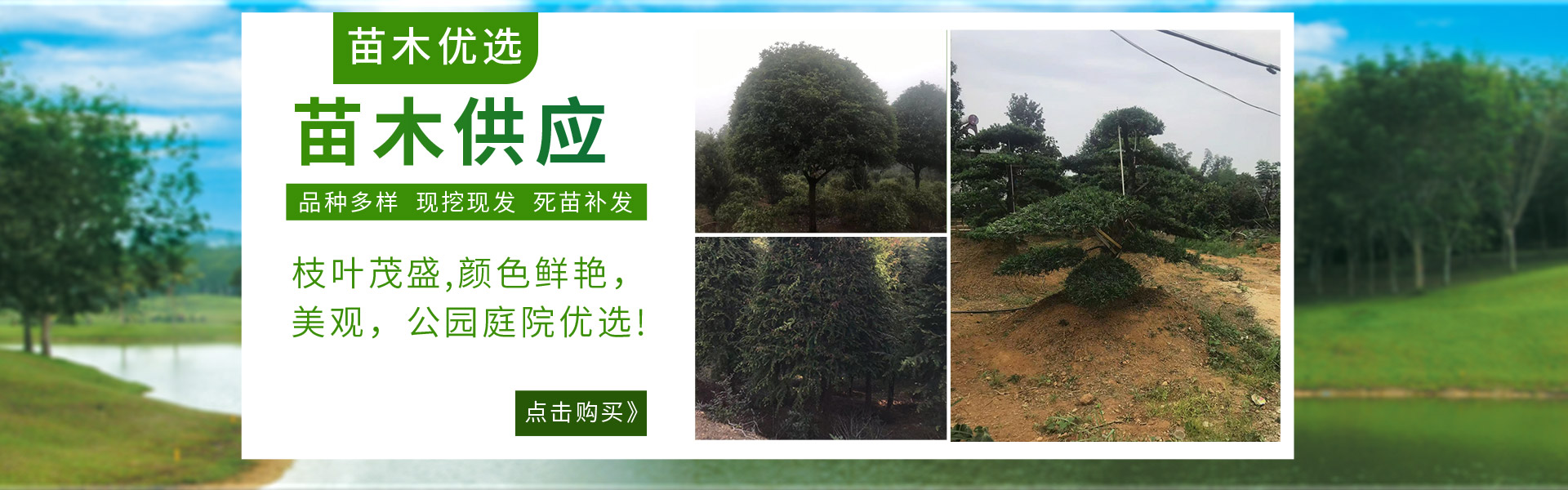


Cinnamomum camphora, primarily distributed in the southern regions of China along the Yangtze River, emits a camphor scent and its oil can be extracted. This tree can resist harmful gases like sulfur dioxide and ozone, deter flies and mosquitoes, and withstand short-term flooding, making it an excellent species for landscaping. Moreover, its high-quality wood is a key raw material for furniture manufacturing. Currently, Cinnamomum camphora has been designated as the city tree of Yibin City, Sichuan Province, where its cultivation area is relatively extensive, significantly promoting the improvement of the urban environment.
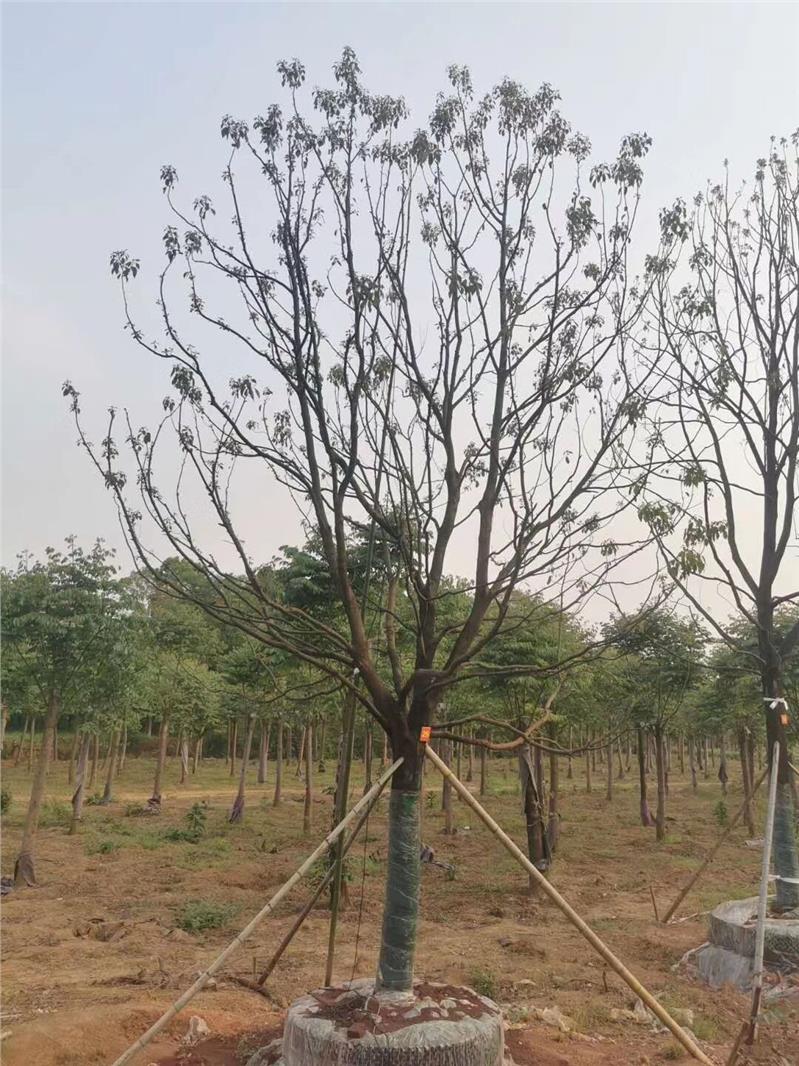
Cedar Tree Transplanting: Planting Time: Spring planting is recommended from late March to early April, autumn planting is ideal in September, followed by the plum rain season, which can serve as a good opportunity for supplementation.
Cedar tree planting specifications and precautions:
When planting new forests of camphor trees, the spacing between rows and plants should be 1.5m x 1.5m or 2.0m x 1.5m. The planting hole size should be around 30cm x 30cm x 40cm, with fertilizer placed at the bottom. Fill the hole with topsoil (up to the base of the seedling), then gently pull the trunk upwards to compact the soil, which promotes root expansion. The root-protecting soil should be tightly connected to the hole soil; if backfilling is not tight or solid, it may create hollows.
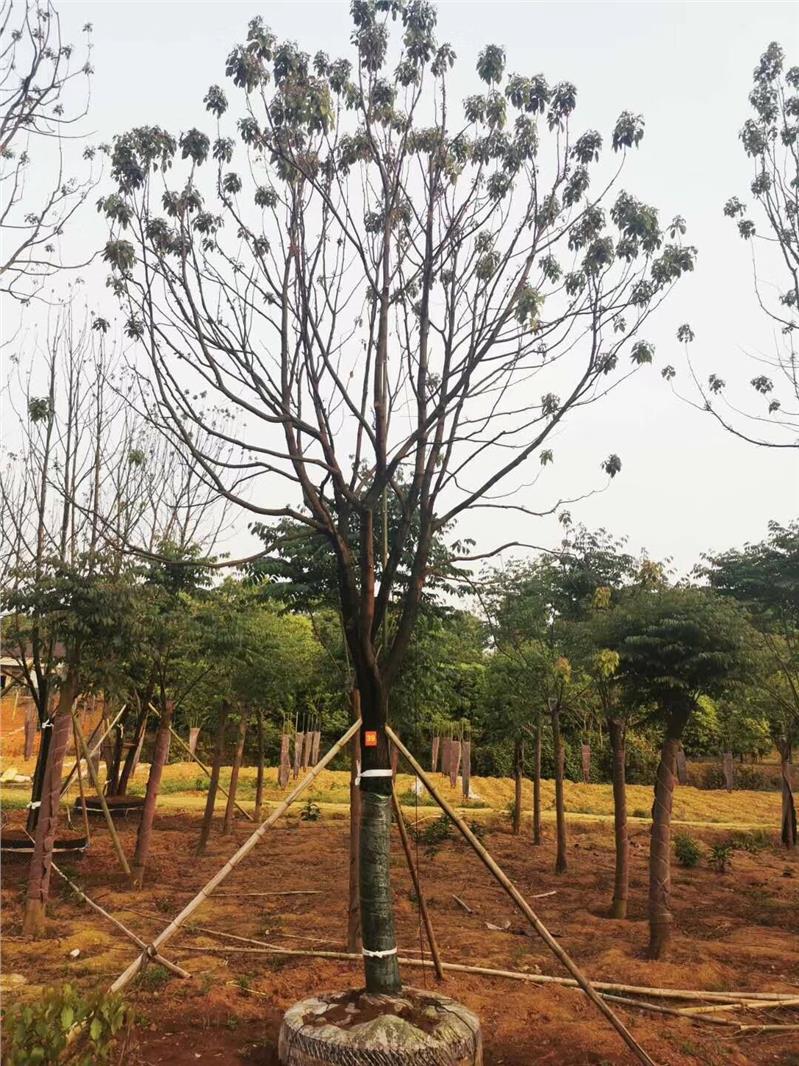
Camphor Tree Morphological Characteristics:
The top bud of the camphor tree is broadly ovate or spherical, with scales broadly ovate or nearly round, and slightly covered with silky hair on the outside. Branches are cylindrical, light brown. The base lateral veins have a few branches towards one side of the leaf margin. The axils of the lateral veins and branches are prominently raised on the upper surface, and have distinct glandular pits on the lower surface, often covered with soft hair. The petiole is slender. In the initial production stage, the bark is green and relatively smooth. During the later growth stage, it generally turns brown, with irregular longitudinal cracks, making it relatively rough (see Figure 1). The fruit is ovate or nearly spherical, with a diameter of 6-8 mm, and is dark purple.
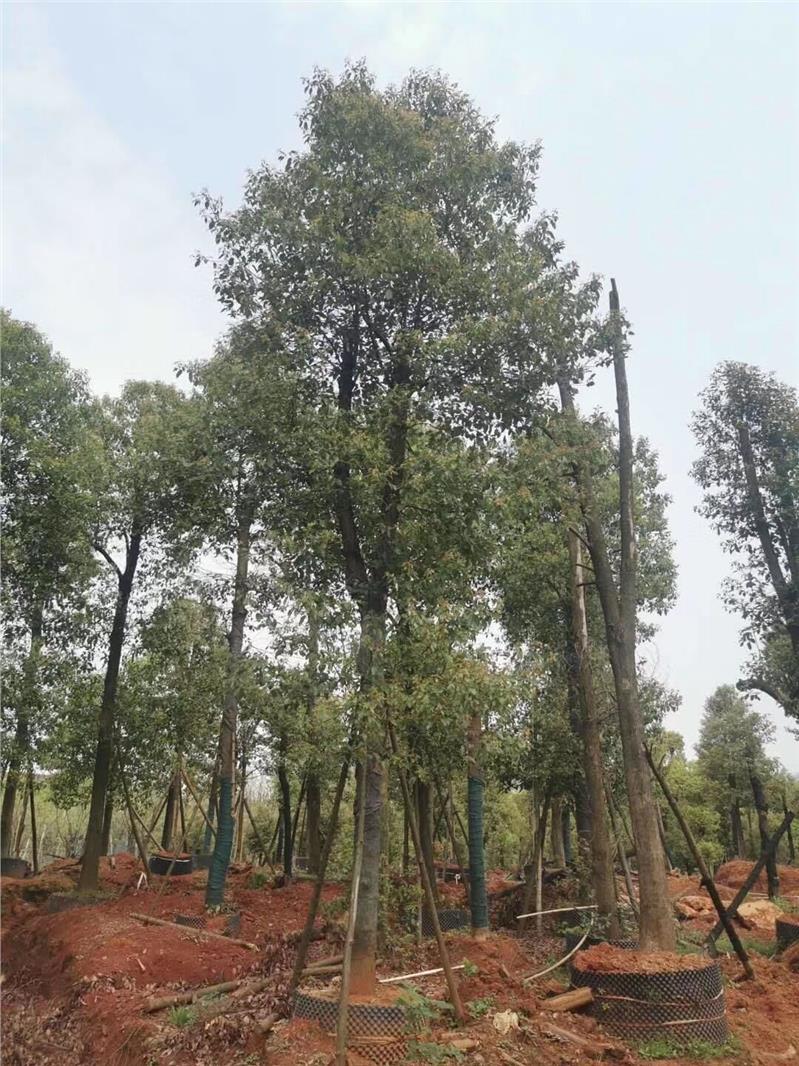
Morphological characteristics:
1. Evergreen large tree, up to 30 meters tall, with a diameter of up to 3 meters, and a broad ovate crown; branches, leaves, and wood all have a scent; the bark is yellow-brown with irregular longitudinal cracks. Apex bud is broadly ovate or spherical, scales are broadly ovate or nearly round, with a slight covering of silky hair on the outside. Branches are cylindrical, light brown. Leaves are alternate, ovate-elliptic, 6-12 cm long, 2.5-5.5 cm wide, with an acute apex, broadly cuneate to nearly round at the base, entire margin, soft骨质, sometimes wavy, green or yellow-green above with a glossy surface, yellow-green or gray-green below, dull, both surfaces or the lower surface slightly pubescent when young, with free three-veined veins, sometimes transitioning to a faint 5-veined base, midrib prominent on both surfaces, with 1-3-5 lateral veins on each side of the upper part. Basal lateral veins have a few branch veins on one side of the leaf margin, with the axils of lateral and branch veins prominently raised above and distinctly glandular below, often covered with soft hair; petiole is slender, 2-3 cm long, concave ventrally and convex dorsally. Young bark is green and smooth, gradually becoming yellow-brown or gray-brown with longitudinal cracks as it ages; winter bud is ovate.
2. The panicle is axillary, 3.5-7 cm long, with peduncles, the rachis 2.5-4.5 cm long, and all orders are hairy with grayish to brownish fine pubescence, which is particularly evident at the nodes. The flowers are greenish white or tinged, about 3 mm long; the pedicels are 1-2 mm long. The calyx is hairy on the outside or with fine pubescence on the inside, the calyx tube is inversely conical, about 1 mm long, and the calyx lobes are elliptical, about 2 mm long. There are 9 fertile stamens, about 2 mm long, with short pubescence on the filaments. There are 3 sterile stamens, located in the inner whorl, arrowhead-shaped, about 1 mm long, and hairy.
3. Ovary spherical, about 1 mm in length, style about 1 mm long. Fruit ovoid or nearly spherical, diameter 6-8 mm, dark purple; receptacle cup-shaped, about 5 mm long, apex flat, width up to 4 mm, base about 1 mm wide, with longitudinal grooves. Flowering period April to May, fruiting period August to November.
