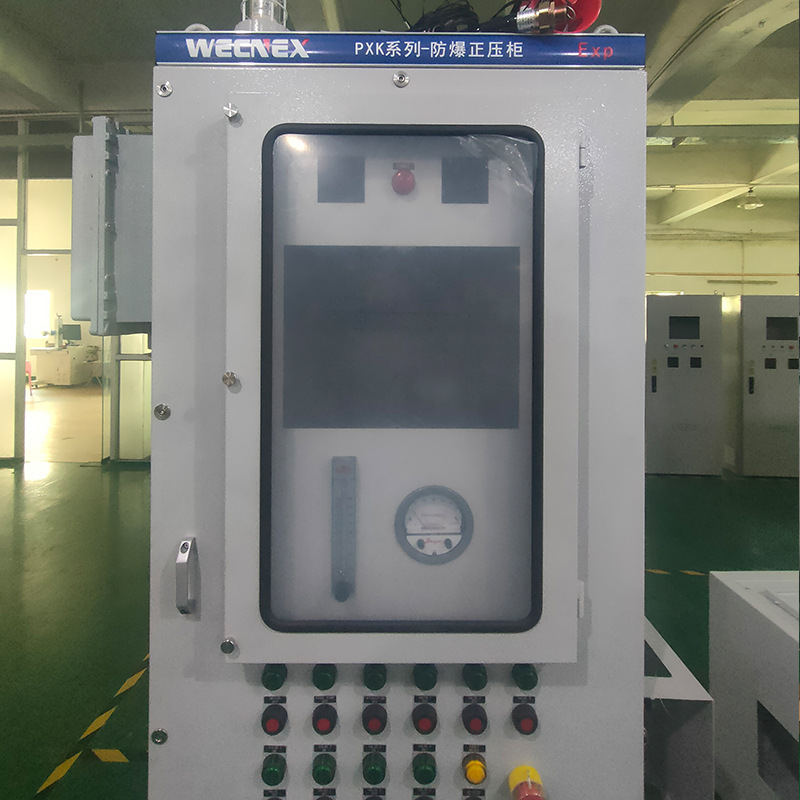

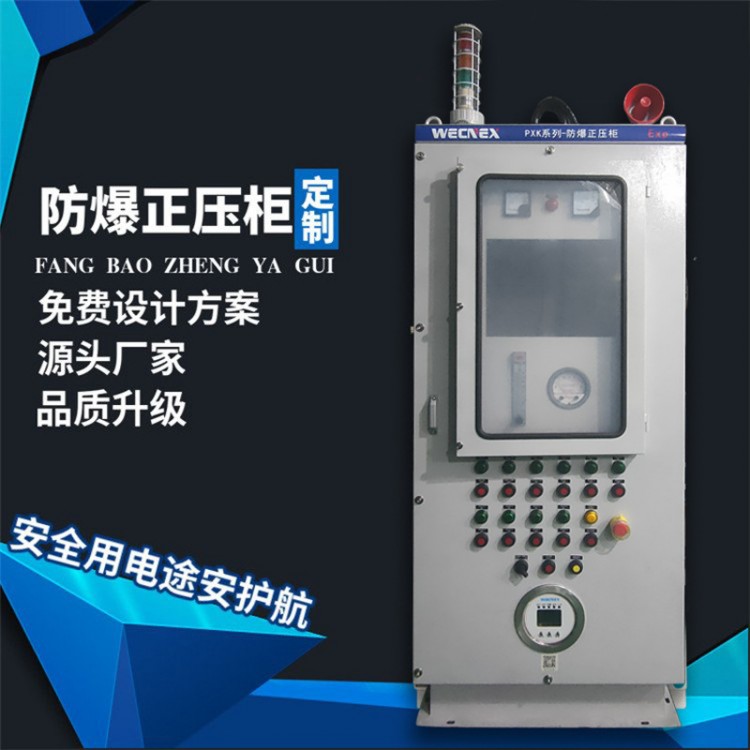
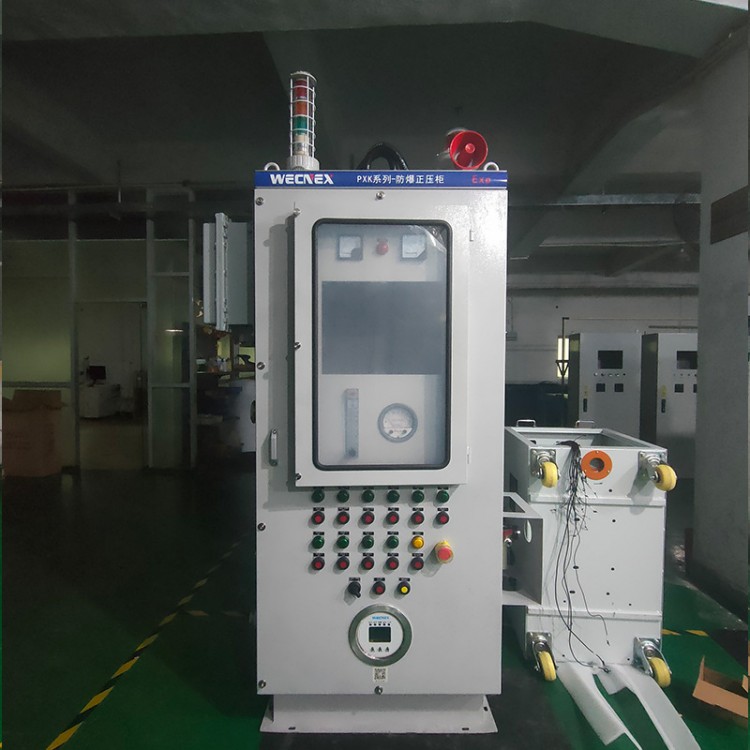
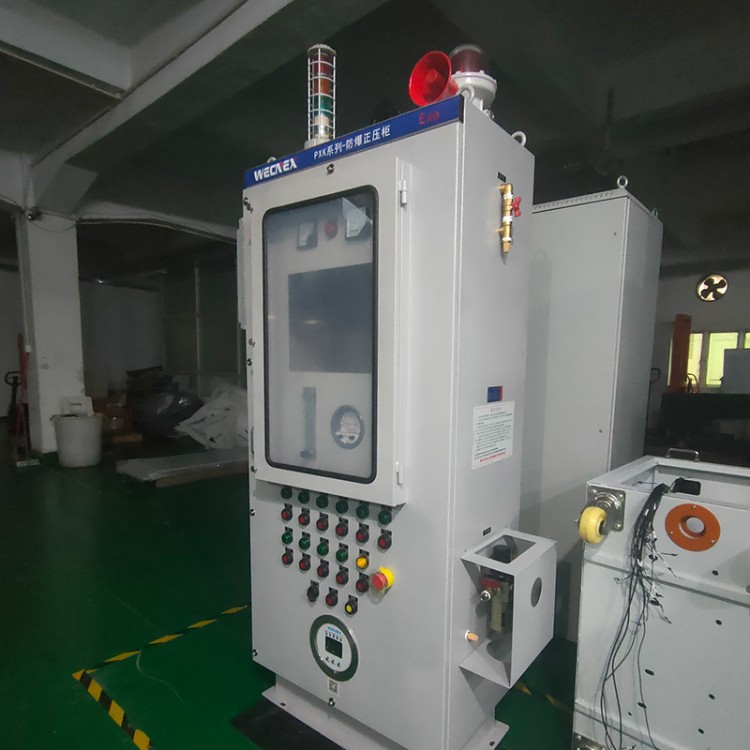
Function of the positive pressure blow-off control system for explosion-proof positive pressure cabinets and structural characteristics of the explosion-proof positive pressure cabinet body
Its explosion-proof principle primarily adopts measures to isolate the ignition source through medium separation and establish positive pressure protection to achieve the goal of electrical explosion-proof.
2. Structurally, the units can be customized to fit user requirements as either box, console, or cabinet styles, with cabinet styles further divided into top-bottom and left-right structures. Box styles are typically made of welded steel plates, with a powder-coated surface and front door operation; console and cabinet styles feature cabinets made of standard profiles, also with a powder-coated surface and special sealing treatments on all joints; front door for operation and rear door for maintenance. The steel plate material generally used is GB710-88 cold-rolled steel plate.
3. Divided into Continuous Sweep and Leak Compensation types based on the intake method. The Continuous Sweep type provides a continuous flow of gas, allowing the working heat of the components in the positive pressure chamber to be carried away through the gas circuit, offering excellent heat dissipation capabilities; the Leak Compensation type supplies gas intermittently, featuring good sealing in the positive pressure chamber and low gas consumption.
4. The positive pressure blow-off control system is equipped with comprehensive protective devices. Power is automatically supplied only after reaching the specified ventilation time, and features high and low pressure automatic audio-visual alarms, pressure lower limit automatic power-off, door opening automatic power-off, and emergency manual power-off safety interlock protection.
5. Reliable sealing performance; shell features multiple sealing protections, long pressure retention, and cost-effective operation.
6. This cabinet utilizes a cable trench mounting style; the user must provide a source of protective gas.