






详情描述
Wind Power TransformerSelection considerations
Wind power generation is an essential part of the power grid's energy supply. The electrical power generated by wind turbine units is stepped up to two levels before being connected to the local power grid. The two-step voltage increase refers to the on-site step-up transformers within the unit's power substation. Typically, the voltage at the wind turbine outlet, which is 0.69kV, is stepped up to 10kV/35kV.
10kV/35kV is collected through collector lines to the low-voltage side of the upgrading station, where it is stepped up to 110kV/220kV by the main transformer. The selection of the upgrading transformer and the main transformer for the wind power generation unit can be made according to the following requirements.
The capacity of the main transformer is typically selected based on the planned load for 5 to 10 years after the substation is constructed, with appropriate consideration for the load development over the long term of 10 to 20 years. When not restricted by transportation conditions, three-phase integrated transformers should be used for substation voltages of 330kV and below. The connection method of the transformer windings must be consistent with the phase of the system voltage; otherwise, they cannot be operated in parallel. In China, for voltages of 110kV and above, transformer windings are connected in a Y0 configuration; for 35kV, they also use a Y connection, with the neutral point often grounded via an arc suppression coil. In wind farms, the neutral points are grounded through a small resistor. For voltages below 35kV, transformer windings are connected in a delta configuration.
I. Transformer Selection
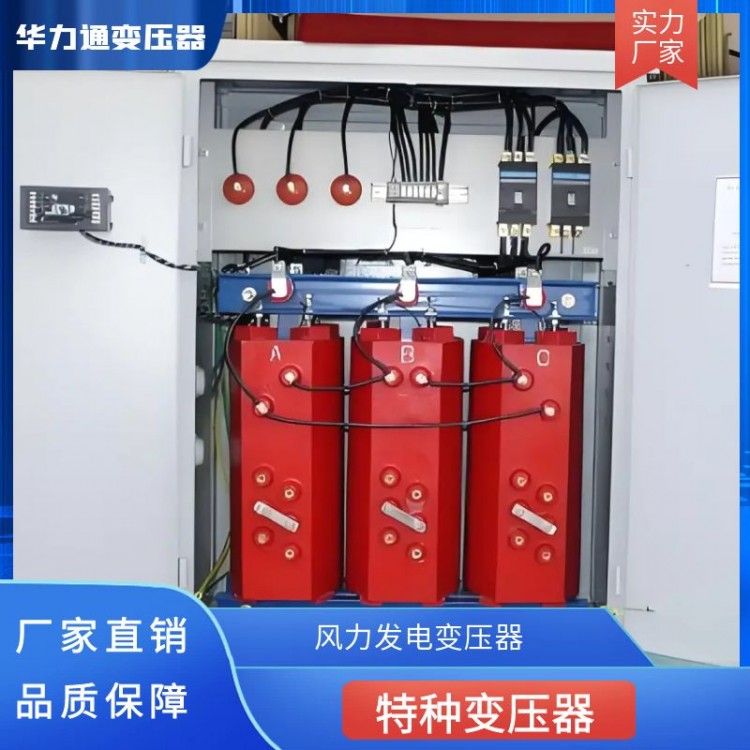
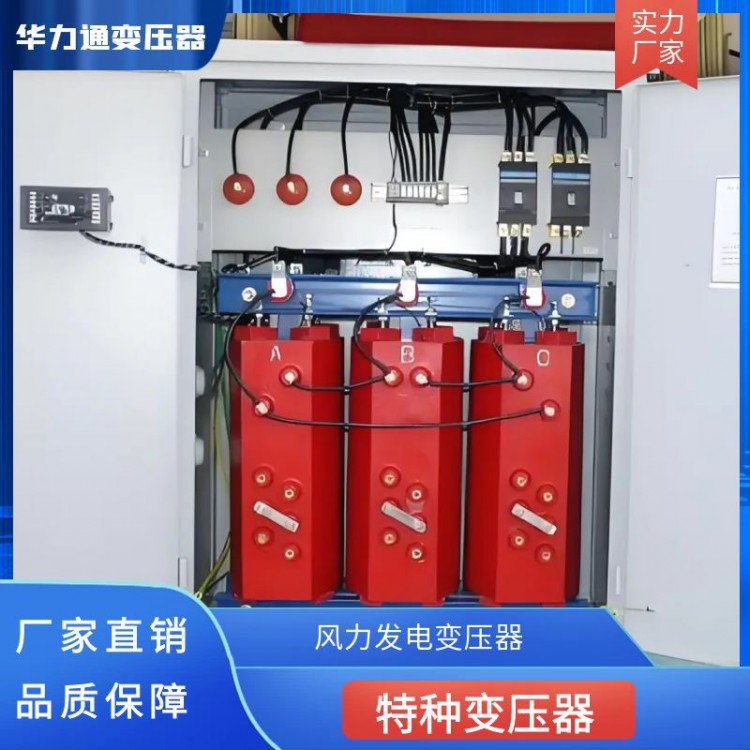
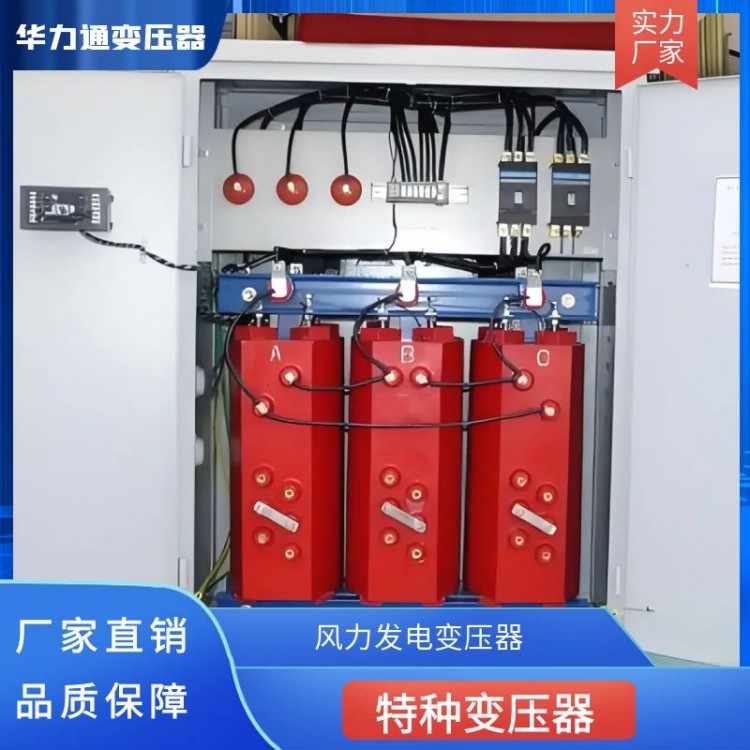
The main transformer for wind power plants should be selected as an air-cooled, low-loss, and maintenance-free electrical transformer.
In actual engineering, 110kV/220kV substation voltage frequently varies with significant amplitude. Typically, a self-cooled, low-loss on-load tap-changing three-phase transformer is chosen. The selection of the transformer must also be in accordance with the approval opinion of the connecting system to ensure that the equipment selection meets local grid acceptance standards. The voltage at the connection point, short-circuit impedance, and connection group should meet the requirements of the connecting system. The main transformer connection groups for wind farm substation are YN, yn0+d, and YN, d11. The two wiring groups are mainly selected based on the local grid approval, and different wiring groups affect the type and position of the low-resistance connection.
Section 2: Transformer Selection
The transformer selection for the wind farm unit substation should comply with the following regulations:
1. The capacity should be selected based on the rated apparent power of the wind turbine generator.
2. The rated voltage of the high-voltage winding of the transformer in the unit substation should be chosen as the higher voltage of the voltage level it is in. The rated voltage of the low-voltage winding of the transformer in the unit substation should be consistent with the rated voltage of the wind turbine generator set.
3. It is recommended to use a no-load voltage regulator transformer for the unit transformer of the power unit.
4. The capacity of the self-use transformer in the unit for transformer substation of the unit should meet the lighting and maintenance requirements of the transformer substation of the unit. For wind turbine generator sets equipped with dry transformers, the self-power supply should be connected to the self-use transformer internally configured within the wind turbine generator set. When the transformer substation unit is installed within the nacelle or tower of the wind turbine generator set, a unified consideration should be given to the self-use transformer.
The unit substation is uniformly designed as an enclosed substation, which can be selected from the US, European, and Chinese types. The US type is a combined substation, with the load switch and transformer housed in a common oil tank, offering advantages of small size, low land occupation, and ease of installation. The European type, also known as a pre-assembled substation, includes ring network and terminal types, with the benefit of lower radiation than the US type and the capability to set up distribution automation, although it is generally more expensive. The Chinese type places the load switch outside the oil tank and uses SF6 switches, preventing the arc from contaminating the transformer oil. The Chinese type combines the advantages of both the US and European types, offering high reliability and cost-effectiveness.
In practical engineering projects, the selection of transformers often involves the opinions of local environmental protection authorities and the property owners, taking into account overall costs and post-construction operation and maintenance conditions.
询价单


