

Emergency exit lights are a common sight in everyday life, their purpose being to guide people to safe exits in low visibility conditions. Therefore, they are subject to stringent quality and explosion-proof requirements. How do they...Obtain explosion-proof certificationWhat? A Must-See for Manufacturers.
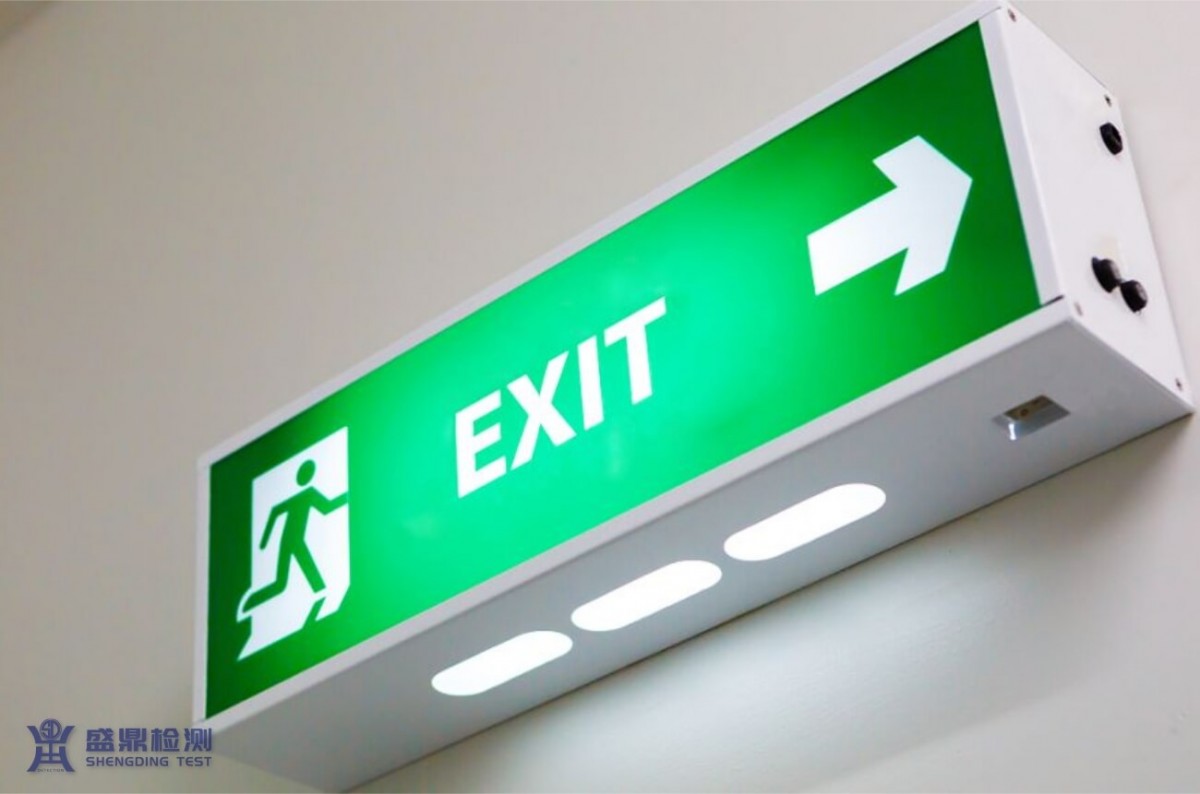
Firstly, let's take a look at the usage instructions for emergency exit lights as specified in the standards:
Suitable for explosive gas environment in Zone 1 and Zone 2 areas.
2. Suitable for Class 20, 21, and 22 hazardous dust environments.
3. Suitable for Class II, Groups A, B, C explosive gas environments.
4. Suitable for temperature groups T1 to T6.
5. Suitable for high-protection requirements and humid environments.
6. Widely used in hazardous environments such as oil extraction, refining, and chemical industries, as well as offshore oil platforms and oil tankers.
Process Requirements for Applying for Explosion-Proof Certification for Emergency Exit Lights
Contact Shengding Inspection Center and negotiate with business personnel or engineers to confirm the basic product information.
2. Prepare product-related materials, including manuals, corporate standards, structural diagrams, electrical schematics, etc., with specific requirements determined by the testing institution.
Engineers develop and review the testing plan.
Ship samples and materials to Shengding Explosion-proof Laboratory.
Engineers conduct product testing in accordance with national standards. If any item fails to meet the required standards during the testing process, the product must be rectified before further testing can be conducted.
6. Obtain a test report or explosion-proof certification.
The entire inspection process for safety exit emergency lights typically takes around 2 months. Additionally, the inspection cost is determined based on the actual situation, as not all explosion-proof products can pass the test in one attempt; a retest would require additional inspection fees.
Emergency exit lights are commonly seen in everyday life. Their role is to guide people to safe exits in low visibility conditions. Therefore, they are subject to strict quality and explosion-proof requirements. So, how do they...Obtain Explosion-Proof CertificationWhat? Must-See for Manufacturing Companies.
Firstly, let's take a look at the usage instructions for emergency exit lights as specified in the standards:
1. Suitable for explosive gas environments in Zones 1 and 2.
2. Suitable for combustible dust environments in 20, 21, and 22 zones.
3. Suitable for Class II, Groups A, B, and C explosive gas environments.
4. Suitable for temperature groups T1 to T6.
5. Suitable for high-protection requirements and damp environments.
6. Widely used in hazardous environments such as oil exploration, refining, and chemical industries, as well as on offshore oil platforms and oil tankers.
Emergency Exit Lighting with Explosion-Proof Certification Process Requirements
Contact Shengding Inspection Center and negotiate with business personnel or engineers to confirm the basic product information.
Prepare relevant product documentation, including manuals, corporate standards, structural diagrams, electrical schematics, etc., with specifics determined by the testing institution's requirements.
3. Engineers develop testing plans and conduct reviews and evaluations.
4. Sent samples and materials to the Shengding Explosion-Proof Laboratory.
Engineers conduct product testing in accordance with national standards. If any item fails to meet the required standards during the testing process, the product must be corrected and retested.
6. Obtain a test report or explosion-proof certification.
The entire inspection process for safety exit emergency lights typically takes about 2 months. Additionally, the inspection fee is determined based on the actual situation, as not all explosion-proof products can pass the test on the first attempt. A retest will require an additional fee for the inspection.
