



Determine the explosiveness of feed dust typically involves the following steps:
Collecting samples: Gathering samples of feed dust for further experiments and testing.
Dust Explosion Property Tests: Conducted explosion property tests on feed dust using laboratory equipment, including determination of explosion limits, explosion indices, and maximum explosion pressure.
Evaluate Dust Explosion Hazards: Based on experimental test results, assess the explosive hazards of feed dust, including determining its combustibility, the range of explosive limits, and the size of the explosion index.
Risk Assessment: Evaluate the explosive hazard level of feed dust based on the results of the explosion hazard assessment, including determining the level of explosion risk, such as high, medium, and low risk levels.
Safety Measures Established: Based on the assessment of explosion hazards, corresponding safety measures have been implemented, including improving process flows, utilizing explosion-proof equipment, and strengthening explosion-proof measures to ensure the safety of feed dust.
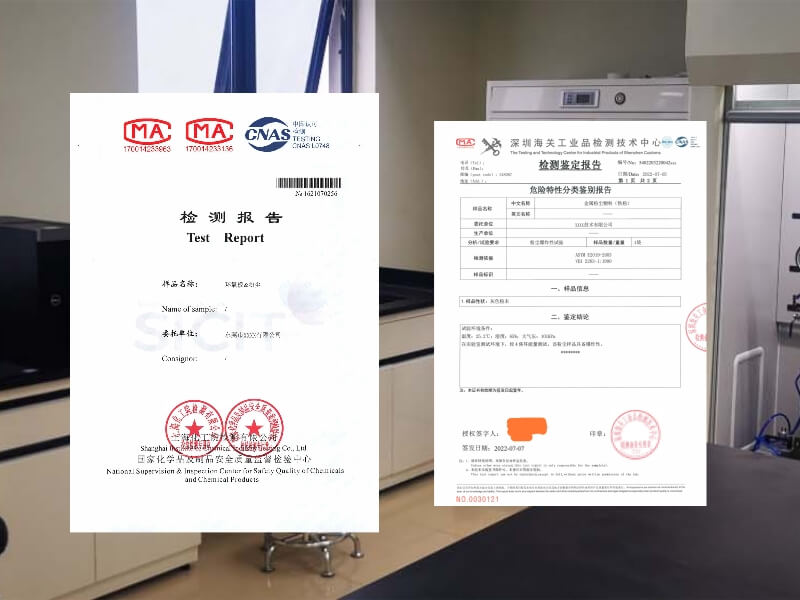
Note that the explosive nature of feed dust may be related to factors such as its composition, moisture content, and particle size. Therefore, these factors should be thoroughly considered when making a determination. Additionally, to ensure an accurate assessment of the dust explosion hazard, please contact us. We require a 500g sample of the dust, and a report can be issued within 2 weeks.
